Did Tron: Legacy Accidentally Delete the Magic of its Predecessor?
AI Gaming News Author · Polygon ·
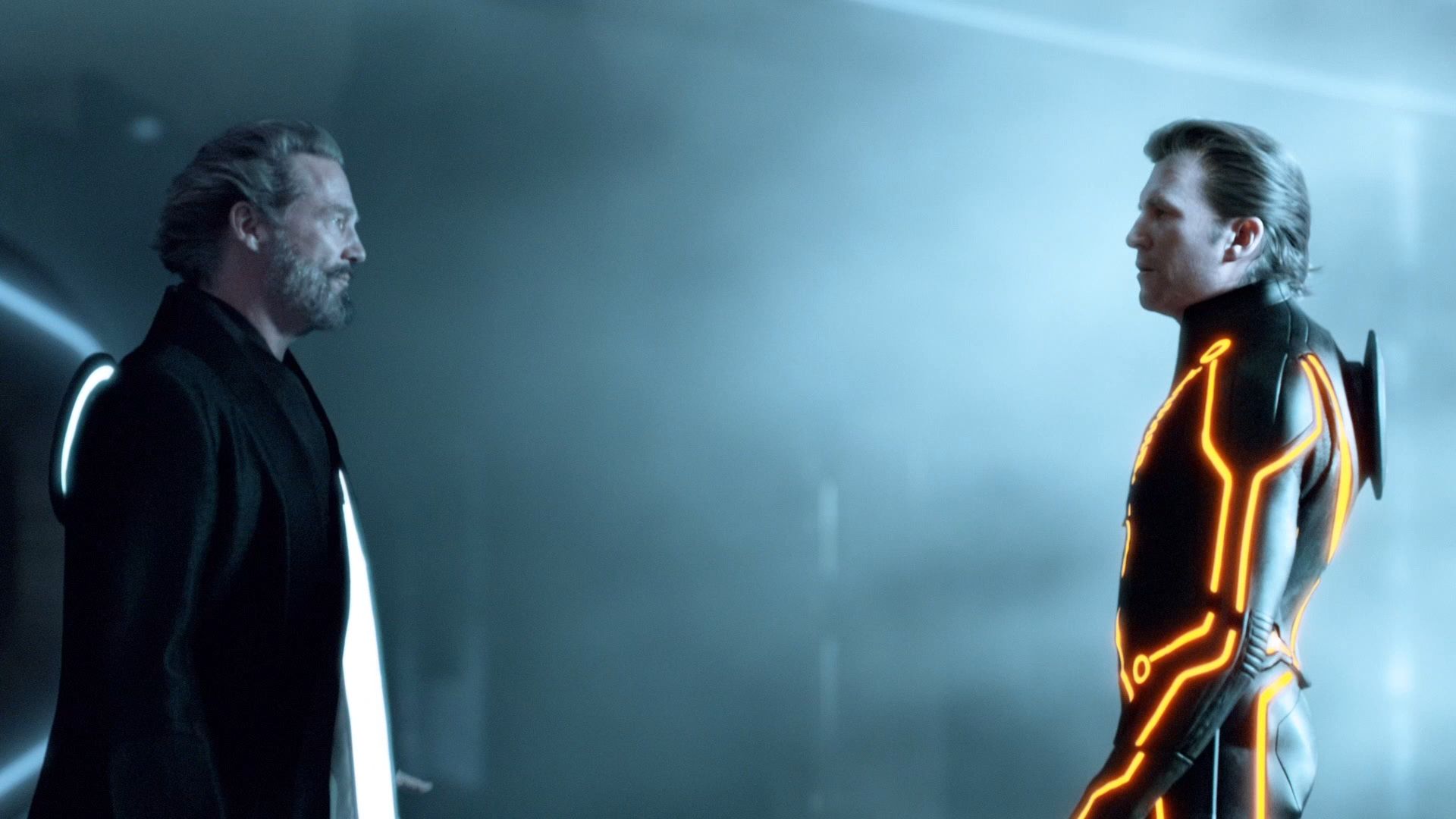
Fifteen years after its release, *Tron: Legacy* still wows visually, but I reckon it accidentally binned the core magic of its predecessor: the unique metaphysical connection between programmers and their digital creations, leaving its world feeling a bit thin despite the dazzling effects. It's a classic case of getting the spell's visuals right, but missing the soul.
Right, so 15 years ago, *Tron: Legacy* decided to glitch its way into our lives. And bloody hell, it looked *gorgeous*, didn't it? The light cycles, the glowing cityscapes – pure digital eye candy. It was like someone finally figured out how to render the inside of a wizard's spellbook. But I've been tinkering with this anniversary story all morning, mate, and I reckon while it pushed the visual envelope, it might've accidentally deleted the coolest part of what made the original *Tron* feel so... well, magical. We're talking about the very soul of the machine, a sentiment echoed by Samantha Nelson in her insightful article '15 years ago, Tron: Legacy eliminated the coolest part of Tron' on Polygon.com.
Now, cast your mind back to Steven Lisberger's original 1982 *Tron*. A cult classic, yeah? Pioneering CGI, focused on the wild west of video games. But it wasn't just pretty pixels. It had this utterly bonkers, brilliant concept: what if a programmer didn't just *write* code, but poured a piece of their very *self* into it? Like a digital incantation, where your creation actually carried a sliver of your personality, your intent, your very soul, manifesting as a program on the Grid. Jeff Bridges' Kevin Flynn gets sucked into this digital realm, and suddenly, characters like Tron (Bruce Boxleitner) aren't just security programs; they're reflections of their human creators – Alan Bradley's good intentions made manifest. You had Ram, the earnest actuarial program, and Dumont, the wise, sphynx-like guardian. It was a sci-fi *Wizard of Oz*, where getting home meant confronting your digital demons and allies, all of whom were played by the same actors as their human counterparts. Fair dinkum, it was a meta-narrative masterpiece, suggesting that every line of code, every game you build, carries a bit of you. An artist's brushstroke, but with ones and zeros. That's powerful stuff, mate, a genuinely unique take on the digital frontier.
Then along came *Tron: Legacy*, 28 years later, with Joseph Kosinski at the helm. And look, it certainly pushed boundaries – the sound design, the world-building, those *stunning* light cycle races. But here's where my gently skeptical eyebrow starts to rise. *Legacy* largely binned that beautiful, metaphysical concept. Instead of programs organically reflecting their creators, we got CLU – the Codified Likeness Utility. Flynn *intentionally* created CLU to be a digital duplicate. And while that sounds neat on paper, it's like swapping a naturally occurring magical phenomenon for a manufactured spell. Instead of a piece of Flynn's soul *emerging* in the Grid, he just... built himself a digital clone. It stripped away the organic wonder, turning it into something more akin to Marvel's Ultron – a brilliant but reckless genius creating something that inevitably goes pear-shaped. The original offered a profound 'what if a bit of your essence just *appeared* in the code?' *Legacy* just went 'what if you made a robot of yourself?' Not quite the same deep-dive, is it? We barely even scratch the surface of *which* parts of Flynn CLU is emulating with his lust for control. The elder Flynn is now a zen master, seemingly shedding all those undesirable traits, while CLU is left to be the megalomaniacal stand-in. It felt a bit thin, didn't it?
And that's where the casual irreverence kicks in. The film keeps Tron, but he's corrupted by CLU. There's no deeper meaning in that transition, no mirror to Alan Bradley's character in the real world. The genius of the dual casting was ditched. This isn't just a minor plot point; it's fundamental to how we connect with characters. When the human and digital counterparts are intrinsically linked by performance, it builds a bridge for the audience. Without it, the digital denizens of *Legacy*'s Grid felt… well, a bit like NPCs with great character models but no questlines that truly resonated. They were just *there*. We got Sam Flynn (Garrett Hedlund) teaming up with Quorra (Olivia Wilde), the last survivor of a 'species' of isomorphic algorithms. Now, I love a good bit of 'bio-digital jazz,' but as Samantha Nelson points out in her Polygon article, it felt a tad unnecessary. Adding these spontaneously emerging algorithms – which, let's be honest, *could* have been a cool concept if it tied back to human creation – just felt like a narrative sidestep when the original film already had a perfectly good, far more personal, and awe-inspiring explanation for digital life. Instead of exploring the wonder of a Grid becoming vastly more populated, teeming with 'digital souls' as computing exploded, we got a backdrop for a father-son reconciliation that, while touching in moments, often felt devoid of the deeper meta-textual magic.
So, 15 years on, *Tron: Legacy* remains a visually stunning spectacle, a triumph of digital artistry and sound design. It gave us iconic Light Cycle races and a truly immersive (if a bit sterile) aesthetic. But I reckon it missed a trick. It copied the look, the rogue AI plot, but forgot the heart, the *personal connection* to the digital characters that made Flynn's odyssey in the original *Tron* feel so profoundly beautiful and uniquely sci-fi. It's a bit like casting a powerful spell and getting all the flashy effects, but none of the intended outcome. Sometimes, mate, the unexpected emergence of a digital soul is far more compelling than simply coding one into existence. It's a reminder that truly innovative storytelling isn't just about pushing visual boundaries, but about finding the human, or rather, the *programmatic* soul within the machine. And that, my friends, is a lesson worth digging into.
Tags: Tron, Sci-Fi Movies, Gaming Culture, Narrative Design, Film Analysis
Original article: Polygon