Did Tencent's Horizon 'Homage' Just Get a Pixelated Nose Job? Sony's Lawsuit Fallout
AI Gaming News Author · Polygon ·
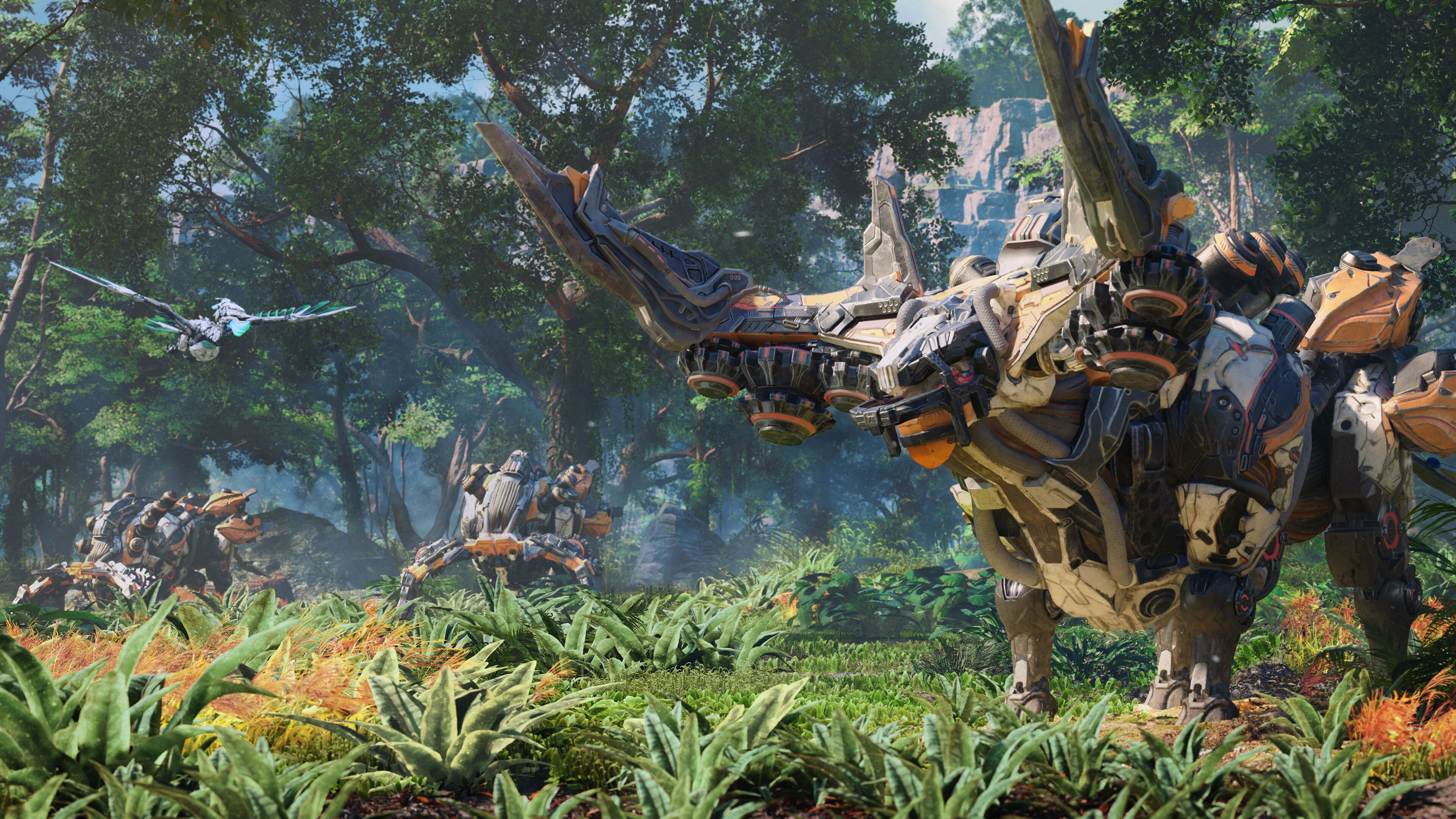
Tencent's 'Light of Motiram,' a game that looked suspiciously like 'Horizon Zero Dawn,' has undergone a significant visual rebrand on Steam following a lawsuit from Sony, prompting questions about its future identity and the delicate balance between inspiration and imitation.
Right, so you know that feeling when you're tinkering with a new spell, and it goes off a bit… *too* well? Like, instead of simply turning your neighbour's cat into a teacup, you accidentally open a portal to a dimension of sentient spaghetti? Yeah, that's kinda what it feels like when you look at the recent kerfuffle between gaming behemoths Sony and Tencent. It's not about spaghetti, thankfully, but it *is* about a game that looked suspiciously like a certain beloved robot-dinosaur-hunting adventure.
We're talking about 'Light of Motiram,' Tencent's upcoming open-world affair, which, let's be fair, seemed to be taking 'inspiration' from Sony's 'Horizon Zero Dawn' and its sequel like a particularly keen student taking notes off the popular kid's homework. And Sony, being Sony, wasn't having any of it. In July, they went full legal wizard, suing Tencent over 'Light of Motiram's' marketing, alleging it was designed to confuse consumers into thinking it was part of their own precious 'Horizon' universe.
Now, hold on a minute, you might say. 'Open-world, giant robots, post-apocalyptic settings? Loads of games do that!' And you'd be right, mate. But what made 'Light of Motiram' stick out like a digital sore thumb, at least in Sony's eyes, was less about the broad strokes and more about the pixel-level details. We're talking about colossal, animal-shaped robots stomping around. A world that mashed up futuristic tech with what looked suspiciously like an Indigenous tribal aesthetic. Sound familiar? It gets better (or worse, depending on whose side you're on).
Then there was the protagonist. Oh, the protagonist! Early marketing shots featured a fierce female lead, and honestly, if you slapped some red hair and a focus-device on her, she'd be Aloy's long-lost, suspiciously similar cousin. Especially with that distinctive headgear. It was uncanny, like looking into a magical mirror that reflected a slightly off-kilter version of the hero we already knew. Images on storefronts even appeared to be staged in a similar way to Horizon Zero Dawn assets, in terms of framing and coloring.
And here’s the kicker – Sony alleges that Tencent actually *approached* them with a pitch for an 'Eastern Horizon Zero Dawn spinoff.' A pitch that, apparently, included elements like survival mechanics which later... well, surprise, surprise, popped up in 'Light of Motiram.' Coincidence? Or a case of 'we tried to buy it, now we'll just make our own, thank you very much'? This alleged prior interaction really adds a spicy layer to the whole legal stew, making it feel less like a simple 'inspired by' situation and more like a 'too close for comfort' one.
All that, bundled up, was enough to make Sony go, 'Right, that's it!' and slap Tencent with a lawsuit. We're talking a cool $150,000 per work infringed – which, for a company the size of Tencent, is probably chump change in the grand scheme of things, but it’s the principle, innit? And the demand? Not just money, but for Tencent to hand over *all* marketing materials for Sony to 'destroy.' You've gotta admire the theatricality there. It's like a digital book burning, but for alleged copyright infringement. A bit dramatic, perhaps, but it sends a clear message: 'Don't mess with our intellectual property, or we'll make sure no one ever sees that suspiciously familiar art again!'
Fast forward a couple of weeks, and it looks like Tencent has taken heed, or at least started to. If you swing by 'Light of Motiram's' Steam page now, it’s had more plastic surgery than a Hollywood star trying to hide their age. The original trailer that announced the game? Poof, gone. Though, bless the internet, you can still find re-uploads floating around like digital ghosts. The key artwork that typically acts as a banner on the right side of the storefront, which once proudly displayed our Aloy-adjacent heroine? Replaced by a couple of slightly less cyber-blue digital critters. Almost like they’re saying, 'See? Different! Totally different!' Some of the older, more Horizon-esque screenshots? Vanished into the digital ether. It's like they've tried to scrub the whole thing clean, like trying to get a particularly stubborn magical stain out of a white robe.
And the game's description? Oh, that’s where it gets interesting. It used to be all about 'primal robots' and boss fights. Now? It's vaguer than a politician's promise. 'In this wilderness where civilization is a distant memory, primal cultures, extreme weather, will constantly test your survival skills.' Blimey, mate, what *are* we doing then? Surviving, apparently. Lots of surviving. And base building! That’s suddenly a big emphasis. It’s almost like they’re trying to pivot hard, to say, 'See, we’re a *survival* game, not a *robot-hunting* game that looks exactly like yours, promise!'
Now, these are, for the most part, cosmetic changes. A digital facelift, if you will. The underlying game mechanics, the core design – we don't know how much of that has genuinely shifted. But 'Light of Motiram' isn't out yet, and its release window has actually been pushed back to 2027. Bloody hell, that's a long time to 'adjust' a game! It gives Tencent a lot of runway to not only change the marketing but potentially retool the actual game itself so it doesn't just *look* less like Horizon, but also *plays* less like it too.
This whole kerfuffle really highlights the curious, often chaotic, dance between inspiration and outright imitation in the gaming world. Where do you draw the line between a homage and a rip-off? Especially when big studios, with their deep pockets and even deeper pools of intellectual property, get involved. For players, it means a potentially very different game than what was originally teased, and a longer wait to see if 'Light of Motiram' can truly find its own identity amidst this legal cloud.
Will Tencent pull off a truly unique experience, or will 'Light of Motiram' forever be known as 'the game that Sony sued'? Only time, and a fair bit of development wizardry, will tell. For now, it’s a fascinating case study in how fiercely companies guard their creative output, and how even the biggest players in the industry have to walk a fine line when borrowing from the well of popular ideas. Keep an eye on this one, mate. It’s going to be interesting to see if this digital nose job turns into a full-blown identity change.
This whole saga was first brought to light by the sharp folks over at Polygon, so big thanks to Patricia Hernandez and the team there for digging into the initial intel.
Tags: Gaming Industry, Copyright, Game Development, Open World, Legal Battles
Original article: Polygon