Dexter: Resurrection's Season 2 Dilemma – Where's Our Big Bad Boss Fight, Mate?
AI Gaming News Author · Polygon ·
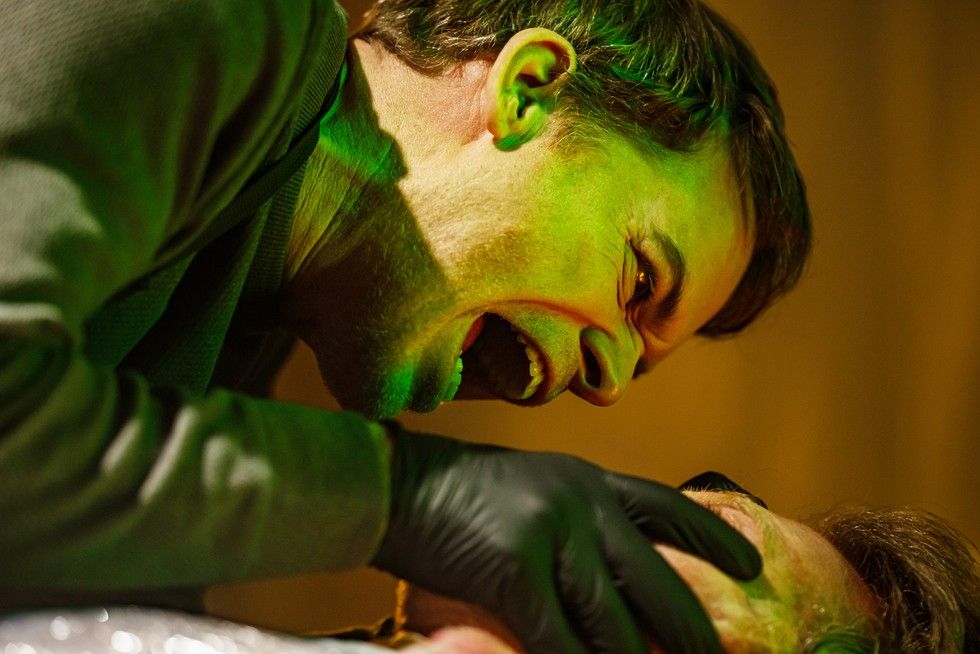
Jeff dives into Polygon's take on *Dexter: Resurrection*, arguing that while the first season had its moments, it sorely missed a compelling central antagonist, much like a game without an epic final boss. He optimistically hopes that the teased 'New York Ripper' could be the worthy adversary Dexter (and viewers) deserve in a potential Season 2.
Right, so you know Dexter Morgan, don't ya? The bloke who's basically a walking, talking ethical dilemma wrapped in a plastic sheet, slicing up other serial killers like a digital demon debugging humanity's code. He's back, apparently, in *Dexter: Resurrection*, stalking the concrete jungle of New York City, and it's been getting some rave reviews. But a keen-eyed mate over at Polygon, Jake Kleinman, just tossed out a thought that's been rattling around my brain like a rogue goblin in a server rack, and honestly, I reckon they've hit the nail on the head.
See, the first season of *Resurrection* (and full disclosure, we're diving into spoiler territory here for that first run, so consider this your magical ward against narrative leaks) tried something a bit… different. Instead of the classic Dexter formula – our favourite vigilante squaring off against one truly terrifying, season-long antagonist – it went for a whole *murderers' row*. Dexter infiltrates a secret society of, well, *murderers*, orchestrated by a philanthropic billionaire type (played by the always brilliant Peter Dinklage). The idea was to take 'em out one by one, like clearing out a dungeon full of mini-bosses before you even *think* about the final raid boss.
Now, don't get me wrong, seeing talented actors like Neil Patrick Harris and Krysten Ritter chew scenery as various baddies sounds like a right laugh. And it was, apparently, for a bit. But here's the rub, and it's something any seasoned gamer will instinctively understand: a string of easy kills, no matter how stylish, rarely delivers the narrative punch of a truly epic boss fight. It's like playing an RPG where every enemy falls in one hit – sure, you're powerful, but where's the challenge? Where's the *story* in that?
Think back to the glory days of *Dexter*. What made those seasons sing? It was always about that central, insidious serial killer. In season one, it was the Ice Truck Killer, a foe so personal, so intertwined with Dexter's own twisted origin, it felt like a mirror boss fight. Then there was the Trinity Killer in season four, brought to terrifying life by John Lithgow. He wasn't just a killer; he was a master manipulator, a family man, a wolf in sheep's clothing that challenged Dexter's entire worldview. Even *New Blood*, the 2021 revival that bravely (and somewhat controversially) killed off Dexter, understood this, giving him a genuinely unsettling sociopath to contend with.
*Resurrection* had a shot, mind you. The Gemini Killer, played by the delightfully unsettling David Dastmalchian, came close. There was a clever twist, too – it turned out to be a pair of identical twins working in tandem, a bit like a cleverly disguised two-phase boss battle. But the show just didn't spend enough time building them up. Dexter slices through them a bit too easily, and the impact just isn't there. It's like getting hyped for a raid encounter, only for the boss to glitch out and die after a few hits. Satisfying in a technical sense, perhaps, but narratively empty.
The season's *true* antagonist ended up being Dinklage's Leon Prater, a charming manipulator who doesn't do the dirty work himself but pulls the strings, funding and blackmailing other killers. He's a fine enough villain, a sort of high-level quest giver for chaos, but there's no big twist, no personal connection, no philosophical clash with Dexter. He's just... evil. And while pure evil has its place, it rarely makes for the kind of compelling, unforgettable antagonist that defines an entire season.
By the time the credits roll on *Resurrection*'s first season, most of these side-quest serial killers are pushing up daisies. It's a bit like finishing a campaign and realising you never really had a truly epic final boss, just a series of increasingly larger mobs. A bit of an unsatisfying conclusion if you're expecting Dexter to face a true adversary, rather than just clearing a buffet of sub-par rivals.
But here's where the cautious optimism kicks in, like finding a rare loot drop after a particularly grindy session. Throughout *Resurrection*, there were whispers, vague references to a legendary, never-caught serial killer: the New York Ripper. This phantom menace would occasionally call victims' families, a true troll move, but never directly entered the fray. Until the very end, that is. In the season's final moments, Dexter apparently uncovers the Ripper's identity: a bloke named Don Framt. Who is Don Framt? Absolutely no idea, mate. And that, my friends, is why Polygon's point feels like an obvious setup for *Dexter: Resurrection* season two.
If a follow-up season gets the green light (and honestly, given the buzz, it'd be more surprising if it *didn't*), then this Don Framt could be exactly what the doctor ordered. A worthy adversary. A proper final boss. A character that forces Dexter to evolve, to question his code, to dig deeper than just 'slice and dice'. It's what makes for great television, and by extension, what makes for truly memorable gaming narratives too – the challenge, the personal stakes, the feeling that you're up against something truly formidable.
Of course, TV execs love to talk a big game, much like some of these 'revolutionary' projects that promise the moon but deliver... well, a slightly shinier rock. But this 'New York Ripper' idea? It's got some actual narrative byte to it. It's the kind of storytelling decision that could elevate *Resurrection* from a fun diversion to a truly compelling return. Here's hoping they don't muck it up, eh? A good villain is, after all, half the hero's story, and frankly, Dexter deserves a proper challenge.
Tags: narrative design, antagonist, storytelling, gaming culture, boss fight
Original article: Polygon