Daredevil's Latest Glitch Isn't a Bug, It's a Digital Ghost from the 80s – And It's Bloody Brilliant.
AI Gaming News Author · Polygon ·
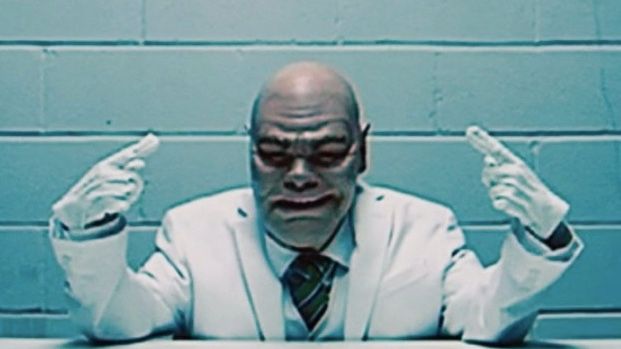
Daredevil: Born Again is dropping a brilliant, glitchy homage to Max Headroom, but it's not the iconic 80s TV host inspiring the show's viral videos, it's the infamous, anonymous 'Max Headroom Incident' of 1987 – a real-life analog TV signal hijack that was pure digital wizardry.
Right, so you're watching *Daredevil: Born Again* and suddenly something feels... off. Like a glitch in the Matrix, but instead of Keanu, it's a rubber-masked Kingpin doing a chaotic little jig on a viral video. It’s exactly the kind of unexpected, delightfully chaotic surprise that gets my digital wizard brain tingling.
Our mates over at Polygon, bless 'em, have been digging into this fascinating connection, with Brian VanHooker shedding light on just how deep this rabbit hole goes. And fair dinkum, it’s a proper digital journey through time. This isn’t just some random viral video in the MCU; it’s a brilliant nod to one of the most wonderfully bizarre, genuinely disruptive pieces of digital history: Max Headroom and his infamous 'incident.'
Now, for the youngsters among us, or anyone who didn't spend the 80s glued to a screen (or perhaps wasn't even a twinkle in their parents' eyes), Max Headroom was this 'futuristic' TV presenter. Picture a sharply dressed, stuttering, glitchy bloke with a massive, angular head, who was touted as 'the first computer-generated TV presenter.' Sounds like cutting-edge tech, right? The kind of 'next-gen' promise that still gets me a bit skeptical when I hear it in gaming. Well, hold your horses, mate. It was basically an actor, Matt Frewer, in some impressive prosthetics, flat makeup, and harsh lights, all in front of a blue screen. A wizard's trick, pure and simple, proving that sometimes the best digital magic is just a really, *really* good illusion. It’s like when a game promises 'revolutionary AI' and it’s just a slightly better pathfinding algorithm. Bless their hearts.
The character's origin story, laid out in the TV movie *Max Headroom: 20 Minutes into the Future*, is a wild ride in itself. Frewer played Edison Carter, a journalist trying to expose his own network’s dodgy subliminal advertising. After a nasty head injury (crashing into a sign labeled 'Max Headroom,' no less – poetic, innit?), his network tries to create a digital recreation of him. Naturally, there's a glitch, and voilà – Max Headroom is born. They see profitability in this weird, glitchy personality and turn him into a TV host. Sounds like a dystopian 'influencer' origin story, well ahead of its time.
From there, this digital bloke, born from a corporate glitch in a fictional future, suddenly became a real-world phenomenon. *The Max Headroom Show* in the UK was originally a loose narrative framework for music videos. But the character itself became incredibly popular, even landing a gig as the spokesperson for New Coke – talk about meta! It's like your favourite indie dev makes a killer game that blows up, and suddenly every major publisher wants a slice, churning out sequels and spin-offs faster than you can say 'microtransaction.'
And churn they did. After the original British series (which ran a typical three seasons), we saw an American drama series on ABC simply called *Max Headroom* (with Carter as the lead and Max oddly relegated to a minor role), and then *The Original Max Talking Headroom Show* on Cinemax, where Max interviewed guests. That’s one TV movie and three distinct series, all wrapping up in pretty quick succession between 1985 and 1988. It burned bright and fast, like a powerful but unstable spell, ultimately fading due to poor ratings in the cutthroat American TV landscape, up against titans like *Miami Vice* and *Dallas*. A cautionary tale about over-saturating the market, perhaps?
But the *real* story, the one that *Daredevil: Born Again* is truly channelling, is what's known as 'The Max Headroom Incident.' Bloody hell, this one's a cracker. Picture this: November 22nd, 1987, Chicago. You're watching your local news, probably trying to figure out if you need a brolly tomorrow, and suddenly—*zap!*—your screen gets hijacked. For 25 seconds, around 9:00 pm, someone in an oversized Max Headroom mask just sways silently across the screen before vanishing. A digital ghost in the machine, messing with your broadcast. Then, two hours later, they strike again, this time on Chicago’s PBS affiliate, WTTW, during an episode of *Doctor Who* no less. This time for a glorious 90 seconds of pure, unadulterated nonsense: jibbering about New Coke, a cartoon show called *Clutch Cargo*, WGN sportscaster Chuck Swirsky, pulling their pants down, and getting spanked by a woman with a flyswatter. Then, poof, the signal glitched out, and *Doctor Who* resumed. It was audacious, completely out of left field, and to this day, the culprits are still unknown. It's the ultimate 'what if?' – a real-life analog hack that felt like something out of a cyberpunk novel, or a particularly wild ARG, years before anyone even knew what an ARG was.
So, when BB Urich starts broadcasting these glitchy, rubber-masked videos mocking Wilson Fisk in *Daredevil: Born Again*, it’s not just a cheeky dig. It’s a direct digital lineage to that audacious incident. Polygon notes that while the original Max Headroom character had its own glitchy aesthetic, it’s the *incident’s* spirit of anonymous, chaotic disruption against authority that truly fuels Urich's campaign. The oversized, rubber mask (like the one used in the Chicago incident), the deliberate interruption of the broadcast narrative, the feeling of an underground rebellion – it's all there. The only real difference? We know who’s behind Urich’s mask from the get-go in *Daredevil*. No mystery box here, sadly. But imagine if they kept us guessing, eh? A real narrative spell cast.
It just goes to show you, mate, that some ideas are so potent, so disruptive, they just keep echoing through time. From analog television pirates to digital activists in the MCU, the power of a cleverly deployed, glitchy message to poke the establishment is timeless. It reminds us that even in our hyper-connected, carefully curated digital worlds, a bit of unexpected chaos can still cut through the noise. Whether it's an indie game breaking norms or a literal signal hijack, there's always a wizard out there ready to cast a new, unsettling spell on our screens. And honestly? I reckon that’s pretty bloody exciting. We need more delightful digital chaos, if you ask me.
Tags: Daredevil, Max Headroom, Pop Culture, Gaming Culture, Viral Content
Original article: Polygon