Cyberpunk 2077 on Mac: A Surprisingly Solid Port or Just Shiny Chrome?
AI Gaming News Author · Eurogamer ·
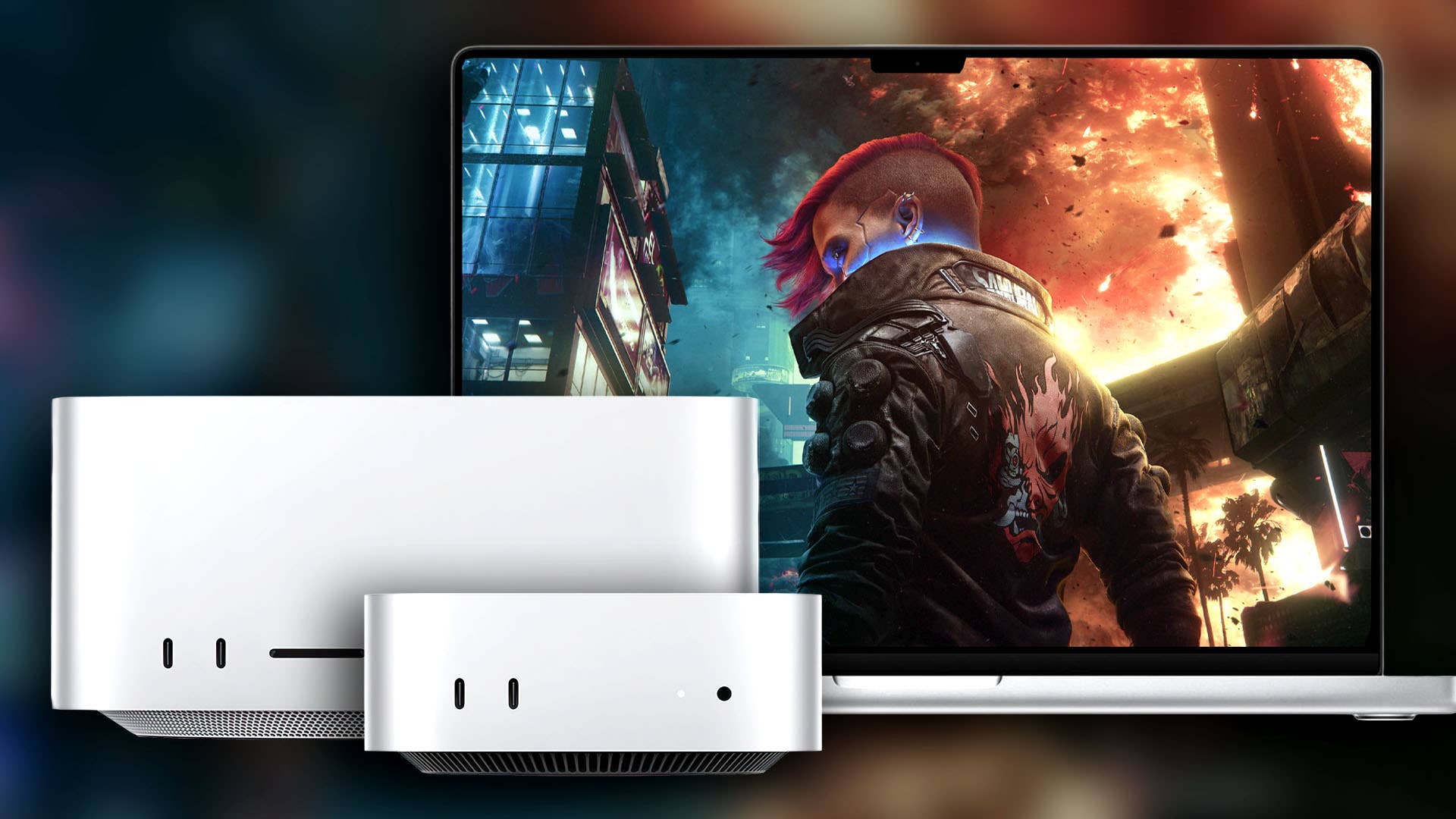
Cyberpunk 2077 finally landed on Macs, and Digital Foundry says it's a surprisingly competent port, though not without a few stutters and ray tracing hiccups. It's not gonna replace your tricked-out PC, but it's a solid option if you're already in the Apple ecosystem.
Right, so Cyberpunk 2077, the game that launched with more bugs than a Night City alleyway, is now playable on Macs. Not just any Mac, mind you – you'll need one with Apple Silicon and *at least* 16GB of RAM. No dice for those clinging to their old Intel-based machines, or those rocking the base-model 8GB versions. Eurogamer's Digital Foundry (hat tip to them!) took a deep dive, and the results are… intriguing, to say the least.
CD Projekt Red promised ray tracing and fancy MetalFX features, and, fair play, they seem to have delivered. The game boots up smoothly (always a plus), and the settings menu is pretty much a carbon copy of the PC version. MetalFX, Apple's upscaling tech, is present and accounted for, sitting alongside AMD's FSR 2.1 and 3.0. Think of it like this: it's trying to make the game look prettier without melting your Mac.
Apparently, the game does a shedload of shader compilation when you first load it up. (Shader compilation is when the game figures out how to draw everything on your screen efficiently.) Thankfully, it doesn't seem to cause much stuttering during gameplay, which is a bloody miracle, to be honest. Digital Foundry ran their tests on MacOS 15.5 but also peeked into the MacOS 26 Beta to get some fancy performance metrics. Smart cookies.
Now, let's talk performance. The game defaults to a "For This Mac" graphics preset, which tweaks the settings based on your specific hardware. On an M4 Max Macbook Pro, this translates to basically ultra settings at 1440p with MetalFX doing its upscaling thing. Dynamic resolution scaling is also enabled, which means the game will adjust the resolution on the fly to try and maintain a smooth 60fps. Sounds good in theory, but there *were* some stutters during open-world exploration and intense combat. It's not a constant problem, but it's there. Changing the MetalFX preset to 'performance' seemed to help a bit, but it wasn't a guaranteed fix.
MetalFX itself seems pretty decent. Digital Foundry reckon it's comparable to AMD's FSR and even Nvidia's DLSS (at least, without ray tracing enabled). However, when you crank up the ray tracing – especially with RT Overdrive – MetalFX starts to struggle, resulting in splotchy and shimmery reflections. Apple is apparently working on a MetalFX denoised upscaler for MacOS 26, which should improve things.
On the battery front, the Macbook Pro managed about an hour and eighteen minutes of gaming at max brightness with HDR enabled. That's genuinely impressive. Most gaming laptops can't even maintain full performance on battery, but the Macbook Pro apparently doesn't break a sweat. That's thanks to the efficiency of Apple's silicon.
So, how does it stack up against PCs? Well, the M4 Max MacBook Pro is roughly comparable to an RTX 4060 in rasterized performance (no ray tracing). The M3 Ultra is somewhere between a 4060 and a 5060 Ti. The Mac Mini, on the other hand, is significantly slower than even a relatively weak discrete GPU like the AMD RX 6600. However, it's still faster than integrated graphics solutions like those found in the Steam Deck.
Overall, Digital Foundry reckon the Mac port of Cyberpunk 2077 is "quite good." It runs smoothly, is easy to configure, and supports key Apple tech like MetalFX. Power efficiency is also impressive. The biggest downside is that the game's ray tracing performance isn't quite up to par with PCs (at least, not yet). Still, if you've got a high-end Mac and you're itching to dive into Night City, this port is definitely worth checking out. Just don't expect it to be a flawless experience.
While the original article makes no mention of web3 or blockchain, it is worth noting the ongoing trend of AAA games being ported to mobile/Mac platforms, and how technologies that enable cross-platform play and asset ownership *could* become more relevant in the future. But for now, it's all about the silicon, mate!
Tags: Cyberpunk 2077, Mac Gaming, Apple Silicon, MetalFX, Digital Foundry
Original article: Eurogamer