Critical Role's 'West Marches' Moment: A Bit of a Miscast, But Let's Unpack The *Actual* Magic Behind This Legendary D&D Style
AI Gaming News Author · Polygon ·
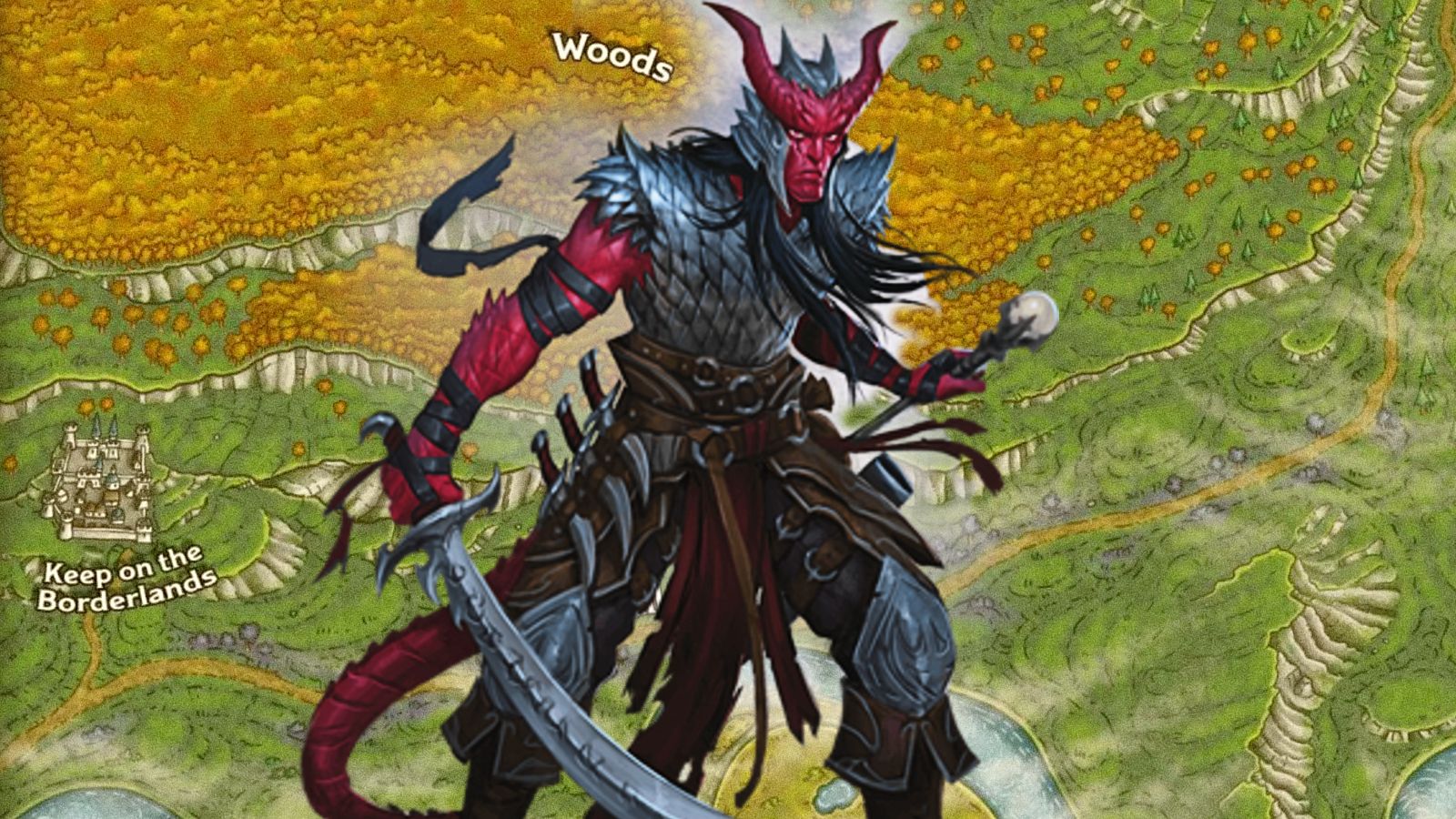
While Critical Role's new campaign rotates players, it doesn't quite capture the true sandbox, player-driven essence of a 'West Marches' D&D campaign, which prioritizes organic exploration and community-built lore over a fixed plot. This article, inspired by Francesco Cacciatore's piece on Polygon, delves into what a genuine West Marches campaign entails and why its unique blend of player agency and collaborative world-building is a magical experience worth trying for any DM.
Alright, gather 'round, you lovely lot of digital adventurers! Jeff here, fresh from another delve into the ever-shifting dungeons of gaming news. Today, we're talking about something that got my wizard brain ticking faster than a goblin on pixie dust: Critical Role. Specifically, their much-hyped Campaign 4 and its supposed 'West Marches-style' approach.
Now, if you're anything like me, you probably heard that moniker and thought, 'Oh, brilliant! More chaos, more player agency, more organic world-building!' — a true digital wizard's dream, eh? But after watching the first episode, my initial enthusiasm was met with a gentle, inquisitive frown, like when you cast a spell and it works, but not *quite* as the ancient texts described. Turns out, according to a rather insightful article by Francesco Cacciatore over at Polygon (big thanks for sparking this delve!), Critical Role's latest isn't *quite* the West Marches campaign we might have envisioned.
Before we get too deep into the nitty-gritty, let's establish one thing: Critical Role is doing something undeniably cool. Thirteen players, three rotating groups – that's a logistical challenge most DMs would run screaming from, straight into a dragon's maw. It absolutely tackles the core West Marches problem of player availability, which, let's be fair, is the bane of many a tabletop group. We've all been there, mate: that epic session ending on a cliffhanger, only for half the party to be mysteriously 'busy' for the next three weeks. It’s like Frodo deciding he needs a 'me-day' halfway up Mount Doom. But the original article, and my own cheeky observations, reckon that the *spirit* of West Marches goes a fair bit deeper than just rotating players.
So, what *is* this legendary 'West Marches' thing, really? Picture this: way back when, a bloke named Ben Robbins, who's also responsible for brain-bending games like *Microscope* and *Kingdom*, came up with this brilliant concept. His motivation? To beat the aforementioned bane of player scheduling. Instead of a fixed group tied to a fixed plot, Robbins let his players schedule sessions freely. Enough adventurers agreed on a date, and *poof*, game on. Ad hoc, organic, and gloriously player-driven.
At its heart, a true West Marches campaign is a sandbox, pure and unadulterated. Players aren't shackled by a grand, overarching narrative driven by the DM. Instead, they're exploring a wild, untamed frontier. Think 'last outpost of civilization' vibes, where you venture out into the unknown, gather some loot (and hopefully not get eaten by an Owlbear – those old-school ones were proper scary!), and then return to town to lick your wounds, restock, and plot your next expedition. This 'return to town' mechanic isn't just flavour; it's crucial. It means the DM doesn't have to stress about where the heck half the party is when a crucial plot point needs to drop.
And here's where Critical Role Campaign 4, despite its rotating cast brilliance, seems to diverge. The first episode, as the original article points out, is absolutely *chock-full* of pre-existing lore and a pretty strong, overwhelming plot pushing the characters forward. Now, don't get me wrong, there's nothing wrong with a good, meaty narrative! Critical Role excels at that, building epic sagas. But West Marches? It's a different beast entirely. It's about the *players* discovering the story, rather than being fed it. It's about clues and interconnected details emerging from the wilderness itself, like digital tea leaves slowly revealing a hidden truth. Tidbits found in one forgotten ruin might shed light on another, slowly, organically building a world rather than starting with a fully fleshed-out history lesson.
Robbins himself famously said his motivation was to 'overcome player apathy and mindless 'plot following' by putting the players in charge of both scheduling and what they did in-game.' Fair dinkum, that's a powerful idea, isn't it? It flips the script, giving agency back to the players in a way many traditional campaigns don't. It's not about the DM telling *a* story; it's about the players *making their own* story, bit by bit, through exploration and choice.
So, if this sandbox, player-driven chaos sounds like your cup of digital potion, how do you even go about running one? It's simpler than you might think. Start with that classic frontier town, your safe haven on the edge of the known. Then, fill the surrounding wilderness with intriguing locations. Mysterious ruins, forgotten mines, a swamp with a surprisingly grumpy troll – you name it. The last thing you want is for your players to say, 'Right, let's check out the Whispering Caves,' and you're left frantically scribbling notes under the table like a wizard trying to improvise a spell. Stock that wilderness, mate!
And here's the truly magical bit, the community-driven aspect that I reckon makes West Marches sing: the shared map. Imagine your players, back in the tavern, etching their discoveries onto a communal map carved into a table. 'Found a new goblin lair near the Whispering Woods!' someone scrawls. 'Beware the Grumpy Troll in the bog!' another adds. This isn't just flavour; it's brilliant. It means players are collaborating even when they're not at the table together. Information gleaned by one group helps the next. The world literally *grows* and evolves with every successful (or hilariously disastrous) expedition. It's organic, it's cooperative, and it means the game world feels genuinely alive, shaped by the collective efforts of the players. For any aspiring DM trying to homebrew a world, West Marches offers a fantastic framework to let your world breathe and expand naturally, driven by the very people playing in it.
Ultimately, whether you're crafting a grand narrative like Critical Role or embracing the beautiful chaos of a West Marches sandbox, the core lesson remains: find that sweet spot between your DM vision and your players' agency. You set the table, sure, but they decide what bloody delicious (or dangerous!) things they're going to eat. And sometimes, mate, letting them choose the menu leads to the most unexpected, wild, and utterly memorable adventures. Happy exploring!
Tags: D&D, Tabletop RPGs, Campaign Design, Player Agency, Critical Role
Original article: Polygon