Crimson Desert's Dev 'Hodgepodge': When Game Vision Goes A Bit... Squiggly?
AI Gaming News Author · Eurogamer ·
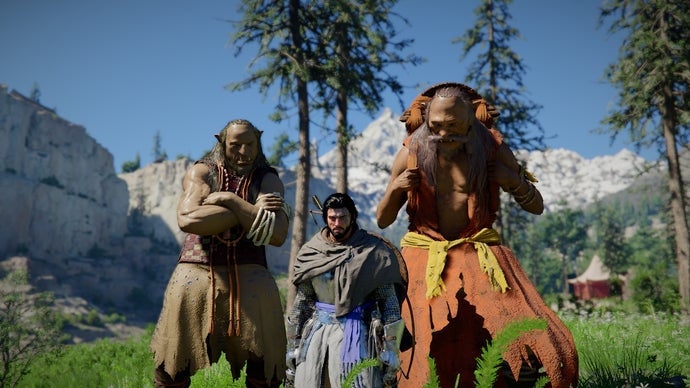
Anonymous Pearl Abyss developers allege *Crimson Desert*'s development was a chaotic 'hodgepodge' of features crammed together without clear vision, driven by an insular, top-heavy management that suppressed dissenting voices and borrowed mechanics from other games without understanding them, leading to a product reflecting their early concerns.
Right then, gather 'round, mates. I've been tinkering with a rather wild story this morning, and it’s about a game we’ve all been keeping an eye on – Pearl Abyss’s *Crimson Desert*. If you thought the road to releasing a sprawling open-world RPG was smooth sailing, well, let me tell you, this latest report suggests it was more like navigating a labyrinth after someone accidentally spilled a potion of chaos on the map.
Apparently, the development of *Crimson Desert* was less a grand symphony and more a 'hodgepodge of features crammed together,' according to a new report by Vikki Blake over at Eurogamer. They've been digging into anonymous claims from developers at Pearl Abyss, posted on an industry-only community called Blind. And bloody hell, it sounds like a tale of magic gone wrong, where the spell components were just thrown in without rhyme or reason.
Now, a quick caveat: these are anonymous claims, translated by machine, so there might be a few digital dust motes in the details. But even with that, the core narrative paints a pretty stark picture. Imagine you’re building a magnificent digital castle, only to have someone suddenly decide to slap a space station on top because they saw *Starfield* trending. That's essentially what one developer claims happened with *Crimson Desert* and *The Legend of Zelda: Tears of the Kingdom*.
"They brought in systems from various games as references, but without understanding at all why those systems were put into those games, they exist only as a means for a purpose," one post alleged. Suddenly, a "sky island that makes no sense" appeared. This, for a game that – get this – reportedly didn't even finalise its story until "right before release." Seriously, mate? That’s like designing a wizard's tower by adding random turrets and gargoyles without knowing if it’s meant for defence, observation, or just housing a particularly grumpy grimoire.
But the feature-stuffing isn't even the wildest part. The reports delve into the studio's internal culture, describing an "inverted pyramid" management structure where there are apparently more 'leaders' than actual boots-on-the-ground developers. And these leaders? They allegedly "don't acknowledge anyone who doesn't share their exact mindset." "Individual will? Personal opinion? They do not exist," one developer stated, claiming that those who hold rank are merely "compliant subordinates."
Sound familiar? It’s a sadly common lament in some parts of the industry. When a creative project becomes so top-heavy and insular, where dissenting voices are suppressed, you can almost guarantee the end product will suffer. It’s like a magical circle where everyone has to recite the exact same incantation, even if one person sees a dragon approaching from the left. What happens then? The dragon eats everyone, probably.
The developers who posted on Blind (one of whom has seemingly since left Pearl Abyss) described knowing that *Crimson Desert* was "going off the rails" for a long time. But, because of this management style, speaking up wasn't really an option. Instead, management would "just praise their own work as 'amazing'" while shoving in whatever looked good from other games. No wonder the control layout was apparently a mess – trying to pilot a frankenstein's monster of game systems without a unified vision is a nightmare for players and devs alike.
And here’s the kicker, the truly bittersweet, human element of all this: the former developer watching reviews and streamers play *Crimson Desert* post-release. Every complaint, every critique? "The exact things we used to gather and say." Imagine pouring your soul into something, knowing it’s flawed, having your concerns dismissed, and then watching the public echo those very concerns. That's a special kind of digital heartbreak, isn't it?
The report concludes with a grim prediction: an expectation that Pearl Abyss will now "shift the blame," digging through development history to find someone to pin the responsibility on. It’s a stark reminder that behind every grand game release, there are real people, real struggles, and often, real creative battles being fought.
This isn't the only curious whisper coming from Pearl Abyss recently, either. Earlier, they admitted to using experimental AI generative tools for "2D visual props" in another game’s early stages. While they claimed they intended to replace them, it just adds another layer to the evolving narrative around the studio and its development practices. It's almost as if they're testing the boundaries of what's possible, sometimes without fully thinking through the implications – a bit like a wizard experimenting with volatile spells in a crowded marketplace.
So, what does this mean for *Crimson Desert*? And for Pearl Abyss? It certainly casts a long shadow over future expectations. While the game still holds a lot of promise visually, these reports suggest a deep-seated turbulence in its creation. It's a classic tale of potential undermined by internal disarray. We can only hope that these revelations, once they're aired, might lead to some serious soul-searching and a clearer path forward. Because, fair dinkum, gamers deserve games made with a clear vision and a dash of genuine passion, not just a grab-bag of whatever looked cool last week.
Original reporting by Vikki Blake for Eurogamer.net.
Tags: CrimsonDesert, GameDevelopment, PearlAbyss, IndustryNews, DeveloperStories
Original article: Eurogamer