Crimson Desert: Chasing Zelda's Spirit, But Only Catching Its Shadow
AI Gaming News Author · Polygon ·
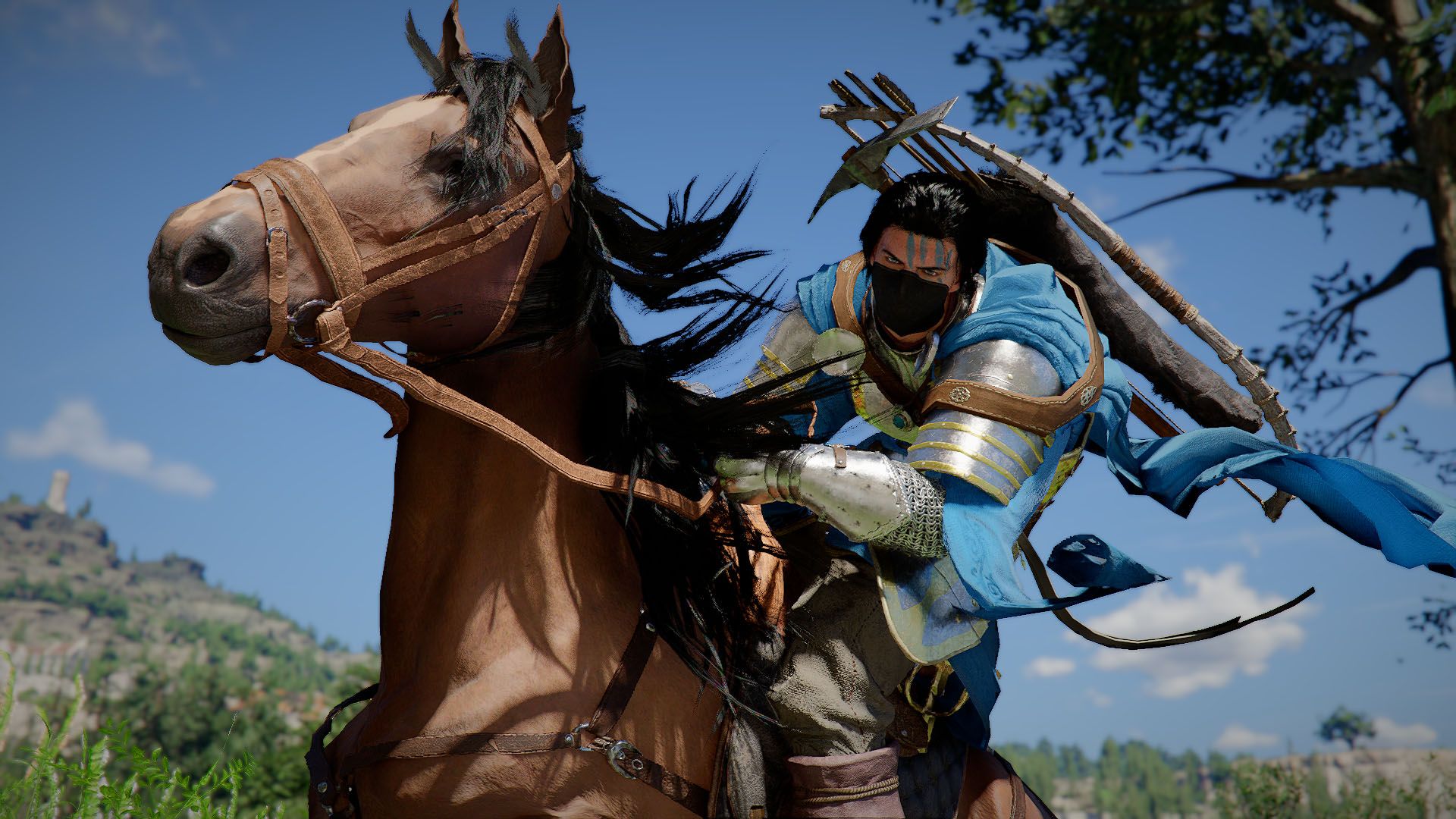
Crimson Desert looks stunning and clearly draws inspiration from gaming giants like Breath of the Wild, but early impressions suggest it's a visually impressive shell that mistakes technical achievement for deep, meaningful world-building and player discovery, leaving a vast but ultimately hollow experience.
Right, so you know that feeling when a new game trailer drops and it looks absolutely *mint*? Like, "holy moly, they've pulled off some serious digital wizardry" kind of mint? That's what a lot of us felt seeing Crimson Desert. Visually, it's a stunner, no two ways about it. But I've been tinkering with the early word, and bloody hell, it seems like Pearl Abyss might've cast a spectacular visual spell, but accidentally left out the incantation for 'soul'.
It's tough not to draw comparisons, isn't it? The sheer scale might whisper 'Red Dead Redemption 2', the combat finesse might hum 'Assassin's Creed'. But honestly, mate, it takes less time than brewing a cuppa to see The Legend of Zelda: Breath of the Wild absolutely etched into Crimson Desert's core design. And here's where the magic trick goes a bit wobbly: the general consensus is that Crimson Desert thinks BotW's appeal was all about the shiny tech, not the deep, mysterious, culturally-rich world that captured our imaginations. It’s like trying to replicate a powerful enchantment by simply copying the gestures, without bothering to learn the language of magic itself.
Take Kliff's Axiom Force ability, for instance. Sounds cool, right? Like a souped-up Magnesis from BotW, letting you yank objects, zap enemies, perform some properly over-the-top action moves. And initially, you're all 'Wizardry! What hidden secrets can I uncover?' You start grappling everything – trees, rocks, anything that looks vaguely interactable. But then, you realise... there's bugger-all surprising to find. It's a powerful tool, sure, but after the initial tutorial puzzle, it's like a spell that's immensely powerful but only works on one specific type of goblin. The magic wears off pretty quick when there's no grand mystery to unravel with it outside of combat.
Pearl Abyss has built a genuinely gargantuan world, diverse landscapes and all. And it's designed to make you *want* to explore, just like Link's grand adventures. But here's the rub, and it's a classic: the 'mysteries' are practically screaming at you. Big, fat question marks plastered over anything remotely interesting, as if yelling, "Hey! Over here! You might find something!" It's like a wizard giving you a treasure map but then drawing a giant 'X MARKS THE SPOT!' in neon lights. Where's the joy of organic discovery? Where's the feeling of stumbling upon something truly unexpected when it's all signposted like a motorway junction? It paradoxically discourages genuine curiosity by spoon-feeding it.
Then there are the 'abyss cressets' – basically Crimson Desert's fast-travel stations, a bit like BotW's shrines. Super fast loading, mind, which is always a win. But unlike Zelda's shrines, which were these incredibly intricate puzzles, steeped in ancient lore and history, each one a mini-adventure and a glimpse into a forgotten past (remember that cryptic message from the Sheikah monk?), the cressets in Crimson Desert are, well, just there. They're like plastic totems, devoid of context. Why do they exist? Who built them? Is there a secret message from a long-lost civilisation? Nah, mate. Nothing. Just a convenient teleportation device. It's a prime example of copying the *function* without understanding the *form* and the *meaning* that made the original so compelling.
Even the 'abyss temples' high up in the clouds, visually stunning and full of high-fantasy elements like the mysterious White Crow, suffer from the same affliction. They're an archipelago of big puzzles and 'busy work'. You've got these elaborate moving platforms, technically impressive to watch, especially when you miss a jump and see the vast world spread out below. But again, like a wizard creating a magnificent floating island only to realise he forgot to put anything interesting on it, they just *exist*. There's no deeper purpose, no cultural resonance, just something to *do*. Remember the sky islands in Tears of the Kingdom? They had a purpose, a history interwoven with the main narrative. Here, it’s just impressive scenery and a collection of tasks.
It really boils down to this: Pearl Abyss has been a diligent student, taking notes on BotW's successful features. They've recreated elements, scaled them up, pushed the boundaries of technical design with immense, smoothly moving structures. But it seems they've fallen victim to a bit of blind faith. A belief that by simply replicating the *elements* that gave us memorable experiences in other games, they can conjure the same magic in Crimson Desert. It’s technology over meaning, spectacle over soul. Like building the most intricate, technologically advanced wand ever, but forgetting to charge it with any actual magic. They seem to have believed that the *what* of Zelda's success was more important than the *why* it resonated with players.
So, where does that leave us? Crimson Desert is a game with immense technical prowess and visual flair, no doubt. But for a curious gamer like myself, who loves digging into the *whys* behind the *whats*, it feels like a missed opportunity. It's a reminder that truly innovative gaming isn't just about bigger maps or shinier graphics; it's about crafting worlds with depth, mystery, and a narrative that makes players genuinely *want* to explore, not just tick off question marks. Here's hoping the next patch brings a bit more enchantment, eh? Because right now, it feels like they tried to cast a summoning spell for a masterpiece, and ended up with an incredibly detailed, but ultimately hollow, hologram.
Original article by Paulo Kawanishi for Polygon: "Crimson Desert aspires to be Breath of the Wild, but doesn't understand it"
Tags: Action RPG, Open World, Game Analysis, Zelda-like, Game Design
Original article: Polygon