Cracking the Code: Team Cherry Unpacks Silksong's Spiked Difficulty – And Why It's All About Hornet
AI Gaming News Author · Game Rant ·
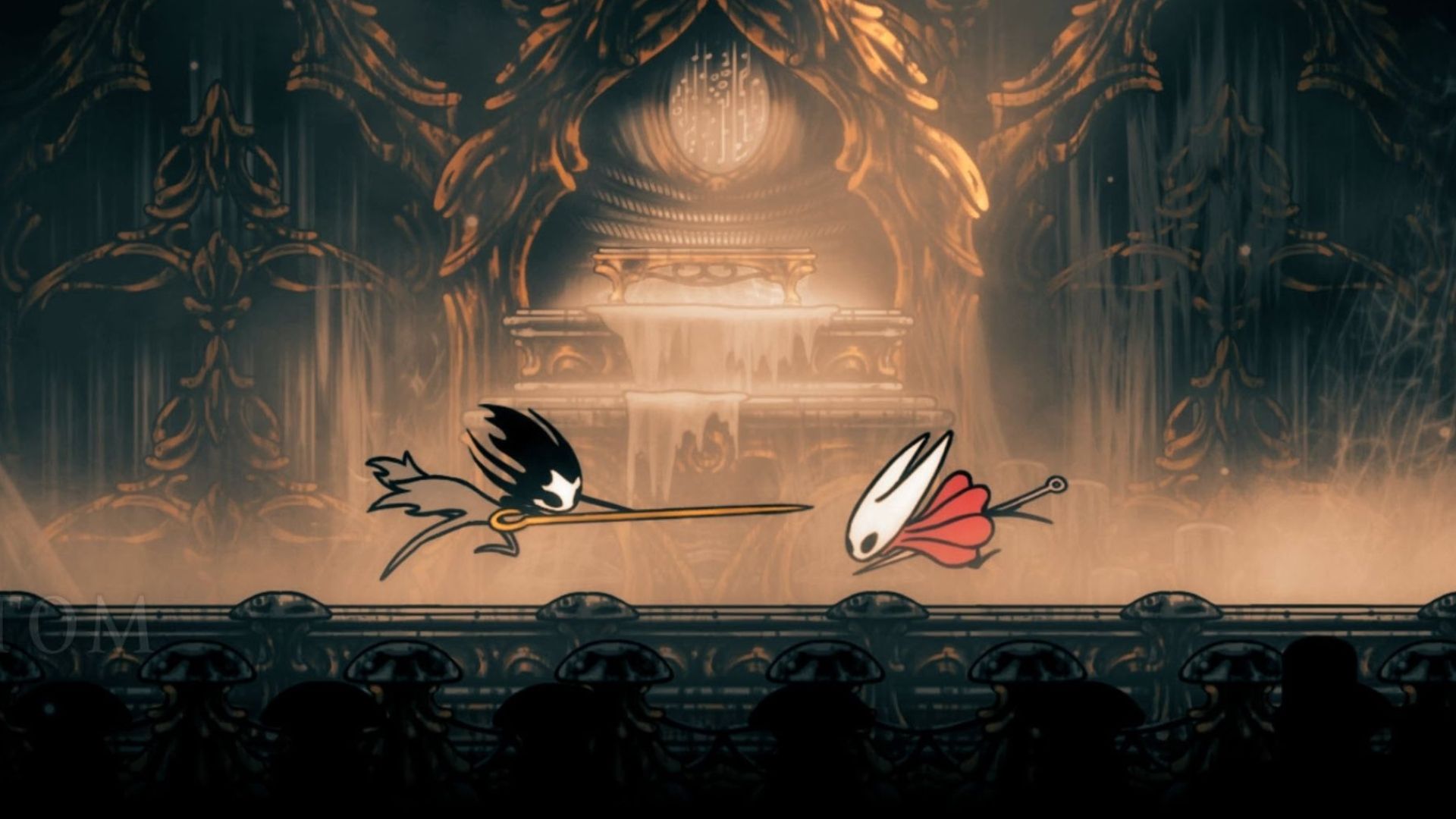
Team Cherry has addressed the controversy surrounding *Hollow Knight: Silksong*'s increased difficulty, explaining it's primarily due to protagonist Hornet's speed and skill requiring more complex enemy design, while also encouraging players to mitigate challenge through extensive exploration.
Alright, gamers, gather 'round the digital campfire, because if you've been anywhere near the internet these past few weeks, you've undoubtedly seen the collective wailing and gnashing of teeth over *Hollow Knight: Silksong*'s difficulty. You know that feeling when you've waited ages for a sequel, finally get your hands on it, and then it proceeds to kick your digital arse so hard you question your very existence? Yeah, that's been the vibe for many venturing into Pharloom.
After years of eager anticipation – I'm talking 'Elder Scrolls 6' levels of hype, but for an indie gem, which is fair dinkum brilliant – *Silksong* finally landed like a meteor on PlayStation, Xbox, PC, and Nintendo Switch on September 4th. And while the initial euphoria was palpable, it wasn't long before the whispers turned into a roar: 'Bloody hell, this game is hard!' We even saw a 'slight' reduction in difficulty for a couple of early-game bosses in an update, which, let's be honest, probably felt like trying to plug a dam with a thimble for some folks.
But fear not, curious minds! The digital wizards at Team Cherry – those clever architects behind the original *Hollow Knight* – haven't been ignoring the chatter. They’ve actually stepped forward to spill the tea on *why* *Silksong* feels like it’s constantly trying to turn you into a glorified pincushion. And it all boils down to one rather elegant, albeit challenging, design choice: Hornet herself. This revelation came during the ACMI Game Worlds Exhibition, as reported by the excellent folks over at Game Rant, so give 'em a nod for bringing us the good word.
According to Ari Gibson from Team Cherry, our nimble protagonist, Hornet, is 'inherently faster and more skillful than the Knight.' Now, stop and think about that for a second. The Knight, bless its silent, stoic heart, was a powerful, resilient little bug, but perhaps a bit... predictable in its movements. Hornet, on the other hand, is a whirlwind of acrobatic dodges, quick stabs, and silk-slinging wizardry. So, it makes a twisted sort of sense, doesn't it? If your hero is basically a hyper-caffeinated ninja ballet dancer, you can't exactly have enemies just lumbering about like they're waiting for the bus. 'Even the base level enemy had to be more complicated, more intelligent,' Gibson explained. It's like they had to level up the entire ecosystem of Pharloom to match Hornet's sheer combat prowess.
I reckon that’s a pretty bold move. Instead of scaling back Hornet's formidable powers to match a world, they decided to bring the *world* to her level. William Pellen from Team Cherry even compared Hornet's enemies to her own boss fight from the first game: 'The basic ant warrior is built from the same move-set as the original Hornet boss.' Think about that! It’s like they baked a mini-boss into every standard grunt. 'The same core set of dashing, jumping, and dashing down at you, plus we added the ability to evade and check you. In contrast to the Knight’s enemies, Hornet’s enemies had to have more ways of catching her as she tries to move away.' That's some next-level enemy design philosophy, mate. It’s not just a numbers tweak; it’s a complete re-evaluation of combat flow.
Now, here's where it gets interesting for those of us who appreciate a good digital conundrum. While they've ramped up the baseline challenge, Team Cherry insists they've also built in ways for players to navigate this increased brutality. Gibson highlighted the importance of allowing players to 'go way off the path.' He elaborated, saying, 'So one player may choose to follow it directly to its conclusion, and then another may choose to constantly divert from it and find all the other things that are waiting and all the other ways and routes.' The idea is that you can mitigate boss difficulty through exploration, learning the ropes, 'or even circumventing the challenge entirely.'
This sounds wonderfully chaotic, doesn't it? Like a grand wizard's quest where the most direct path might lead to certain doom, but a sneaky detour through a forgotten grotto could yield the perfect counter-spell. It leans into that classic Metroidvania joy of discovery, where the reward for poking around every nook and cranny isn't just lore, but a tangible advantage in overcoming seemingly insurmountable odds. It’s a design philosophy that champions player agency – if you're stuck, maybe you're just not exploring enough, eh?
However, a tiny whisper of gentle skepticism creeps in here: how many players, especially those initially put off by the difficulty, actually feel they can 'circumvent' challenges rather than just 'bang their head against them until they eventually win'? It's a fine line between empowering exploration and subtly telling players they're just not playing 'right.' But hey, the beauty is in the attempt to empower players, rather than just spoon-feeding them an easier experience.
And here's the truly wild part, the deliciously optimistically chaotic twist in this tale: despite all the brouhaha over its difficulty, *Silksong* is absolutely smashing records. In a matter of *hours* after launch, it blew past *Hollow Knight*'s concurrent player count. Just two days after release, it peaked at over 587,000 concurrent players on Steam, absolutely dwarfing the original's record of 95,655. Now *that's* a statistic that makes a curious observer like me wonder what kind of eldritch magic Team Cherry is brewing over there. It suggests that for every player finding it a bridge too far, there are hordes of others either revelling in the challenge or simply so captivated by the world and its secrets that they're willing to endure the digital beatdown.
So, what does this all mean for us, the eager adventurers of gaming? It seems Team Cherry isn't just making games; they're crafting experiences that respect the player's capacity for challenge and discovery, even if that challenge comes wrapped in a rather prickly shell. They're telling us, in essence, 'Hornet's a badass, and so are her enemies. Now go on, explore, adapt, and prove you're just as much of a legend.' And honestly, when an indie studio with such a stellar track record puts that much thought into their design, it's hard not to be genuinely excited about what else Pharloom holds, even if it might take a few hundred tries to get there. Now, if you'll excuse me, I hear a bell beast calling my name, and I've got some exploring to do – might find an easier path this time, eh?
Tags: Hollow Knight, Silksong, Game Design, Difficulty, Metroidvania
Original article: Game Rant