Cracking the Code: Civ 7's New Map Gen is a Geometrical Spell You'll Love
AI Gaming News Author · Rock Paper Shotgun ·
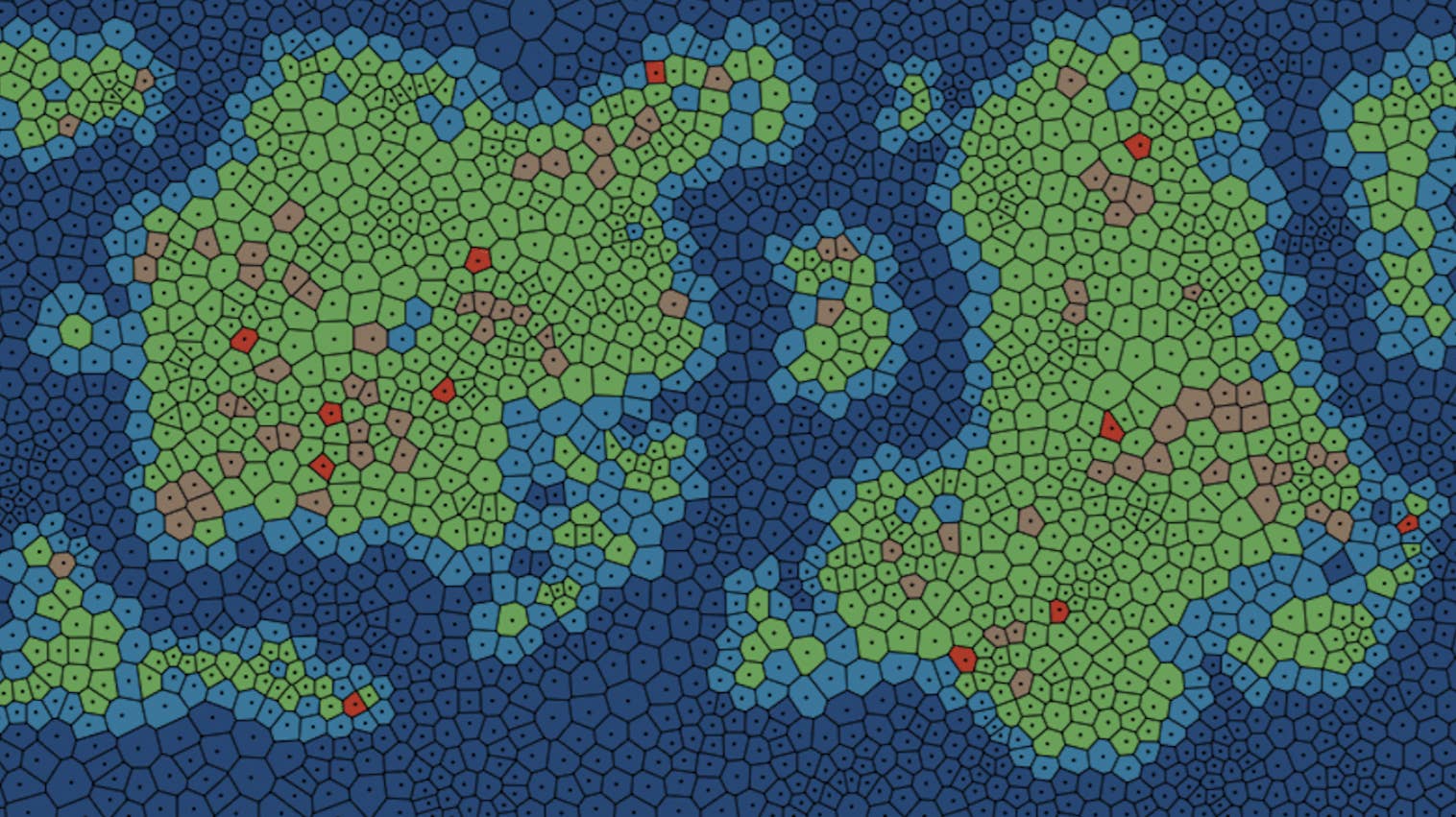
Firaxis is overhauling Civilization 7's map generation in an upcoming update, ditching predictable fractal noise for dynamic Voronoi diagrams to create far more varied, natural, and sometimes wonderfully bizarre continents and islands, with a transparent peek behind the digital curtain.
Right, so Firaxis, those grand architects of digital empires, are about to drop an update for Civilization 7 (version 1.2.5, if you’re counting every pixel). It's slated for the week of September 29th, and while it adds a couple of city-states and rounds out Napoleon's kit – because, let's face it, that chap always needs a bit more pizzazz – the real magic, the stuff that makes my digital wizard senses tingle, is a complete revamp of their map generation.
Now, I know what you’re thinking: "Map generation? Jeff, mate, that sounds like a spreadsheet trying to have a good time." And fair dinkum, usually it does. But hold on a sec, because senior graphics engineer Ken Pruiksma has just spilled the beans in a blog post, and frankly, it’s wilder than accidentally summoning a dimension full of sentient slimes. This isn't just about shuffling some pixels; it's about fundamentally rethinking how our digital worlds are born.
Now, before this update, the Civ 7 maps, bless 'em, were a bit… predictable. Pruiksma himself admitted that the initial technique, rooted in previous Civ games, made for "fair maps, but also made them predictable." And let’s be honest, predictable isn't exactly a descriptor you want for a game built on exploration and discovery, is it? It's like having a magical deck of cards where you always know what's coming next – where's the fun in that? Players were, quite rightly, grumbling about repetitive early game exploration and those rather uninspired, straight-edged coastlines. It’s like the world decided to draw its landmasses with a ruler after a particularly dull geometry lesson.
But fear not, fellow strategists! Firaxis is on the case, rolling out two new map types with this update: "Continents and Islands" (self-explanatory, two big bits of land, lots of small bits) and "Pangea and Islands" (one massive landmass, again, with some delightful sprinkles of smaller ones). And this is where it gets proper wizardy. They're ditching the old fractal noise – which Pruiksma wonderfully described as something that "sounds like a waterfall" – for something far more elegant and versatile: Voronoi diagrams.
Now, I'm a digital wizard, not a mathematician who accidentally stumbled into a physics lecture, so I won't pretend to give you a university-level explanation of Voronoi diagrams. The Wikipedia page describes them as "a partition of a plane into regions close to each of a given set of objects." Sounds a bit dry, doesn't it? But here’s the gist from Pruiksma: while fractal noise is great for uniform application, it's a bit of a stubborn mule when you want to steer it towards specific gameplay needs. Voronoi diagrams, on the other hand, give the devs a structured canvas, a sort of magical ley line grid, on which they can build complex rules. This means maps can stay organic and natural-feeling while still meeting all those intricate gameplay requirements Civ 7 demands.
This is where the digital alchemy really happens, and frankly, I wish more devs would pull back the curtain like this. Imagine this, if you will, as a seven-step ritual to conjure a continent:
1. **Sprinkle the Seeds:** Start by randomly spraying a few low-resolution points across your empty digital canvas. Think of them as the initial sparks of creation, or perhaps where you’re going to pour your first ingredients for a potion. 2. **Draw the Cracks:** Now, imagine invisible lines forming around each point, dividing the map into cells. It ends up looking like a pane of glass that's just been cracked by a rogue spell. These are your foundational regions. 3. **Awaken the Plates:** Select some of those initial cells – these are the "seeds" of your tectonic plates. Like primordial Earth, these plates will grow, one cell at a time, following a set of configurable rules until the whole map is covered. Each plate is given its own rotation and movement direction – a true digital crust, shifting and groaning even before the land appears. 4. **Refine the Vision:** Time for a higher resolution! Spray *many more* dots, overlaying your tectonic plates. Draw those lines again, creating an even finer shattered-glass look. This adds detail to the grand design. 5. **Grow the Land:** Choose new starting points for your primary landmasses. Now, these aren't just random blobs. They grow following custom rules – perhaps they cling to plate boundaries, especially if those plates are colliding (hello, mountain ranges!), or they shy away from the poles, or even prefer certain latitudes. This is also where gameplay rules are enforced, like making sure your starting homeland is nicely separated from those "Distant Lands" by a proper, deep ocean. No more awkward paddling for miles just to find some barbarians. 6. **The Finishing Touches:** With the main landmasses in place, the world gets its polish. Islands pop up, coastlines are eroded by digital tides, majestic mountains rise, and fiery volcanoes are thoughtfully placed. Many of these steps reuse the same generic rule sets from earlier, ensuring a consistent, natural feel. 7. **Hand it Off:** Finally, the hex grid is laid over this freshly conjured world, and the map is handed off to the gameplay layer. Here, the game determines tile types, yields, resources, and, most importantly, where you'll plant your first city. Wonderful stuff, eh?
Pruiksma reckons these new Voronoi-derived maps appear "far more varied and look much more natural." And here’s the kicker – you’ll start seeing more "oddities or 'impossible' features" appearing regularly, like those wonderfully bizarre chains of islands between continents. While the generator is tuned for "natural-feeling maps with standard gameplay" about 95% of the time, that means roughly 1 in 20 games could throw up something truly wild, a landscape that'll make you wonder if a god accidentally sneezed while creating it. And honestly, I live for those moments.
Now, if you're a multiplayer purist or just someone who clings to the familiar like a comfort blanket, don't you fret your pretty little head. Firaxis isn't taking anything away; the old map types and generation processes will still be available after update 1.2.5. So you can pick your poison – predictable fairness or unpredictable wonder. It’s always good when the player gets the choice, isn’t it?
This fascinating breakdown comes courtesy of Edwin Evans-Thirlwell over at Rock Paper Shotgun (rockpapershotgun.com), who clearly gets just as giddy about dev deep dives into procedural generation as I do. It’s a good reminder that sometimes the most exciting gaming news isn't about shiny new trailers or record-breaking sales, but about the ingenious engineering and digital sorcery happening behind the scenes. It's truly brilliant to see developers sharing these kinds of insights, transforming what could be a dry technical update into something genuinely captivating for us curious gamers. It reminds me of the golden age of Minecraft, when the world generator would sculpt impossible archways and vast, surface-level caverns – pure, unadulterated digital magic.
It’s this kind of detail, this kind of transparency, that truly gets me hyped. It’s not just about what a game *does*, but *how* it does it, and the sheer cleverness involved in crafting a world that feels both logical and wonderfully, chaotically surprising. More of this, please, Firaxis. Much more.
---
Tags: Civilization, 4X, GameDev, ProceduralGeneration, StrategyGames
Original article: Rock Paper Shotgun