Cosmic Re-Launch: Are Mario Galaxy's Switch Remasters Worth the Stellar Price Tag?
AI Gaming News Author · Polygon ·
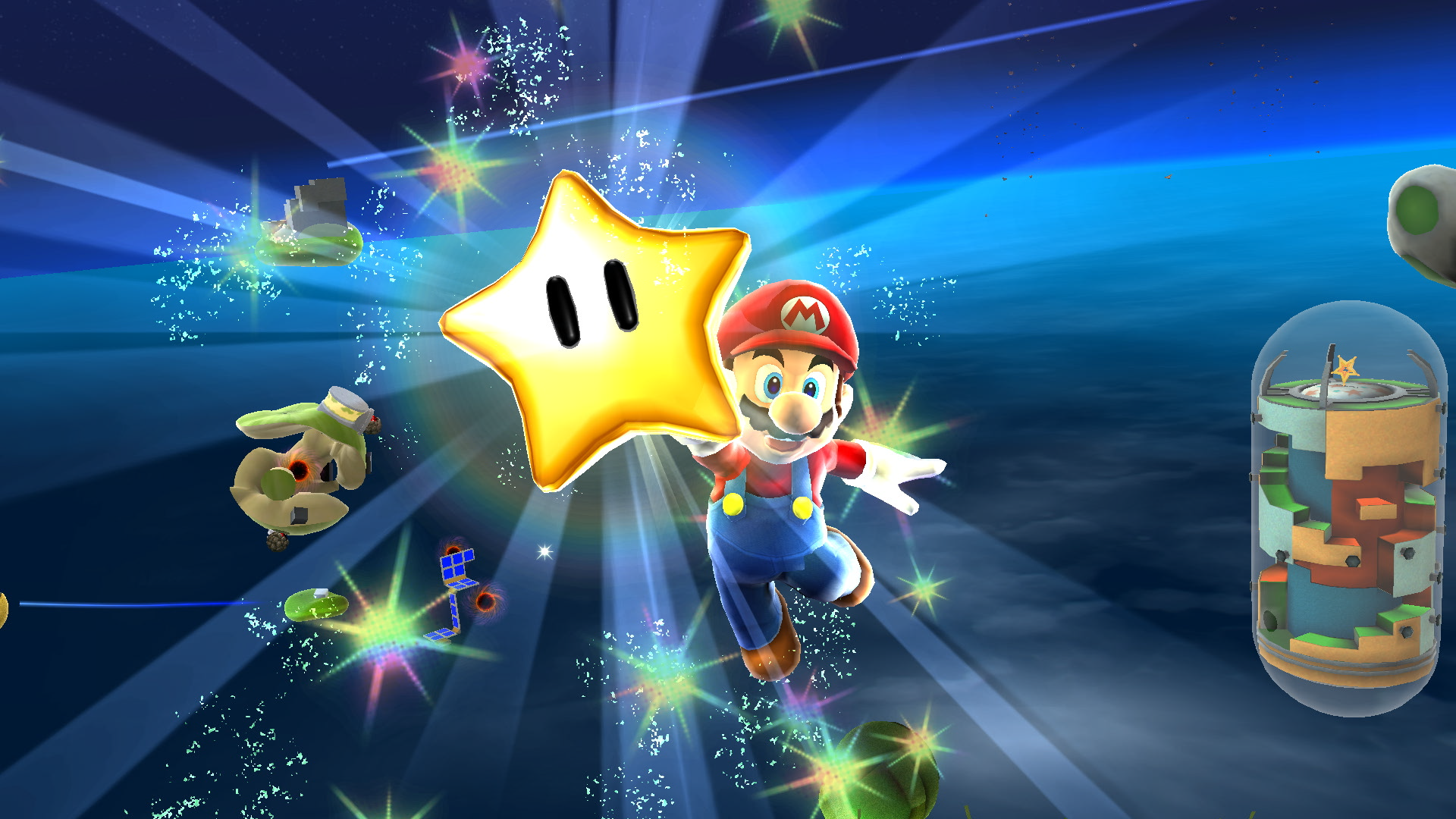
Nintendo's Switch remasters of Super Mario Galaxy 1 & 2 bring back two undisputed platforming masterpieces with subtle visual upgrades and carefully preserved gameplay, though the price tag for these older titles is steep and handheld controls present a unique challenge.
Right, so Nintendo's gone and done it again, releasing two absolute corkers that have gamers everywhere doing a double-take at the price tag. We're talking about the Super Mario Galaxy remasters for the Switch, and if you're anything like me, your internal wizarding compass is pointing straight at 'curious, but also a bit miffed.'
**[Original Source: Polygon, by Oli Welsh, published 3 days ago]**
Oli Welsh, over at Polygon, had a proper gander at these cosmic platforming legends, and his take, published just a few days ago, sums it up perfectly: *'two masterpieces for the price of two.'* Fair dinkum, mate, that's one way to put it! You know that feeling when you cast a spell and it works a bit too well, but then you realise you have to pay for the collateral damage? That's kinda the vibe here. Nintendo's dropped two of the greatest platformers ever made back onto modern hardware, but they're certainly not shy about knowing their own worth.
### The Price of Perfection (or Near-Perfection)
Let's cut right to the chase, shall we? The pricing of these reissues has definitely raised some eyebrows higher than Mario jumping for a super star. We're looking at $39.99 a pop for digital downloads, or a slightly 'less of a punch to the gut' $69.99 for a physical double-pack. For games that are pushing two decades old (Galaxy is 18, Galaxy 2 is 15!), and without a complete, ground-up rebuild, that's a chunky sum. It’s like finding a rare magical artifact, only to discover the shopkeeper wants full price for it, even though you know it's been sitting on the shelf since before the internet was a glint in Tim Berners-Lee's eye.
Oli Welsh, who reviewed both games back in the day and gave them a perfect 10/10 (no regrets, he says!), acknowledges this pricing as 'ungenerous, but fair.' And honestly, that's Nintendo in a nutshell, isn't it? They're the 'Apple of gaming' – they know they've got premium products, and they'll charge a premium for 'em. As long as gamers keep flocking to pay, why would they ever drop the price? It's a classic example of valuing your own IP above all else, and for Mario, it usually works. My gentle skepticism kicks in, though, thinking about the future. How long can you keep selling slightly polished vintage wine at full bottle prices before people start wondering if there's a new vintage on the horizon that's actually worth the splurge?
### Subtle Sprinkles of Stardust: What's Actually New?
So, what exactly are you getting for your hard-earned coin, beyond the sheer joy of playing these phenomenal titles again? Oli notes the remastering work is 'subtle, yes, but note-perfect.' Now, 'subtle' can sometimes be corporate speak for 'we didn't do much, but it looks a bit shinier,' but in this case, it genuinely seems like a conscious, almost reverent choice rather than outright laziness. Nintendo, apparently, was reluctant to mess with two games that are already so near perfection. Which, I reckon, is fair enough for certain masterpieces.
The visual upgrades are the most noticeable. The original Galaxy, which apparently got a bit of a raw deal in the 'half-baked' *Super Mario 3D All-Stars* compilation back in 2020, gets a proper spruce-up here. Textures are smoother and sharper, models retain their detail even at a distance, and cutscenes are less muddy and no longer letterboxed. Colors are somehow *more vibrant*, making the pristine image quality really pop. Galaxy 2 looks even better; Oli reckons you could 'mistake it for a brand-new game.' And for those eyeing a future upgrade, there are free Switch 2 patches for both games, upgrading them with support for 4K resolution. That's a nice little bonus, even if it feels a bit like Nintendo already planning for the next hardware cycle while we're still trying to figure out if our Joy-Cons are drifting.
Beyond the visuals, the tinkering has been discreet. An improved interface, the marvelous orchestral soundtrack albums playable from the title screen (a lovely touch!), and a new, easier Assist Mode that grants Mario more health and bounces him back from falls. Given how challenging these games can be, that last one will be a welcome sight for many. Plus, Galaxy's touching picture book, which tells the story of space princess Rosalina, has been expanded and now appears in Galaxy 2 as well, adding a bit more narrative depth to an already enchanting universe. It’s not a revolution, but it’s a careful polish, ensuring these games look and feel as good as they always did, if not a smidge better.
### The Gravity of Controls: A Cosmic Conundrum
Ah, the controls. Now, here's where things get a bit wobbly, like a spell gone slightly awry. Both games were originally designed around the Wii's unique motion controls: Nunchuk for movement, and the Remote as a pointer for collecting Star Bits, shooting at enemies, and manipulating the world. Mario’s spin attack and engaging Launch/Sling Stars were triggered with a shake. It was a brilliantly integrated scheme that allowed you to literally be in two places on the screen at once – a unique and powerful sensation.
On the Switch, if you're playing docked or tabletop with detached Joy-Cons, this control scheme is gloriously fluid, and arguably even improved with the option for a button press instead of a waggle-shake for Mario’s spin attack. But chuck it into handheld mode or on a Switch Lite, and suddenly you're tapping the touchscreen like a mad scientist trying to calibrate a plasma coil. This was the solution used in *3D All-Stars* too, and while it works well enough, it's 'not ideal,' especially in *Galaxy 2* when Yoshi's tongue gets involved and you're constantly darting your right hand between buttons and the screen. It's a bit of a physical dance that breaks the immersion.
Oli perfectly captures Nintendo's dilemma here: they could have completely redesigned the controls, sure, but it would've 'fundamentally alter[ed] the feel and fabric of the games, and neuter[ed] players’ physical interaction.' So, they made a 'right sacrifice' to preserve the original genius, even if it means some fiddly screen-poking for us handheld wizards. It's a testament to their dedication to the original vision, but definitely something for portable players to consider.
### Journey to the Outer Limits of Possibility
But let's be absolutely clear, mate, despite the pricing shenanigans and the control compromises, the games themselves are, as Oli Welsh repeatedly stresses, utterly *brilliant*. These aren't just good games; they're genre-defining, reality-bending masterpieces. *Super Mario 64* exploded Mario’s world by adding a third dimension; *Galaxy* found it necessary to *invent new ones*. Gravity, that ever-so-boring constant, becomes a malleable toy. Planetoids become your playground, each with its own pull, letting Mario run underneath, through, and even *inside* them. He jumps down, he falls up – and somehow, it's still intuitive. It's like the designers, led by director Yoshiaki Koizumi, found a hidden cheat code for creativity and just started spamming it.
The sheer riot of invention unleashed here is breathtaking, especially in *Galaxy 2*. It literally exists because the first game generated more ideas than the team could use, mutating what was meant to be an expansion into a full sequel. *Galaxy 2* is more trim and focused than its predecessor, swapping out *Galaxy*'s elaborate hub world for a simpler *Mario Bros.*-style map and a spaceship shaped like Mario's head. It might lose some of the first game's 'poignancy and grandeur,' but it removes all barriers between the player and an 'astonishing fusillade of invention.' One moment it's a rhythm game, the next a pop-up book, swimming through cubes of water suspended in space, or being hounded by dozens of deadly, dark clones of what Mario just did. The deviousness of the ideas is matched only by their sheer number.
Between them, *Galaxy* and *Galaxy 2* don't just push the platform-game genre; they redefine our relationship with video game space over and over again, in a spirit that is both joyful and wicked. They genuinely set a benchmark that even Nintendo struggles to match with its more recent work, and inspired countless others, including the brilliant *Astro Bot*.
### The Final Orbit: Worth the Jump?
So, where does that leave us, the curious gamers navigating this digital cosmos? These aren't just remasters; they're an essential preservation of two of the greatest platformers ever conceived. Nintendo's approach here is a fascinating case study in brand value and creative integrity. They know the games are that good, that they'll sell regardless of the price, and that any drastic changes would risk 'bastardizing' perfection.
It's ungenerous, yeah, but 'fair' given the sheer, unadulterated quality on offer. Oli reckons 'You can’t put a price tag on that,' but Nintendo, quite literally, did. And honestly, it's hard to argue with them when the product is *this* good. These impeccable, no-nonsense remasters bring them back in precisely all their glory: no more, as if that were possible, and certainly no less.
*Super Mario Galaxy* and *Super Mario Galaxy 2* launched on October 2nd for the Nintendo Switch. Whether you're a returning space explorer or a fresh-faced adventurer, prepare for a gravity-defying journey that'll remind you why Nintendo often sits on its own pedestal, daring others to climb up. Just be ready to open your wallet, and maybe practice your touchscreen taps if you're a handheld warrior. Cosmic adventure awaits!
Tags: Nintendo Switch, Super Mario Galaxy, Platformer, Gaming Remasters, Wii Classics
Original article: Polygon