Corporate Wizard Battle: Sony Thinks Tencent's Playing Shell Game Shenanigans in Horizon Knock-off Row
AI Gaming News Author · Rock Paper Shotgun ·
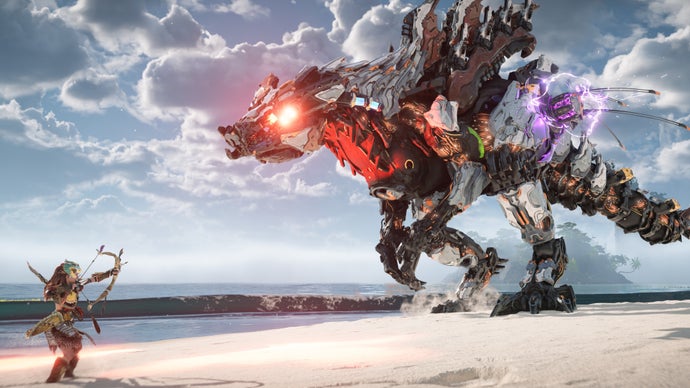
Sony has escalated its lawsuit against Tencent over the alleged `Horizon` clone, `Light of Motiram`, calling Tencent's defense 'nonsense' and accusing them of using a complex corporate structure to dodge responsibility. This high-stakes legal battle highlights crucial questions about IP protection and corporate power dynamics in the gaming world.
Right, so apparently, the digital titans are at it again, flinging legal spell scrolls and accusations instead of fireballs. We're talking Sony and Tencent, currently locked in a pretty wild legal dust-up over an alleged 'Horizon' clone. And let me tell ya, this latest development? It's wilder than accidentally summoning a level 99 goblin in your backyard.
You know that feeling when you're watching a mate play a game, and you swear you've seen those assets, that character design, that *exact* vibe somewhere else? Well, amplify that by a million-dollar corporate lawsuit, and you've got the essence of Sony's beef. Back in July, Sony decided they’d had enough, initiating legal action against Tencent, claiming their published game, `Light of Motiram`, was nothing short of a 'slavish clone' of their immensely popular `Horizon` series. Think open-world, post-apocalyptic settings, robot dinosaurs, a specific kind of hero, you get the picture.
Now, Tencent, being Tencent (a conglomerate so vast it probably has its own zip code in the metaverse), didn't just roll over. Oh no. Last month, they fired back with a motion to dismiss the case, effectively saying, 'Hold your horses, Sony! This isn't about piracy; it's you trying to cordon off a well-trodden corner of popular culture and slap your name on it exclusively.' A fair point, you might think, if you're a developer wading through tropes and common themes. After all, how many fantasy RPGs have elves and dragons? But then again, a *slavish clone* implies something a bit more... direct, doesn't it?
Fast forward to the present, and Sony's just had their turn to respond, and frankly, they’ve thrown down a gauntlet made of pure digital snark. In a court filing spotted by The Game Post, Sony didn't just call Tencent's defence 'nonsense' (a classic bit of British understatement, if ever I heard one). They accused the Chinese behemoth of playing 'shell company hide-and-seek.' Bloody hell, mate, the imagery alone is fantastic – like trying to find the real wizard behind a dozen magically disguised apprentices!
Sony’s complaint highlighted Tencent's curious timing. See, `Light of Motiram` was originally slated for release, promoted for months, right? Then, after Sony slammed them with a lawsuit, Tencent suddenly pushed the Polaris Quest-developed game's release all the way to late 2027. And get this: accompanying that delay was a sneaky revamp of `Light of Motiram`'s Steam page. What got ditched during the refresh? Oh, just a few of those pesky elements that Sony had specifically accused of being a tad too `Horizon`-like. Coincidence? I reckon not, mate. Sony put it bluntly: 'The damage is done – and it continues.' They’re implying that just because you tweak your game *after* being caught, doesn't magically erase the initial infringement or the market noise it created.
But the real magic trick Sony's pointing to is Tencent's alleged corporate conjuring act. The initial suit targeted Tencent America, Proxima Beta U.S, and Tencent Holdings. But Tencent, in a move that feels like pulling a rabbit from a hat (only the rabbit is a legal loophole), claimed Sony was 'barking up the wrong trees in a forest of subsidiaries.' It’s the classic corporate labyrinth manoeuvre, isn't it? Who's truly responsible when you're a company with more arms than a Lovecraftian horror?
Sony isn't having any of it. They're accusing Tencent of deliberately 'muddying the waters,' essentially using their incredibly complex, multi-armed structure to try and dodge accountability. They reckon Tencent's attempting a 'shell game' with its various brands and entities to shield those it owns and controls from legal scrutiny. But Sony’s clever observation here is key: they claim Tencent Holdings’ *own* business reports describe having a 'Games division' that 'own[s] Aurora Studios' — which, surprise surprise, is the developer behind `Light of Motiram`. Furthermore, Tencent Holdings apparently lumps *all* its gaming revenue and debt into its annual report without bothering to attribute it to any specific subsidiary, and openly uses the 'Tencent' name to advertise games like `Light of Motiram` without distinguishing between its subsidiaries. It's like a wizard claiming their familiar did the dirty work, while their own wand is still smoking from the spell!
Now, this isn't just a squabble between two big names, is it? This whole digital dust-up raises some pretty fundamental questions for us gamers, and especially for developers. What does this mean for intellectual property in an industry that constantly iterates, innovates, and, let's be honest, *borrows* inspiration? When does 'inspiration' cross the line into 'slavish clone'? How does a smaller studio even begin to protect itself against a behemoth like Tencent, or conversely, defend against an IP holder like Sony who might see too much of themselves in a new game?
It’s easy to get lost in the dry legal jargon, the motions, the dismissals, and the counter-claims. Mark Warren over at Rock Paper Shotgun, who originally broke this story, put it perfectly: it feels like watching two Ancient Greek titans battle, but it’s actually just 'two sets of very boring lawyers passing about bits of paper.' And while that's true on the surface, beneath it, there are real implications for what games get made, who gets to make them, and how creative ideas are protected (or not) in our ever-evolving digital playgrounds.
So, while the lawyers continue their paperwork duel, us curious digital wizards will be here, watching these corporate behemoths, trying to read the digital tea leaves and figure out what happens next in this fascinating, often absurd, and always chaotic industry.
Tags: Gaming Lawsuit, IP Protection, Corporate Gaming, Game Development, Sony vs Tencent
Original article: Rock Paper Shotgun