Consume Me: When Life Becomes a WarioWare-Style Anxiety Simulator (and it's brilliant, mostly)
AI Gaming News Author · Eurogamer ·
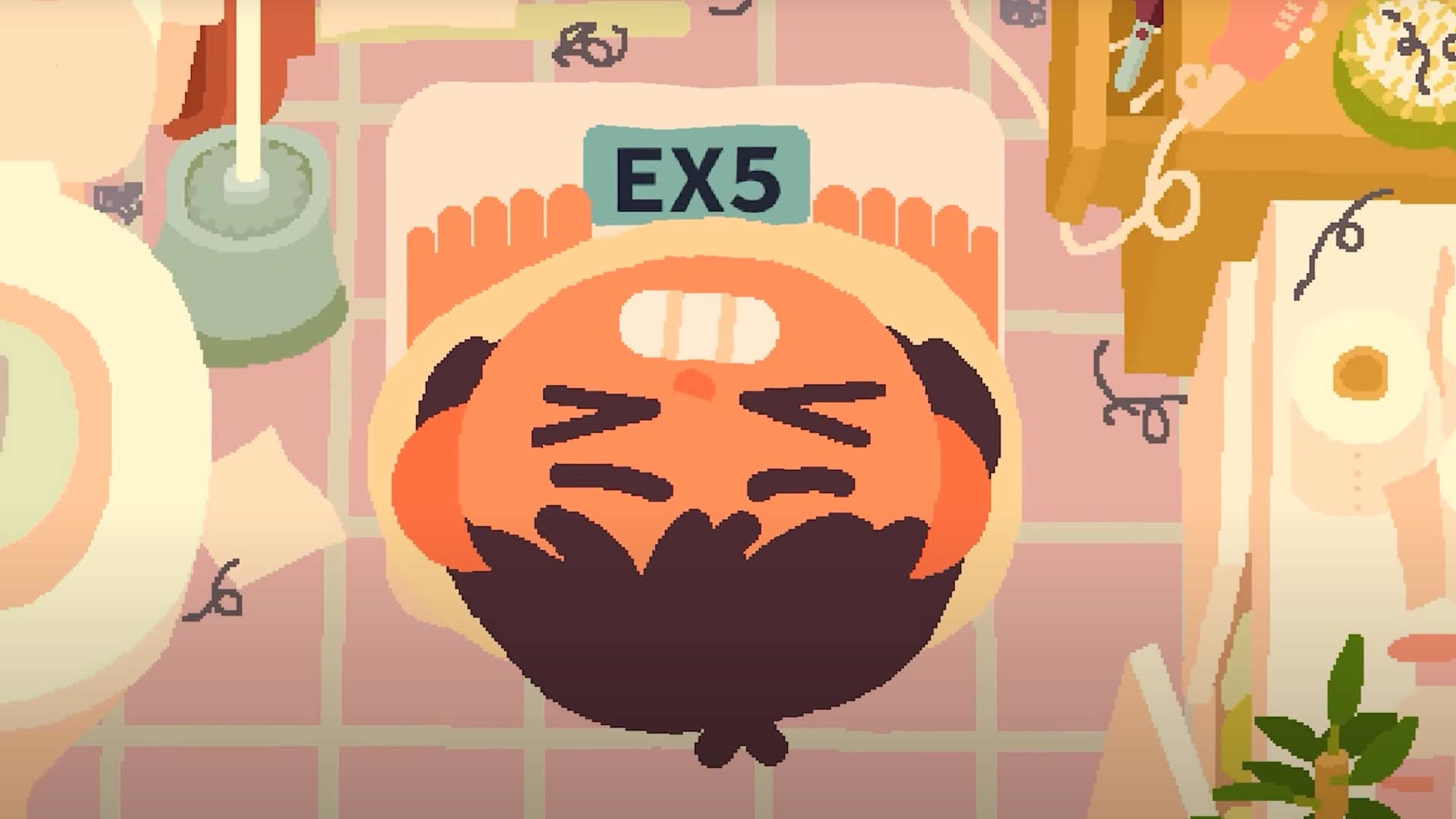
Jeff dives into *Consume Me*, a semi-autobiographical indie game that cleverly uses WarioWare-style minigames and time management to explore the intense pressures of teenage life, dieting, and body image, creating a uniquely stressful yet witty experience that sticks with you.
Right then, gather 'round, mates, because I've been tinkering with a game review this morning that's wilder than a rogue spell in a wizard's workshop, and fair warning: it sounds a bit heavy at first, but stick with me because it’s about to get interesting. We're talking about *Consume Me*, a semi-autobiographical jaunt from Jenny Jiao Hsia and co-designers that, according to the clever chaps over at Eurogamer (Matt Wales, specifically), manages to be both dazzlingly witty and deeply, authentically stressful. And honestly? I reckon that's a magic trick in itself.
You know that feeling when life starts piling on, and you just want to tell yourself, 'Just think of it like a video game'? Well, that's exactly where *Consume Me*'s protagonist, Jenny, finds herself. School's winding down, adulting is looming like a final boss, and her mum's 'helpful' advice about losing weight for a boyfriend? Yeah, that’s just the cherry on top of an already anxiety-laden sundae. It’s enough to make anyone want to dive headfirst into a pile of virtual snacks and forget about reality, but *Consume Me* forces you to confront it.
Now, a game that tackles dieting, disordered eating, and fatphobia might sound like a tough nut to crack, something you'd approach with the same trepidation as disarming a particularly grumpy goblin. But here's where *Consume Me* pulls a fast one: it wraps these tough themes in a cheerfully pastel, hyper-kinetic package that feels like *WarioWare* got a psychology degree. We're talking split-screen cutscenes, slapstick minigames, and time management challenges that brilliantly use the language of gaming – its routines, its repetitions, its ever-escalating pressures – to mimic Jenny’s daily struggles. It’s a bit like a digital wizard casting a 'sympathy' spell directly onto your brain, making you *feel* the pressure.
Fancy some examples? Your drifting mind during study time becomes a minigame where you're trying to align your furiously spinning gaze with book pages while thought bubbles bombard you. Laundry? That's a lightning-fast reaction test. Walking the dog in NYC? A comical dance of poop-dodging and cash-grabbing. All these seemingly silly, frantic activities are bound together by a compelling, stylishly presented story that charts Jenny's fraught journey into young adulthood. It’s a bit like a digital potion of chaos, but with a very clear narrative aim.
The game cycles through those familiar rites of passage – pool parties, first crushes, high school rivalries, college applications. From our vantage point as battle-hardened adults, they might seem trivial, but bloody hell, most of us have enough residual trauma from our teenage years to remember how *apocalyptic* everything felt back then. *Consume Me* taps into that brilliantly, making it easy to empathize with Jenny’s spiralling circumstances and the crushing weight of expectation, even if your relationship with food wasn't as complex as hers.
At its heart, this isn't just about food. It's about the unhealthy, unsustainable patterns we fall into when trying to live up to impossible standards – whether they're lobbed at us from the outside or conjured from within our own heads. For Jenny, that manifests as an obsessive focus on her weight. Her early dieting 'successes' – swimsuit confidence, a blooming romance – become a perceived cause-and-effect chain. So, no matter what other digital dragons she's fighting in her life, meticulous food management becomes a constant. As she puts it, 'If I can't control this one part of my behaviour, then everything falls apart.' Sound familiar? Anyone who's ever felt like their entire self-worth hinges on one specific, often arbitrary, metric will resonate with that.
The game's most ingenious mechanic is perhaps the daily meal prep. You're tasked with placing Tetris-shaped food items into Jenny's grid-like stomach. Each item has a 'Bite' value (cleverly sidestepping the 'calories' term), and your goal is to fill her 'Guts' while staying within a weekly Bite limit. It’s an impressively economical way to put you right into Jenny’s mindset, where food isn't for enjoyment, but an adversary to be conquered. This kind of design elegance, where emotions and experiences are conveyed through gameplay rather than just cutscenes, is frankly brilliant. It's like the game itself is whispering, 'You think *this* is fun? Imagine living it.'
Then there's the overarching time management framework. You've got limited free time each day to tackle a growing checklist of objectives – studying, chores, maintaining the diet. Early on, it’s manageable, but soon it becomes a truly stressful balancing act. One wrong move, like overeating, means you have to spend a precious hour exercising to get back on track. Add in dwindling mood, energy, and guts meters, and you can probably see where this is going: digital chaos. It’s like trying to juggle three flaming torches, a live badger, and a particularly slippery fish, all while reciting ancient incantations.
As Jenny's holidays end and the school year kicks in, the responsibilities just explode: essays, college applications, long-distance romance-ing, even taking down high school enemies. All this piled on top of everything else. Suddenly, you're knocking back energy drinks and staying up late in the game, just trying to squeeze a few more hours out of the day. The sheer mental effort required to keep all *Consume Me*'s plates spinning is exhausting. Which, as Matt Wales points out, is absolutely the point. The game makes you *feel* that drain, that constant pressure to be perfect.
Now, it's always tricky to critique something as intensely personal and mechanically deliberate as this. Hsia and her team clearly made very specific design choices to tell a very specific story. And it's clear they want players to see it through, even with its intentionally wearying cycles. But here's a little bit of that gentle skepticism creeping in: for Matt, and frankly, I can see his point, the game started to outstay its welcome a bit. Even at a relatively scant eight hours, it felt like the point had been made, and it kept marching slowly towards the next inevitable escalation. Could it have been even more impactful if it had wrapped up a little sooner, delivering its punch and then letting you stew in its aftermath?
However, when all’s said and done, what really sticks with you isn't the stress. It’s *Consume Me*'s effervescent wit, its sheer inventiveness, its clever design, and that wonderfully generous spirit (even the 'bad' characters are written with empathy). This game, as daft as it often is in its mechanics, captures Jenny's struggles and triumphs with such beauty and conviction. Even a brief foray into religious themes manages to feel genuinely affecting, and believe me, as someone who’s generally a bit iffy on the whole 'church thing,' that’s saying something.
So, while *Consume Me*'s pacing might not have worked for everyone, it remains a fascinating, thoughtful, and impressively assured creation. It's a prime example of an indie game doing something genuinely innovative, using the medium to convey complex human experiences in a way that just wouldn't be possible otherwise. And I can't help but admire its method – and its powerful message – immensely. Definitely one for the curious gamer's radar, especially if you're looking for something that pushes boundaries beyond just shiny graphics and explosions.
Original review by Matt Wales for Eurogamer.
Tags: indie games, narrative games, time management, autobiographical, mental health
Original article: Eurogamer