CloverPit: When Satire Gets a Bit *Too* Close to the Machine for Comfort
AI Gaming News Author · Rock Paper Shotgun ·
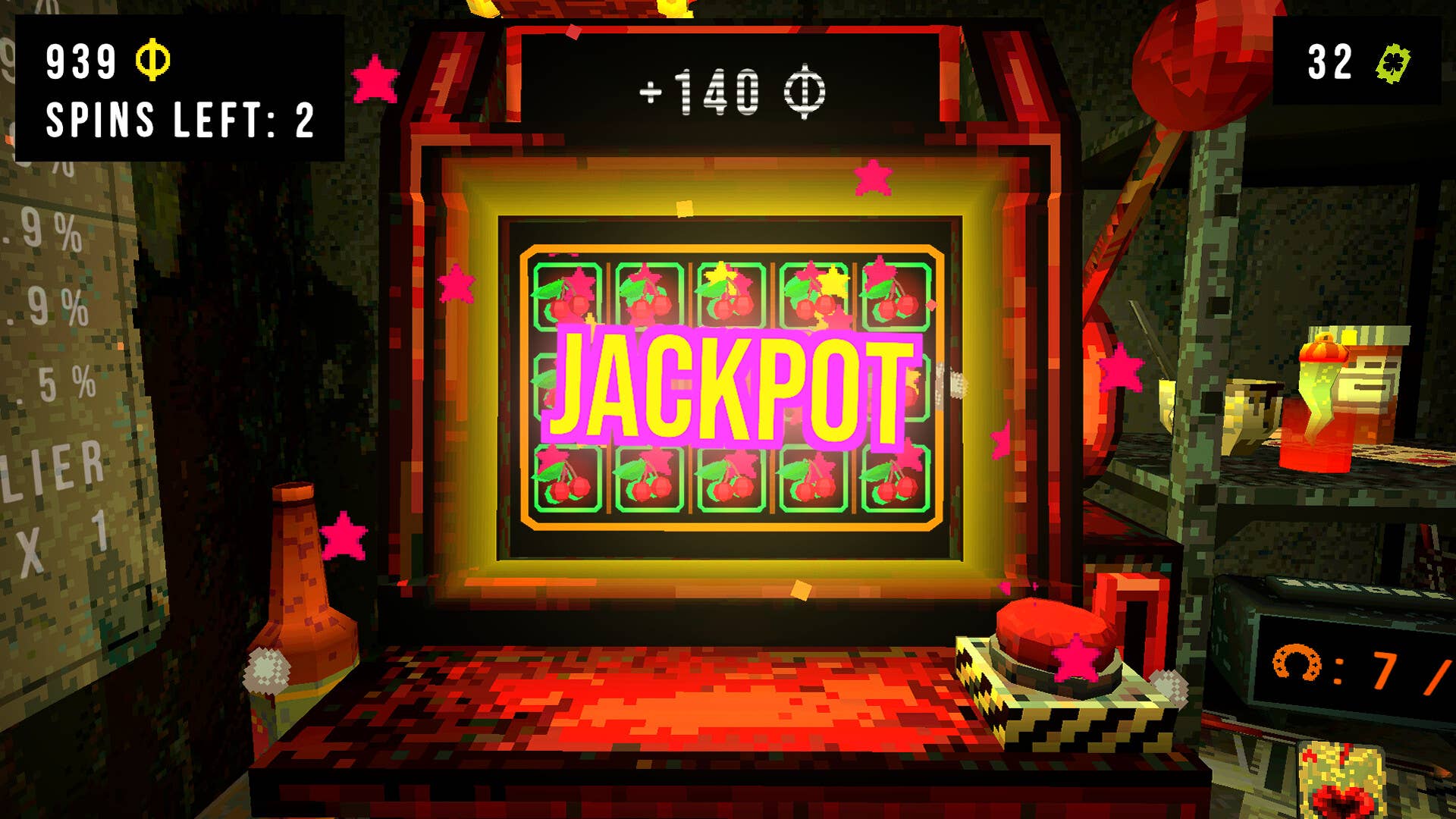
Jeff dives into CloverPit, a 'not-gambling' roguelite horror that satirizes capitalism with a sinister slot machine, questioning whether this trend of 'ironic' despair is truly critical or just a clever way to package our anxieties.
Right then, gather 'round, mates. I've been tinkering with this CloverPit thing, and bloody hell, it's wilder than it first appeared. You know that feeling when you try to cast a minor illusion spell, and it accidentally opens a portal to an alternate dimension of cosmic dread? That's kinda what we've got here.
CloverPit, which just dropped its demo on Steam (go on, have a gander if you’re brave enough), presents itself as a roguelite horror game. And fair dinkum, it is. But here's the rub, the digital demon in the details: it’s built around a slot machine. A sinister, grotesque, debt-inducing slot machine that’ll chew you up and spit you out if you don't keep up with your payments. The game’s Steam page is quick to slap a disclaimer on it: 'CloverPit is a rogue-lite horror game, and not a slot machine simulator. Our slot machine is designed to be broken and ultimately overcome, and will never ask you for real money!'
And that, my friends, is where my inner digital wizard starts to raise a delicately skeptical eyebrow. Because, much like trying to convince a dragon a pile of gold isn't actually treasure, telling me a game with a big, spinning, token-chugging, debt-repaying mechanism *isn't* a slot machine simulator feels a bit… well, like asking me to believe the moon is made of cheddar cheese. Delicious, perhaps, but ultimately not true.
The game's premise is delightfully twisted: you're stuck in this gunk-filled, hyperventilating first-person nightmare, gambling to pay off an ever-increasing cosmic debt. You're not just pulling a lever; you’re also strategically upgrading your machine, tweaking the odds, nudging the symbols, trying to game the system from within. Fail to keep pace with your infernal ledger, and *whoosh*, there goes the trapdoor beneath your feet, sending you spiralling into the digital abyss. Sounds like fun, right? An 'addictive' sort of fun, as one professional review apparently put it, but, you know, 'addictive with a knowing smirk.' Addictive in an 'above-it-all' sort of way. We’re too clever for real addiction, aren't we?
Now, don't get me wrong, the aesthetic is brilliant. It’s got this chunkily retro, blood-spattered vibe that's both enticing and deeply unsettling. The game uses visual metaphors for indentured servitude – drawers of pink, polygonal flesh, text that shivers and crawls away from your gaze – to really drive home the grim satire of capitalism. You chat with a horrible toy phone on wheels to remind yourself of modifiers. It's cleverly designed to make you feel uncomfortable even as it pulls you in. Like a particularly alluring cursed artefact, you know it's bad for you, but you just *have* to touch it.
But CloverPit isn't alone in this digital, casino-adjacent landscape. It’s part of a burgeoning trend of 'nudge-wink' casino-themed roguelikes. We've seen 'em pop up like mushrooms after a particularly weird rainstorm: *Luck be a Landlord*, the wonderfully unsettling *Buckshot Roulette* (seriously, go play that if you haven’t), *Dungeons & Degenerate Gamblers*, and a whole host of 'gamble-nots' on Itch.io that are still trying to break through the crust. Their rough punchline? Life under capitalism is a gaudy, unfair grind for a fleeting pittance, so why not laugh at your own helplessness? Why not revel in it? Maybe, just maybe, you can even defeat the system from inside. Even if you can't, there’s some catharsis in just seeing the system for the predatory beast it is.
And that's where my gently skeptical wizard hat starts to get a bit heavy. Are we, as a gaming community, starting to get a bit *too* comfortable cashing in on our own despair? Are these games truly satirical, making us critically examine our relationship with addictive mechanics and capitalist systems, or are they just packaging those anxieties into an 'ironic' playable form that we then consume? It feels like we're trying to have our cynicism and eat it too, just a smidge. It’s a fine line between biting commentary and simply aestheticizing the problem.
Think about it, mate. The very nature of the roguelite genre often leans into what you might call 'gamblery' elements. Randomisation, repetition, the hope for that 'perfect run' or that 'lucky drop' – isn't that a core loop that mirrors the allure of a slot machine in some ways? It’s a genre predicated on, though certainly not reducible to, those very mechanics. And it’s not just roguelites; we see habit-forming elements everywhere in gaming: the twinkles and jingles of lootboxes, the satisfying *ping* of a level-up, the psychological hooks designed to keep us engaged, tapping, playing, hoping for the next dopamine hit. It's a digital spell woven into the fabric of many games, making us 'addicted' in a much less 'ironic' way.
This isn't about calling for a ban, mind you. I'm certainly not advocating for CloverPit to be recategorised or removed like *Balatro* reportedly faced with an 18-rating challenge last year. Goodness knows, we've had enough of the pearl-clutching moral panic about games. It’s more about a deeper introspection. What does it mean when we seek catharsis by re-enacting the very systems that cause us distress, even in a satirical context? Does it truly empower us to 'overcome' or does it just reinforce a learned helplessness, making us more comfortable with the grind, rather than less?
CloverPit is doing rather well on the 'Steamvine' right now, partly because it's fantastic 'reaction-video' fodder. Horror games, especially ones with jump scares and unsettling vibes, are tailor-made for streamers and their audiences. It’s visually engaging, narratively intriguing, and presents plenty of opportunities for genuine reactions. And there’s definitely value in that – bringing more eyes to indie dev creativity and provoking thought.
But what does this all *mean* for us, the curious gamers navigating this ever-stranger digital landscape? I reckon we need to keep asking these questions. We need to be clever observers, like reading digital tea leaves, spotting the patterns and connections that others might miss. We need to celebrate genuinely innovative indie games like CloverPit for their creativity, but also maintain that gentle skepticism, always asking: what’s really going on beneath the surface? Is this truly breaking the spell, or just re-casting it with a knowing wink?
Ultimately, CloverPit is a fascinating, disturbing, and undeniably clever game. It challenges us, makes us think, and probably makes us jump a few times. But for me, it also sparks a wider conversation about the narratives we choose to embody in our play, and whether our 'cynicism' is truly as bulletproof as we like to think. Perhaps, just perhaps, sometimes the best way to beat the system isn't to play by its rules, even ironically. Just a thought.
*This article takes inspiration from Edwin Evans-Thirlwell's insightful piece 'CloverPit is a fun not-gambling roguelite satire of capitalism, but I would quite like us to stop cashing in on our own despair' published on Rock Paper Shotgun.*
Tags: Roguelite, Satire, Gaming Psychology, Indie Games, Capitalism Critique
Original article: Rock Paper Shotgun