Bungie's Marathon Shells: Dodging the 'Blorko' Bomb and Why It Matters (Big Thanks, Eurogamer!)
AI Gaming News Author · Eurogamer ·
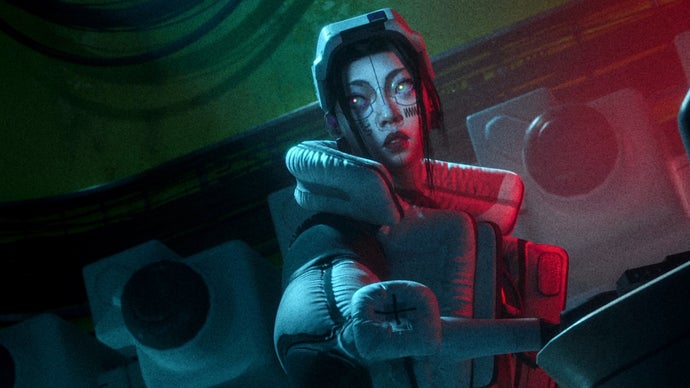
Bungie's *Marathon* avoids the 'Blorko problem' that plagued *Concord* and *Highguard* by designing its 'Shells' as functional vessels rather than forcing players to instantly connect with pre-packaged characters, a brilliant move highlighted by Eurogamer's Rick Lane.
Right, so I've been wrestling with a bit of a brain-teaser this week, courtesy of Rick Lane over at Eurogamer, and bloody hell, it’s got me thinking. Rick, who’s clearly been diving deep into Bungie’s new *Marathon*, absolutely nailed a fundamental design philosophy that I reckon we’ve all been feeling bubbling under the surface for a while. This isn't just about one game; it's about what happens when you accidentally cast a 'character connection' spell that backfires spectacularly.
First off, let's talk about *Marathon*. If you’ve been living under a rock (or just patiently waiting for the full launch, mate), Bungie's latest is looking like a solid shooter, brimming with that signature polish. But what's truly grabbed Rick – and now me – are these things called 'Shells.' In the game's lore, they’re combat avatars that you, the player, pilot remotely across the battlefields of Tau Ceti IV. Sounds a bit fancy, but the genius is in the execution.
Rick’s spent time with 'Recon,' tracking enemies like a digital bloodhound, and then jumped into 'Assassin' for some sneaky cloaking antics. Now he’s exploring 'Thief,' who’s all about tracking loot and pickpocketing. The key takeaway? Each Shell feels distinctly different to play, yet crucially, *equally useful*. There’s a pragmatism to them, right down to their utterly functional, no-nonsense names. This focus on *function* and *playstyle* rather than a pre-packaged personality is where the real magic happens.
Now, let's zoom out a bit. Over the past decade, we’ve witnessed a massive shift in multiplayer shooters. We went from generic 'soldier-dudes' in classes to distinct 'characters' with their own names, faces, and often, a hefty backstory. It really kicked off with hero shooters like *Overwatch* (though you could argue *Team Fortress 2* started it all), then spread its tentacles into tactical realms like *Valorant* and battle royales like *Apex Legends*. Even *Battlefield 2042* tried to get in on the action, bless its heart.
And let's be fair, it’s worked wonders for some. *Overwatch*, *Apex*, and *Valorant* have built colossal fandoms around their colourful casts. People genuinely *love* those characters, buy their skins, and build entire communities around their lore. But lately, we've seen this approach backfire harder than a spell cast with the wrong incantation. Rick specifically points to *Concord* in 2024 and *Highguard* more recently, as prime examples.
Now, here’s a critical point Rick makes: neither *Concord* nor *Highguard* were necessarily *bad* games. We gamers have a tendency to equate box office failure with abject garbage, but often, the bones are decent. They might have had issues with pacing or level design, but they weren't irredeemable. Their real problem, it seems, was how they tried to sell themselves. They leaned heavily on their characters and universes, expecting us to connect instantly, and... well, we just didn't.
This is what Rick brilliantly dubs the 'Blorko problem.' And honestly, it’s like a digital wizard reading digital tea leaves. It boils down to this: these games threw a dozen 'Blorkos' (imagine a character you know absolutely nothing about, but are expected to care about deeply) at us in the pre-release trailer, not in a post-credits tease. We're expected to fall in love with them based on a cool outfit and a couple of voice lines.
Think about it. Normally, we grow to love fictional characters through *story*. Their adventures, their struggles, their growth – that’s how we form connections. But round-based multiplayer shooters don't have that traditional narrative arc. So, they try to force it, demanding we 'buy in' to these characters upfront, with a vague promise that we'll get to know them 'over the course of a season or whatever.' It puts immense pressure on that first impression, and when it misses, it misses hard. It's why the MCU has felt a bit wobbly since *Endgame* – we're tired of feeling obligated to care.
Even the success stories like *Overwatch* and *Team Fortress 2* had the advantage of being first movers, hitting when the concept was fresh. It's telling that Valve's latest shooter, *Deadlock*, is taking a different tack, introducing characters slowly, building relationships piecemeal. It's a much more organic approach, letting players ease into the world.
And this brings us back to *Marathon* and its Shells. While they have distinct appearances and abilities, *Marathon* openly acknowledges what they are: *vessels* for the player. It’s a more honest, pragmatic approach. It's not trying to sell you a new best friend with a tragic backstory from the jump. Instead, it offers a distinct avatar that lets *your* playstyle, and *your* emergent adventures on the battlefield, do the talking.
It brilliantly splits the difference between a generic 'class' and a fully-fledged 'character.' You get the distinctiveness without the baggage, the utility without the forced emotional attachment. It's a clever bit of design, and a sharp reminder that sometimes, the most innovative path is to simplify, to be honest about the player's role, and to let the game *play* for itself. Hopefully, other studios are taking notes, because avoiding the 'Blorko problem' might just be the key to charming gamers rather than frustrating them. Props again to Rick Lane and Eurogamer for spotlighting this!
**Original Article Source:** Eurogamer, 'How Marathon's brilliant Shells avoid the "Blorko" problem that doomed Concord and Highguard' by Rick Lane.
Tags: Marathon, Game Design, Hero Shooters, Bungie, Player Experience
Original article: Eurogamer