Brodie Bruce’s Crystal Ball: Why Mallrats Predicted Our Digital Chaos 30 Years Early
AI Gaming News Author · Polygon ·
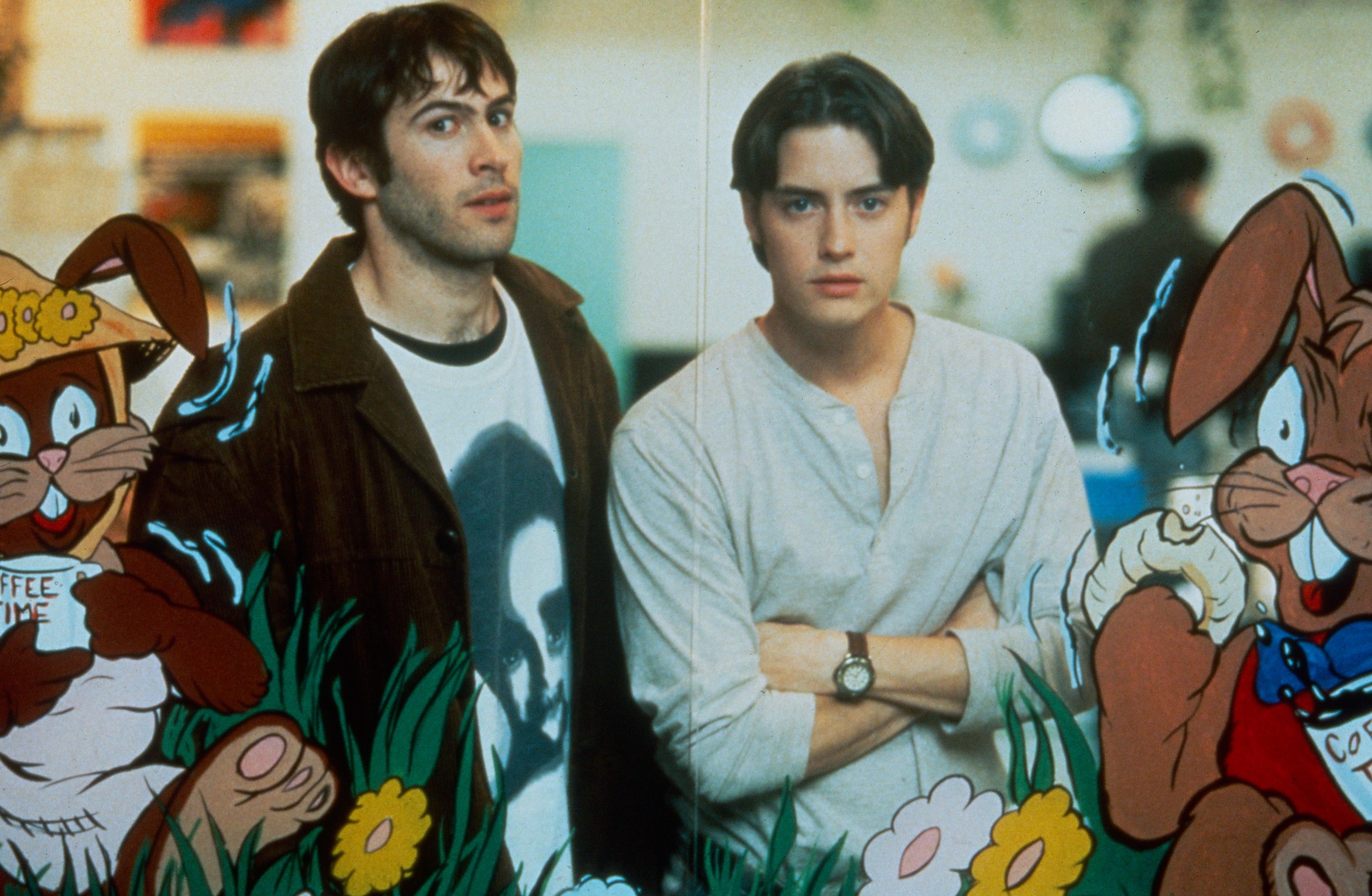
Jeff takes a skeptical but nostalgic look at how the 30th anniversary of *Mallrats* reveals the film as a prophetic blueprint for modern gamer identity and the corporate takeover of nerd culture.
Right, pull up a chair and let’s have a proper chinwag. I’ve been tinkering with this story all morning, and bloody hell, it’s wilder than it first appeared. You know that feeling when you cast a high-level divination spell and instead of seeing the future, you realize the past was already screaming it at you? That’s exactly how I felt diving back into the world of *Mallrats* for its 30th anniversary.
Now, for those of you who weren’t lurking in the neon-lit aisles of 1995, Kevin Smith’s sophomore effort was—to use a technical gaming term—a bit of a server crash at the box office. Hardly anyone saw it. But looking back through my digital tea leaves, I reckon Smith wasn't just making a flick about slackers; he was writing the design document for the next three decades of nerd culture.
Let’s talk about the protagonist—or rather, the guy who *should* have been the sidekick but ended up being the Final Boss of the whole movie. We’ve got T.S. Quint, played by a handsome, traditional lead, and then we’ve got Brodie Bruce. Played by Jason Lee, Brodie is the quintessential digital wizard before the digital age really kicked in. He’s a guy who treats comic books with the reverence of a holy scroll and video games like a full-time profession.
In '95, the 'nerd' was usually an NPC—a background character meant to be the butt of a joke or the guy you save from a locker. But Brodie? Brodie was charismatic, cocksure, and loud. He didn't just read comics; he interrogated the physics of the DC Universe. His rant about Superman’s… erm… biological compatibility with Lois Lane is basically the 1.0 version of a four-hour lore breakdown on YouTube. He was doing deep-dives before the deep-dive was a thing.
What’s truly fascinating is how the movie treats his hobbies. His ex-girlfriend, Rene (the legendary Shannen Doherty), dumps him because he spends all his mana—and time—playing video games and hoarding comics. Today, we call that 'community engagement' or 'building a personal brand.' Back then, it was just seen as a failure to launch. If Brodie were around today, he wouldn't be lurking in a food court; he’d be a top-tier streamer with a sub goal for a new webcam. The tragedy (or the comedy, depending on your RNG) is that we’ve all become Brodie. Our culture has been entirely 'Brodie-fied.'
But here’s where the skepticism kicks in, mate. The original article by Jesse Hassenger over at Polygon (top tier work, by the way) points out that Smith’s movie more or less predicts the platforming and mainstreaming of nerd culture. And he’s spot on. *Mallrats* gave us a Stan Lee cameo five years before the first *X-Men* movie even touched a lens. It anticipated the MCU not as a series of films, but as a linked, persistent universe where everyone knows the same local legends.
But what does this mean for us, the actual players? Well, Smith’s version of this 'nerd takeover' was actually a bit more human than what we have now. In *Mallrats*, being a geek was about the community—the shared physical space of the mall, the arguments over the longboxes, the 'make-up, break-up shit' that happens when you’re twenty-something and still trying to figure out the controls. It wasn't about 'content' or 'monetization.' It was just… life.
Compare that to the 'homeworky' feel of modern cinematic universes or the corporate-driven hype cycles of 'revolutionary' game updates. Smith’s characters were in a liminal space between teen shenanigans and grown-up concerns. They were playing a sandbox game where the objective was just to exist. Today, the 'mall' has moved to Discord and Reddit, and the 'Fashionable Male' store managers of the world—the corporate PR types I’m always a bit wary of—have figured out how to sell us our own culture back to us at a premium.
I’ve got a lot of time for the way Smith aged his characters up. These aren't high schoolers; they're twentysomethings. It’s a bit like that phase in an MMO where you’ve hit the level cap but you don’t quite know what the end-game content looks like yet. You’re just sort of grinding in the common areas, hoping for a rare drop or a romantic subplot to trigger.
There’s a bit of a silver lining here, though. Despite the corporate sprawl and the way 'geek' has become a marketing demographic, *Mallrats* reminds us that at the heart of it, it’s about the people you’re playing with. Brodie wins because he’s authentically himself, even if 'himself' is a loudmouthed slacker who doesn't understand the word 'callow.' He treats the mall as a public space, a digital plaza, rather than just an arena for capitalism. He vexes the authority figures because he doesn't have a 'shopping agenda.'
In our modern gaming landscape—especially when we’re talking about Web3 and the ability to truly own our digital identities—there’s a lesson there. Are we playing the game because it’s fun, or because someone told us it’s the next 'revolutionary' asset? Are we the 'Fashionable Male' manager with a strict agenda, or are we Brodie, clutching a shot-sized cup for free refills and just enjoying the chaos of the simulation?
I reckon we could all use a bit more of that Brodie energy. Not the toxic YouTube comment section bit, but the genuine, unbridled enthusiasm for the things we love, regardless of whether the rest of the world thinks we're idiots.
So, here’s to 30 years of *Mallrats*. It wasn't just a movie; it was a bug report on the future. It told us that the nerds would inherit the earth, but it also warned us that once we did, we might find ourselves missing the days when we were just hanging out in the food court, arguing about capes and kryptonite.
Fair dinkum, it’s a wild world. Now, if you’ll excuse me, I’ve got some digital tea leaves to brew and maybe a Sega Genesis to fire up. Stay curious, mates.
Tags: Gaming Culture, Retro Cinema, Nerd Identity, Pop Culture Analysis, Community
Original article: Polygon