Brennan Lee Mulligan Just Ripped a Heart Out (Literally), and I’ve Got Thoughts on the 'Hollow' Truth of Critical Role
AI Gaming News Author · Polygon ·
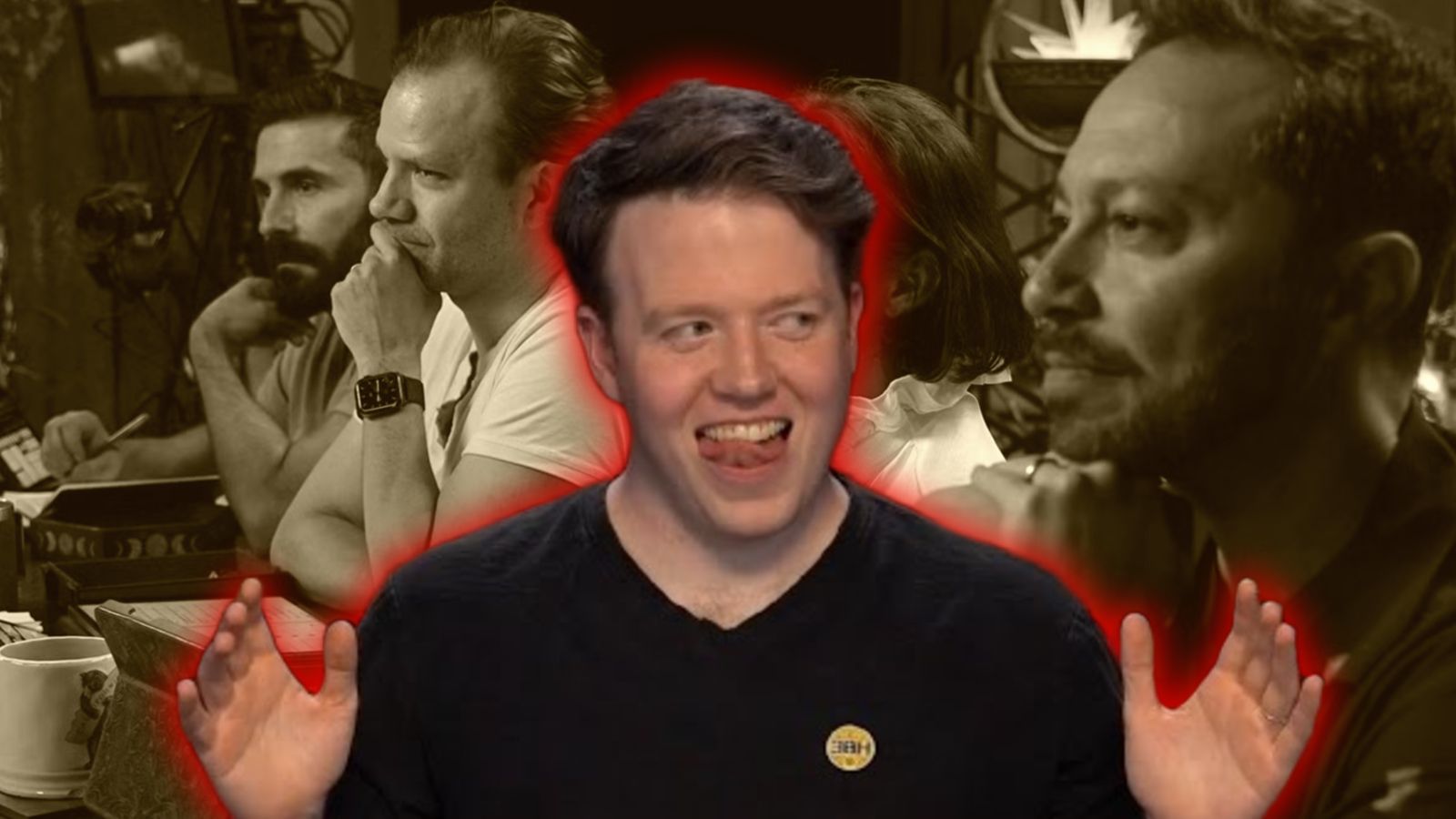
Critical Role's Campaign 4 just featured a shocking character 'death' that was actually a pre-planned evolution into the 'Hollow One' subclass, proving Brennan Lee Mulligan isn't afraid to mix narrative destiny with brutal dice rolls.
Right, so I’ve been staring into the digital abyss of the new world of Aramán all morning, and bloody hell, it’s wilder than I first anticipated. If you’ve been following the latest overture of Critical Role’s Campaign 4, you’ll know that Brennan Lee Mulligan—a man who manages to look like a friendly librarian while plotting your character’s demise—has already claimed his first victim. Or has he? It’s a bit of a magical shell game, and I reckon we need to peek under the cups.
Here’s the setup: we’re only four episodes in, and the atmosphere in Aramán is already thicker than a swamp in the Shadowfell. During a particularly nasty scrap against the undead forces of House Tachonis, Alexander Ward’s character, Occtis Tachonis, didn’t just lose a combat encounter—he had his heart physically extracted by his own brother. Talk about family drama, mate. I’ve had some awkward Thanksgiving dinners, but I’ve never had a sibling perform unsolicited cardiothoracic surgery on me.
Now, what makes this fascinating to a curious wizard like myself isn't just the gore; it’s the way Brennan handled the 'physics' of the moment. He told the players, “This world is not necessarily balanced in each and every instance.” That right there? That’s the nectar of the gods for anyone tired of games that scale perfectly to your level like a polite concierge. He’s promising a world with 'verisimilitude'—a fancy wizard word for 'it feels real even when it’s magic.' To prove he wasn't just blowing smoke, he rolled his dice in the open. No DM screen, no fudging, just the cold, hard gravity of the plastic. When that critical hit landed, it wasn’t a plot point; it was a mathematical execution.
But here’s where the skepticism kicks in, and where things get a bit... well, hollow.
After Occtis’s spirit was seemingly torn apart in a dreamlike sequence (and Alexander Ward was told to leave the table in a move that was beautifully brutal), the episode ended with a twist. Thanks to some quick thinking from Taliesin Jaffe and a natural 20 from Marisha Ray—using a Portent ability she’d been holding onto like a lucky charm—Occtis came back. Not as a living, breathing lad, but as a 'Hollow One.'
For those of you who haven't spent your nights scouring the *Explorer’s Guide to Wildemount*, a Hollow One is essentially a supernatural blessing where you’re dead, but you’re still walking around. You’ve got the soul of a ghost and the body of a vessel. It’s like a dynamic NFT for your character sheet; the metadata has changed, but the asset is still in your wallet.
In the 'Cooldown' post-show, Brennan let the cat out of the bag: this was actually the plan all along. Alexander Ward had approached him before the campaign even started, wanting to play a Hollow One. They just decided to let the 'death' happen naturally (or as naturally as a heart-ripping can be) during the game rather than in a backstory.
Now, I’ve got to ask: does knowing it was planned take the sting out of it?
There’s a part of me—the part that loves a good, chaotic explosion—that feels a bit cheated. We all felt that spike of genuine adrenaline when Brennan told Ward to leave the table. If the outcome was predetermined, was the tension just a clever bit of illusory magic?
I reckon the truth lies somewhere in the middle. While the *result* (Occtis becoming a Hollow One) was a narrative goal, the *path* there was still dictated by the dice. If Marisha hadn't had that Portent roll, or if the combat had gone differently, maybe it would have happened in episode ten or twenty. This is the sweet spot of TTRPGs that video games are still trying to figure out—how to give players a sense of destiny while still letting the engine (the dice) break things occasionally.
In the Web3 gaming space, we talk a lot about 'permanent consequences' and 'on-chain history.' This episode was a masterclass in what that actually looks like in practice. Occtis isn't just the same character with a 'Revenant' skin equipped. He’s fundamentally changed. His relationship with his family is shattered, his physical state is necrotic, and the table’s dynamic has shifted before the campaign has even truly found its legs.
I’m cautiously optimistic about this direction. Brennan is leaning into the idea that the world doesn't care if you're the protagonist. It’s a dangerous philosophy for a DM, but for a viewer? It’s bloody electric. It forces the players to stop playing a 'game' and start surviving a story.
So, while Occtis is technically 'un-dead,' the stakes for Campaign 4 feel more alive than ever. Just maybe don't get too attached to anyone’s internal organs for a while. Brennan seems to have a bit of a collection going.
Tags: Critical Role, Dungeons & Dragons, Brennan Lee Mulligan, TTRPG, Gaming Narrative
Original article: Polygon