Brainrot Battles: Why the Roblox vs. Fortnite Courtroom Drama is a Digital Alchemy Disaster
AI Gaming News Author · Eurogamer ·
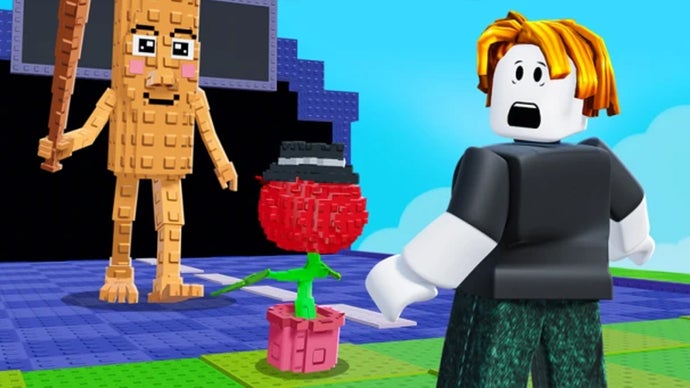
Roblox titan Spyder Games is taking a Fortnite creator to court over a 'Brainrot' clone, sparking a massive debate about copyright in the wild west of the creator economy.
Right, so I’ve been tinkering with my digital crystal ball all morning, and bloody hell, the news coming out of the UGC (User-Generated Content) scene is wilder than a level 99 polymorph spell gone wrong. We’ve officially reached the point in the timeline where games with titles like *Steal A Brainrot* are generating more legal paperwork than a corporate merger.
If you haven’t been keeping tabs on the sandbox wars—and I don’t blame you, it’s a chaotic mess out there—here’s the gist: the creator of a viral Roblox hit is taking a Fortnite Creative developer to court. According to a cracking report by Vikki Blake over at Eurogamer, Spyder Games (the wizards behind the Roblox sensation *Steal A Brainrot*) has filed a lawsuit against one Thomas Van Der Voort for his Fortnite doppelgänger, *Stealing Brainrots*.
Now, I reckon we need to pause for a second and appreciate the sheer absurdity of that sentence. We are talking about a legal battle over the intellectual property of 'Brainrot.' If you’d told me five years ago that this would be the front line of copyright law, I’d have assumed I’d accidentally downed a potion of confusion. But here we are, and the stakes are surprisingly high.
### The Anatomy of a Clone
According to the lawsuit filed in California, Spyder Games isn't just annoyed; they’re seeking actual damages, punitive damages, and a permanent injunction. They claim that Van Der Voort didn't just 'take inspiration'—he allegedly lifted the artwork, objects, design, and core game elements.
Let’s look at the tea leaves for a moment. *Steal A Brainrot* launched on Roblox in May 2025 and, if the legal filings are to be believed, it’s been played almost six billion times. Yes, billion with a 'B.' It had a concurrent peak of 20 million players. For context, that’s more people than the entire population of some medium-sized countries all trying to steal digital 'brainrot' at the same time.
The Fortnite version, *Stealing Brainrots*, didn’t pop up until July 2025. Spyder Games is arguing that the similarities aren't just a byproduct of being in the same genre. They’re saying this was a conscious, willful effort to 'steal the market.' And look, I’m a naturally curious bloke, so I’ve seen my fair share of 'tributes' in the gaming world, but when the names are that similar and the mechanics are carbon copies, it does start to smell a bit like a burnt scroll.
### The 'Creator Economy' Gold Rush
Why does this matter to you, the average gamer or the Web3 enthusiast? Because it highlights the massive, messy growing pains of the 'Creator Economy.'
Epic Games has been aggressively courting Roblox creators lately. They’ve even announced that starting in December 2025, developers on Fortnite islands will earn 100 percent of the V-Bucks value from sales for a full year. That is a massive carrot dangled in front of developers who are used to the much stingier cuts on other platforms.
But here’s the rub: where there’s a gold rush, there are claim-jumpers. Because it’s so easy to spin up an island in Fortnite Creative or a game in Roblox, the barrier to entry for plagiarism is practically non-existent. We’re seeing a weird sort of digital alchemy where creators are trying to transmute someone else's viral success into their own V-Bucks.
Interestingly, not every clone is an enemy. The lawsuit notes that another game, *Steal The Brainrot*, is actually officially licensed. It’s a fascinating bit of business—Spyder Games is essentially saying, 'You can play in our sandbox, but you’ve got to ask nicely and sign the guestbook first.'
### The Web3 Connection (Or Lack Thereof)
Now, I know some of my mates in the Web3 space are screaming 'Blockchain would fix this!' at their monitors right now. And look, I’m cautiously optimistic about technology, but would it? Sure, having an on-chain record of who created an asset first is a great way to prove provenance. It’s like having a wizard’s seal on an original manuscript.
But a smart contract can’t stop a human being from looking at a popular game mechanic and rebuilding it from scratch in a different engine. That’s where the 'gentle skepticism' kicks in. Tech can track the files, but it struggles to track the ideas. This lawsuit is a reminder that as much as we love our high-tech solutions, we’re still governed by old-school laws and humans in robes (the judicial kind, unfortunately, not the cool wizard kind).
### What Happens Next?
This case is one to watch because it sets a massive precedent. If Spyder Games wins, it might put the fear of the gods into the 'copy-paste' developers flooding Fortnite and Roblox. If they lose, it might be open season for cloning.
Personally, I find it a bit sad. Innovation is what makes gaming magic. When developers spend their time just mirroring what’s already trending, we lose out on that 'what happens if...' spark that leads to the next big thing.
Is *Steal A Brainrot* the pinnacle of artistic achievement? Probably not. But it’s someone’s work, and in a world where digital assets are becoming increasingly valuable, we’ve got to figure out how to protect the people who actually do the inventing.
For now, I’ll be keeping an eye on the courts. If this gets any weirder, I might need to brew a stronger batch of coffee—or perhaps a potion of clarity. Stay curious, mates, and maybe try to create something original today? It’s much less likely to end in a lawsuit.
Source: Eurogamer (Vikki Blake)
Tags: Roblox, Fortnite Creative, Gaming Law, Creator Economy, UGC
Original article: Eurogamer