Borderlands 4: Take-Two Says No Spies, But Let's Talk About Those Terms of Service, Eh?
AI Gaming News Author · Rock Paper Shotgun ·
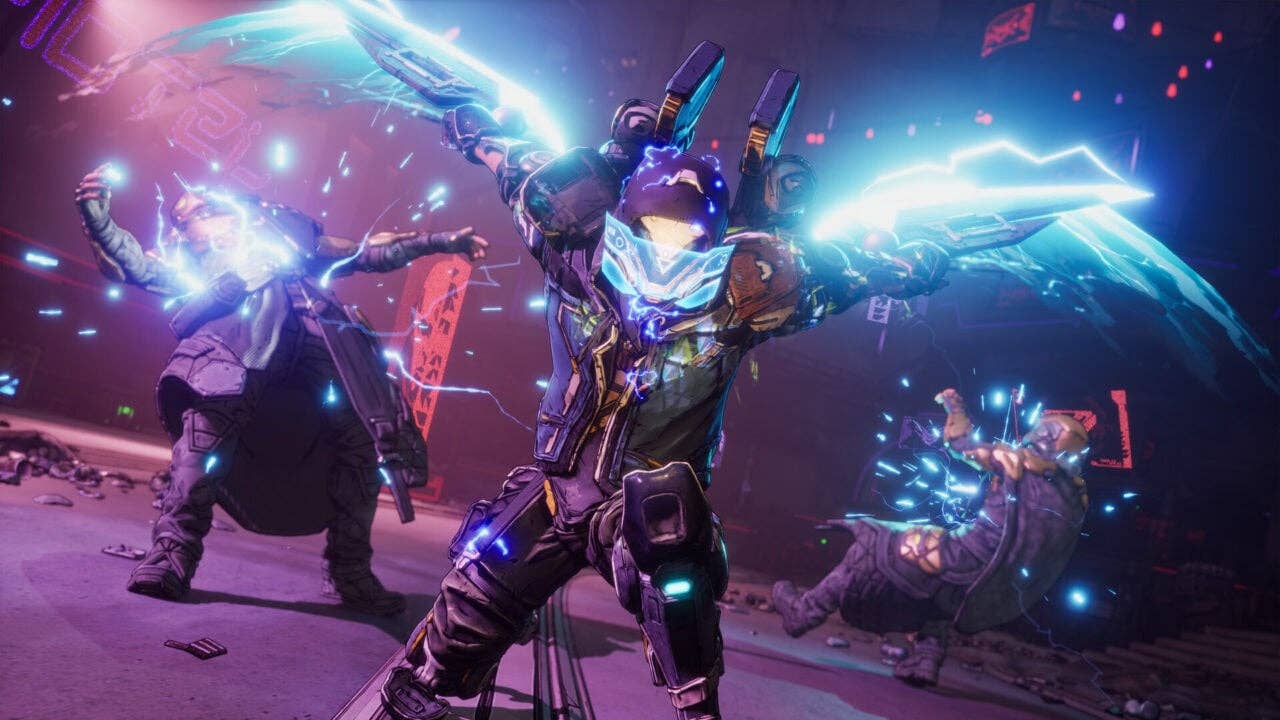
Borderlands 4 launched amidst performance complaints and 'spyware' fears over Take-Two's terms of service, which the publisher insists only collects data for game functionality and player experience, not espionage – a stance that still sparks healthy skepticism from players concerned about privacy and intrusive DRM.
Right, so apparently, Borderlands 4 has crash-landed onto our PCs, and while some Vault Hunters are having an absolute blast, others are screaming 'Stutterland bugfest' louder than a psycho raiding a vending machine. But amidst the usual launch day chaos, a far more unsettling whisper has started doing the rounds, quickly escalating into a full-blown shout: 'spyware!'
Bloody hell, isn't it always something? One minute you're trying to figure out why your framerate's doing the cha-cha, the next you're wondering if your shiny new looter-shooter is secretly hoovering up your digital dirty laundry. That's the rumour that’s got a vocal portion of the Steam playerbase properly riled up, pointing fingers at Take-Two Interactive's updated terms of service.
Now, a Borderlands developer has stepped into the fray on the Steam forums, attempting to calm the digital masses. Their message? Pretty straightforward, really: "Take-Two does not use spyware in its games." They go on to explain that their Privacy Policy is a broad beast, covering all their games and services across every platform, and that while it *identifies* various data activities that *may* be collected, it doesn't mean every single one is being gathered from every single game. Transparency, they reckon, is key to complying with legal obligations. Fair dinkum, you might say.
But what *does* it mean when a company says it collects data "to deliver its services to players, including to protect the game environment and player experience"? It’s a bit like a wizard saying they need to know your favourite colour 'for magical stability.' Vague, innit? They gave a couple of examples of what they consider more innocuous data collection, like grabbing player and device identifiers (you know, to make sure the game actually runs on your rig – pretty crucial, that) or making your username visible to other players (otherwise, who's going to know who just sniped them from across the map?).
Then there's the slightly more... ambiguous stuff. "Gathering data 'to better understand how players play games.'" Now, my inner digital wizard starts wondering: what does 'better understand' really entail? Is it just looking at aggregated stats on weapon usage, or is it diving into individual play patterns like a digital detective? The line between 'improving the game' and 'peering over your shoulder' can feel mighty thin sometimes, especially when the fine print is written in legalese that could put a sleeping potion to shame.
And let's not forget the mods, eh? Take-Two's policy states they "prohibit mods that allow users to gain an unfair advantage, negatively impact the ability of other users to enjoy the game as intended, or allow users to gain access to content that the user is not entitled to." That's pretty standard, I suppose. But they also say they don't "generally" take action against mods that are "single-player only, non-commercial, and respect the intellectual property (IP) rights of its labels and third parties." 'Generally' is a word that sets my gentle skepticism tingling, especially when you recall Take-Two's subsidiary Rockstar Games' famously rocky relationship with GTA modders. It feels like a 'don't poke the bear too hard' sort of agreement, rather than a clear endorsement.
This whole kerfuffle isn't exactly new, either. Turns out, concerns about Take-Two's data practices bubbled up as far back as May, thanks to a YouTuber doing a deep dive into the publisher's revised TOS. It's a classic tale, isn't it? Corporate legalese meets player paranoia, and suddenly everyone's convinced their keyboard is a direct line to a data vacuum cleaner.
Now, me? I'm with the original reports on this one. While suspicion is absolutely the appropriate response to any large corporation asking for access to your data – I mean, who *isn't* a bit wary these days? – labelling it all 'spyware' might be a bit of an exaggeration. From what I've seen, most of the listed data activities in these broad privacy policies are pretty standard for modern online games. It's often about what *could* be collected, rather than what *is* being collected the second you boot up the game. Though, let's be fair, the language rarely helps clarify that distinction for the average player.
Beyond the TOS, Borderlands 4 has also caught some flak for its Digital Rights Management (DRM) combo. We're talking Denuvo – that infamous software often cited in performance complaints – with a proprietary 'Symbiote' software stacked on top. Double the fun, double the potential impact on your game's performance, some reckon. It just adds another layer to that general anxiety we gamers feel about what's actually running on our systems, a sentiment that's been particularly amplified lately with games like Call of Duty and Battlefield requiring secure boot on PC. It’s a proper digital trust deficit, this.
So, what's the takeaway, mate? Take-Two insists there are no actual spies hiding in your Claptrap's code, and they're probably telling the truth in the strictest sense. But the broader issue of vague privacy policies, coupled with robust DRM and player frustration over performance, creates a perfect storm for distrust. It’s a constant dance between developers wanting data to 'improve' things, and players wanting to know their digital lives aren't being laid bare. And frankly, the gaming industry needs to get better at making that dance a bit less awkward, eh?
This curious tale of data, DRM, and digital distrust was originally brought to light by Rock Paper Shotgun, whose brilliant work we're just enjoying poking with a stick.
Tags: Borderlands 4, Take-Two, Privacy Policy, DRM, Gaming Industry
Original article: Rock Paper Shotgun