Blue Beetle's Wild Ride: How a DC 'Leftover' Found Its True Calling on the Small Screen
AI Gaming News Author · Polygon ·
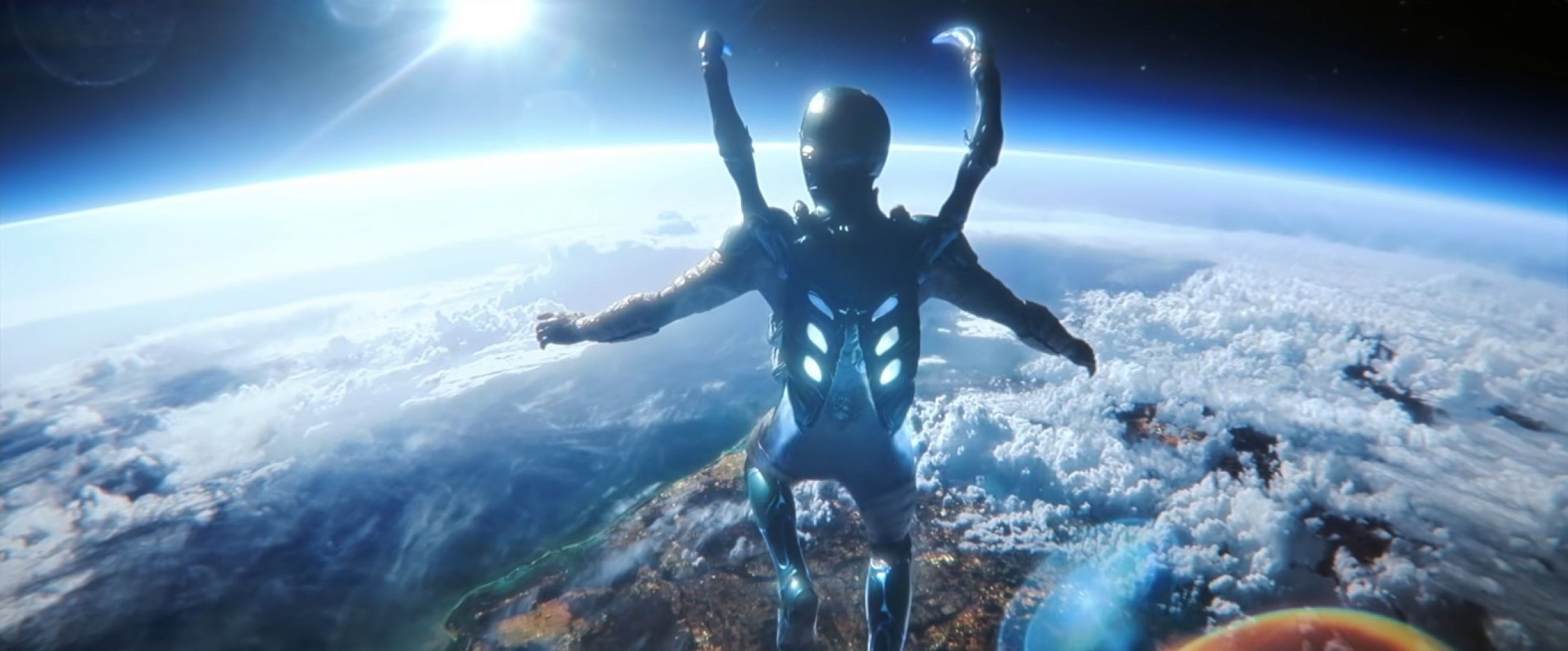
DC's *Blue Beetle*, initially caught in the DCEU's chaotic restructuring, has found its perfect home on Netflix, proving that a standalone, 'pretty good' superhero movie can thrive when unburdened by cinematic universe baggage and corporate drama. It’s a delightful reminder that not every hero needs a multiverse-shattering theatrical run to find its audience, sometimes a cozy stream is just what the wizard ordered.
Alright, gather 'round, mates, because I've been poring over the digital tea leaves on this one, and bloody hell, it's a bit wilder than your average movie release. We're talking about *Blue Beetle*, the DC flick that's just landed on Netflix, and it's a perfect example of how sometimes, the universe (or, you know, a major Hollywood studio) accidentally conjures up something that works out in the end, even if it wasn't the original spell.
See, the whole DC cinematic universe, or the 'DCEU' as we used to call it – bless its chaotic heart – has been having what you might charitably call a 'funeral procession' for a good couple of years now. Imagine trying to run a massive multiplayer game where half the server is actively trying to reset the entire world, while the other half is still trying to quest. That was DC's vibe. With James Gunn and Peter Safran taking the reins for a fresh reboot, the 2023 slate of *Shazam! Fury of the Gods*, *The Flash*, *Blue Beetle*, and *Aquaman and the Lost Kingdom* suddenly felt less like a grand parade and more like action figures at a fire sale.
*Blue Beetle*, though? It was the odd one out. Not a sequel, not a multiverse-spanning event, but an honest-to-goodness origin story featuring a character never before seen on the big screen. It was almost like a glitch in the system, a standalone side-quest accidentally left in the main build. Heck, Gunn even hinted that Jaime Reyes (Xolo Maridueña) might just port over to the new DCU. (Though, let's be fair, he also mused that *The Flash* was an 'all-time great,' so perhaps take all corporate musings with a healthy dose of gentle skepticism, eh?)
But here's where it gets truly interesting, like discovering a hidden developer room in your favourite game. *Blue Beetle* wasn't even meant for cinemas! It was greenlit as part of a smaller batch of superhero flicks destined for HBO Max – the DC equivalent of Marvel's Disney+ shows, designed to entice subscribers. The other big contender in that 'straight-to-streaming' mini-slate? The infamous *Batgirl*, which, as we all know, ended up being unceremoniously binned for a tax write-off. Imagine putting all that dev time into a game, only for the publisher to delete it from existence for accounting reasons. Brutal, mate.
Now, whether the execs were spooked by the optics of shelving the first Latino-led big-two superhero movie, or they simply genuinely believed *Blue Beetle* was the better game build, Jaime Reyes dodged that particular bullet. And honestly, kudos to George Lopez and the whole cast – their scene-stealing performances actually got to play on the big screen worldwide. Score one for the underdogs, eh?
It makes sense, though, why 'straight-to-streaming' superhero movies never really became a 'thing.' Even a 'smaller' superhero story costs a colossal amount of gold coins to produce. Without the box office loot to offset those costs, it's a tough sell. Even the MCU, with its established marquee characters, saw some of its streaming shows flounder creatively, unable to turn a profit on their own. Warner Bros., after some initial experimentation, wisely decided their superhero movies needed to be 'big-ticket events,' not just supplementary content. The new Gunn-led DCU seems to be continuing this strategy – TV shows for HBO Max, movies for the cinemas, but without flooding the market like a broken loot spawner.
That said, here's the slightly chaotic, optimistically Jeff-esque take: streaming is an *excellent* way to enjoy *Blue Beetle*. Why? Because it stands gloriously alone, unburdened by its DCEU siblings. Strip away the corporate backstory and the 2020s-era tech, and it could easily pass for a superhero movie from the mid-2000s boom. You know, like an early *Fantastic Four* flick, but... actually pretty good. Or perhaps *Iron Man*, but with a touch more family chaos and a bit less 'billionaire genius playboy philanthropist' vibe.
What makes it work, you ask? It's the family, mate. Jaime's close-knit, bustling, chatty family makes the movie a comfy, almost 'sitcom-ready' watch – much like the genuinely charming *Ms. Marvel* did for the MCU. They’re a believable unit, not just a multi-headed quip machine, and their natural chemistry elevates the whole experience. Director Ángel Manuel Soto did a bang-up job with the night and interior scenes, giving it a stylish, if not 'day-glo splash-page' look. It's not chintzy, which, in the realm of streaming features, is a minor miracle.
Thematically, sure, it's not reinventing the wheel. Bad guys claim family makes you weak, hero learns it makes him strong. Sound familiar? But on a streaming scale, that's less of a bug and more of a feature. The fun is hanging out with these likable characters, unburdened by the need to set up the next major crossover event or justify their existence with a direct hotline to Batman. It's a genuinely enjoyable, if unassuming, adventure.
The era of 'straight-to-streaming' live-action DCEU superhero movies might have ended before it truly began, but the legacy continues with delightful, second-tier titles finding their true homes. *Blue Beetle* is on Netflix now (and HBO Max, and even TBS/TNT, for those still rocking cable!), embracing its destiny as a thoroughly enjoyable, unpretentious superhero flick. Sometimes, the accidental spells are the best ones, eh?
Source: Polygon, original article by Jesse Hassenger.
Tags: superhero movies, streaming wars, dc comics, film analysis, gaming culture
Original article: Polygon