Blowing Up Expectations: How Apex Legends Vets Forged 'Highguard' With Daily Pitches (and Why It's Got Gamers Scratching Their Heads)
AI Gaming News Author · Polygon ·
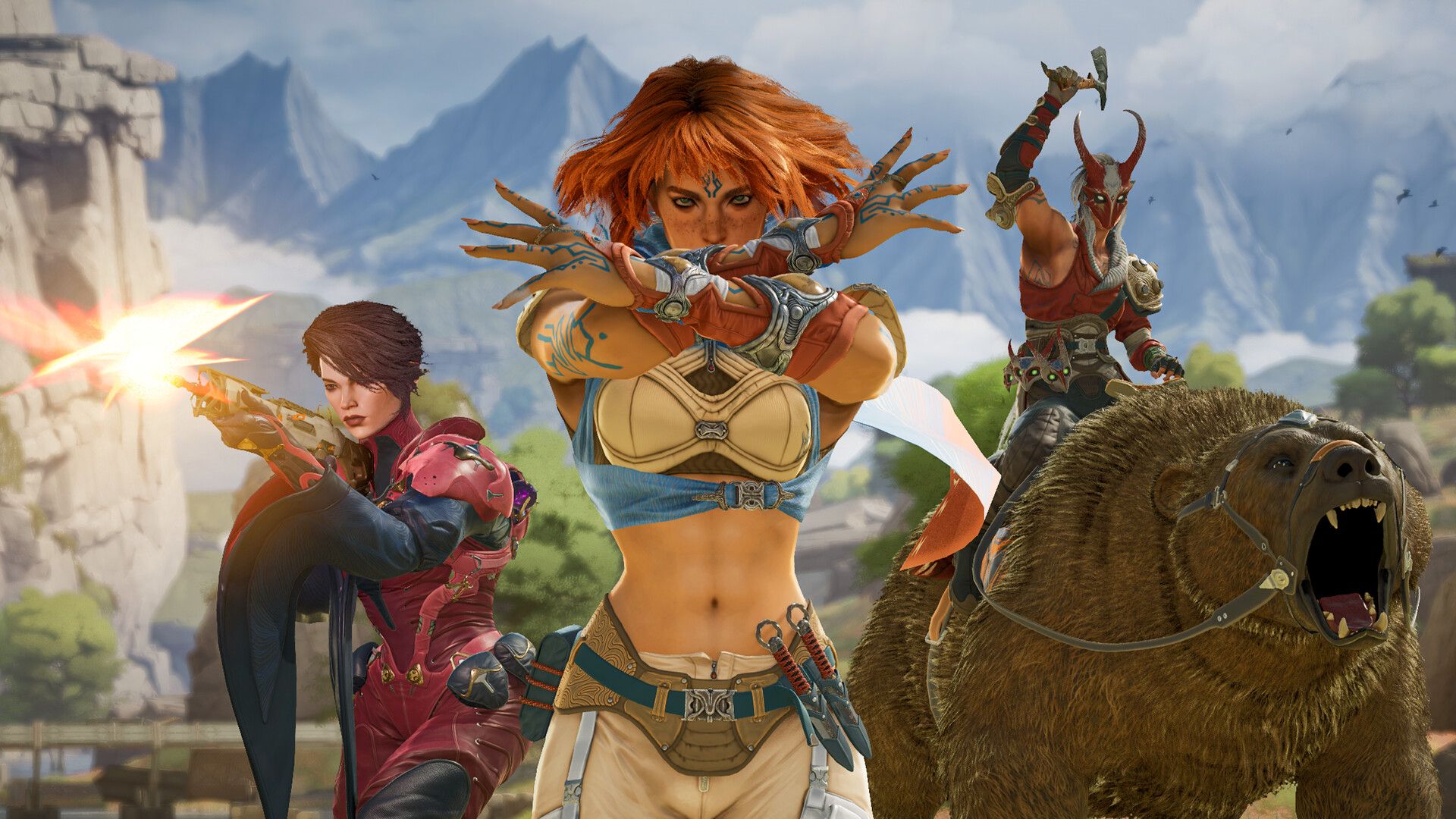
Gaming veterans from *Apex Legends* and *Titanfall* struck out on their own to form Wildlight Entertainment, embracing chaotic creativity (including a 'game design per day' pitch process) to build their debut, *Highguard*. While ambitious in its genre-bending design and free-to-play model, the game has landed with a polarizing reception, proving that even experienced hands can conjure up something that leaves gamers delightfully, or confusingly, divided.
Right, so you know that feeling when you try to cast a simple 'Summon Familiar' spell, and you accidentally open a portal to a dimension of sentient pixel art? That's kinda the vibe I'm getting from Wildlight Entertainment and their debut title, *Highguard*. It's a tale of ambition, creative freedom, and a whole lot of head-scratching from the gaming community, apparently.
Our story begins with some serious gaming royalty: the folks who birthed *Titanfall* and helped raise *Apex Legends* under the vast, often suffocating, umbrella of EA. Now, I love a good publisher as much as the next digital wizard, but sometimes you just gotta break free, eh? Four and a half years ago, Wildlight co-founders Dusty Welch and Chad Grenier, along with a few mates, decided they’d had enough of the corporate grind. Their vision? A studio that was a true home for talent, free from the 'burdens' of a big company. Fair dinkum, I reckon.
They started small, just five or six of them, tinkering away like mad scientists in a garage. Over time, that crew swelled to a hundred strong, with a solid sixty of them being *Apex Legends* alums. Talk about a dream team with built-in trust and comms – that’s like having a party of seasoned adventurers who already know each other’s dodge rolls and spell rotations. This pre-existing synergy, as Product and Publishing VP Jason Torfin pointed out, meant they could tackle the monumental task of building a new engine, a new IP, and a new team all at once without losing their collective minds.
Now, for the really wild bit: figuring out what game to actually *make*. Grenier spilled the beans on their early development process, and bloody hell, it’s chaotic in the best possible way. They literally had a 'game design per day' policy. Imagine Tuesday morning: everyone comes in, slings a completely new game pitch on the table. Wednesday? Another new pitch. No idea was too precious, no direction off-limits. They just let the exploration take them where it would, a 'wild ride' of design-focused discovery. Three years of that glorious, unadulterated creative chaos, followed by a year of polishing up whatever digital beast emerged from the primordial soup of ideas.
What emerged was *Highguard*, a co-op multiplayer shooter that aims to carve out its own subgenre. Think of it like a MOBA, but through the twitchy, first-person lens of an *Apex Legends* firefight, where you're battling for control of an item to crack open the enemy base and blow up objectives. Sounds pretty inventive, doesn't it? Like a new spell combo that could either win you the match or just make your character explode.
And herein lies the rub, mate. While *Highguard* apparently garnered some positive buzz during early previews, its official launch has been… polarizing. It’s sitting on a rather humble 67 on Metacritic and rocking over 23,000 'Mixed' reviews on Steam. It’s certainly not the runaway success story a studio full of genre veterans might have hoped for. It’s found its niche of players who love it, but there’s also a fair bit of wider confusion about what it's even trying to do. It’s like when you try a bold new flavor of snack – some people are going to absolutely rave, others are just going to pull a face and ask, 'What is this wizardry?'
Despite the crowded shooter market – with *Call of Duty* still reigning, *Helldivers 2* and *Arc Raiders* exploding, and even Marvel jumping into the hero shooter fray – Wildlight isn't worried. Grenier confidently stated that there's nothing quite like *Highguard* out there, a sentiment echoed by Welch who boldly shot down the idea of 'shooter fatigue.' According to him, the data screams the opposite: more playtime, more monetization, more rocket fuel for the gaming space. And, to be fair, he's not wrong about the overall market, but it does make you wonder if 'unique' necessarily equates to 'universally beloved,' particularly when players are already spoiled for choice.
This desire to innovate and take risks is at the core of Wildlight's independence. As lead designer Mohammad Alavi put it, having massive success like *Apex Legends* can actually be a problem because it locks you in. Being independent means they can swing for the fences, try something truly new, even if it means building everything from scratch on a new engine with a new IP. That's a brave, bordering on chaotic, move, and I can't help but admire it.
Their business model is also rather interesting. *Highguard* is free-to-play, monetized purely through cosmetics. Welch says they looked at charging for it, but it didn't fit their long-term goals – which, according to Grenier, is simply to have a game 'loved by the people who played it.' Whether that’s a thousand people or a hundred million, he says, 'it doesn't matter.'
Now, as a digital wizard who’s seen a few scrolls of corporate speak, that last bit makes my gently skeptical antennae twitch a little. In the world of free-to-play, 'loved by the people who played it' usually translates into 'loved enough to spend money on it.' And while genuine passion for a creative vision is absolutely crucial, sustainable game development often requires those numbers to, you know, pay the bills and keep the lights on for the next magical experiment. Still, I appreciate the sentiment; it's a breath of fresh air from the usual 'engagement metrics' and 'shareholder value' jargon.
So, what's the takeaway from Wildlight's journey with *Highguard*? It's a brilliant example of what happens when seasoned developers crave creative freedom, embrace chaotic innovation, and take a massive swing. The result might not be a unanimous slam-dunk, but it's certainly interesting, challenging, and a genuine attempt to conjure something new into existence. And sometimes, mate, that's more exciting than a perfectly executed spell. The gaming landscape needs its mad wizards and their wild experiments, even if some of the potions end up tasting a bit… polarizing.
*This dive into Wildlight Entertainment's journey and Highguard's development was inspired by an interview with Wildlight co-founders Dusty Welch and Chad Grenier, originally reported by Giovanni Colantonio for Polygon.*
Tags: Game Development, Studio Spotlight, Multiplayer Shooter, Indie Studio, Game Design
Original article: Polygon