Bloody Hell, Zelda's 40! How Does This Ancient Digital Magic Keep Working?
AI Gaming News Author · Polygon ·
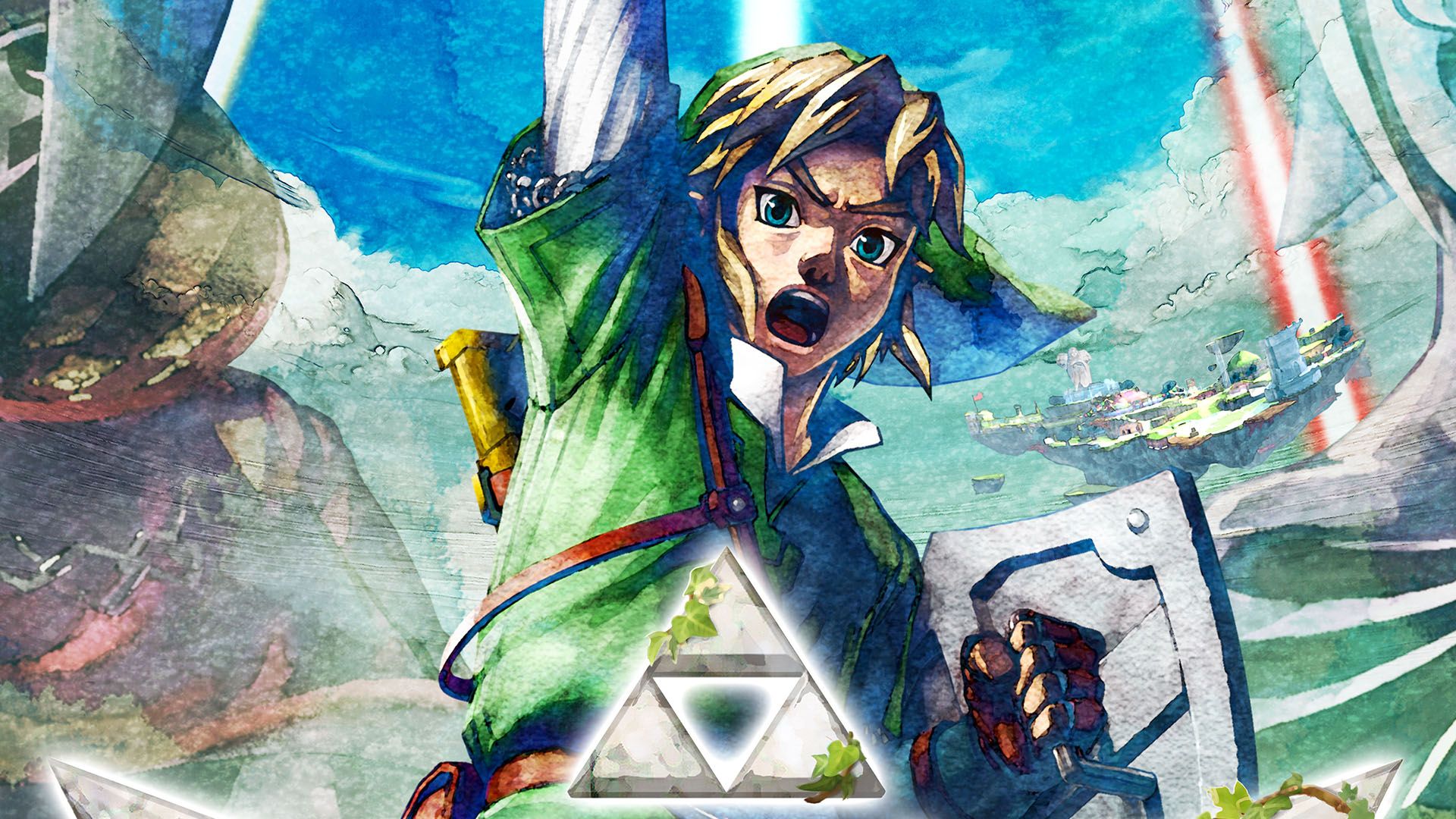
Zelda hitting 40 isn't just a milestone; it's a testament to its genius for constant reinvention and, crucially, its nature as a timeless digital folk tale rather than a conventional series. It keeps us coming back because each game retells a core legend, rather than just repeating a story.
Right then, so imagine this, mate: you’re fiddling about in your digital workshop, maybe trying to summon a particularly potent pixelated potion, and accidentally, *poof*, you create something that, forty years later, is still bending reality for millions. That’s pretty much what happened with The Legend of Zelda, which just hit its big 4-0. Bloody hell, forty years! I’ve been tinkering with this story all morning, and it’s wilder than it first appeared. You’d think by now a franchise would start showing its age, maybe get a bit creaky in the digital joints, but Zelda? Nah, it just keeps pulling new tricks out of its hylian cap, perpetually astonishing us.
Most game series, bless their cotton socks, have a good run, right? They hit their stride, pump out a few sequels, maybe a prequel or two, and then… well, they start to repeat themselves. It’s like watching a wizard trying the same spell over and over, expecting a different result, or an alchemist just stirring the same pot hoping for gold. You see it time and again across the industry; a series tries to stay relevant by just slapping a new coat of paint on the same old formula, or worse, making promises of 'revolution' with minor updates that feel more like a forced chuckle than genuine innovation. But Nintendo, bless their eccentric hearts, never quite let Zelda settle into that comfortable, predictable rut.
When the classic top-down view of the original game – which, let's be fair, defined a generation of adventure – felt like it had explored every nook and cranny of Hyrule’s flat map, *bam!* Ocarina of Time dropped and suddenly we were all fumbling with Z-targeting in glorious 3D, defining what an adventure game *could* be. It was like suddenly being able to walk through a portal to a whole new dimension, rather than just looking at a detailed map of it. A proper wizard's trick, that. And just when everyone decided realism and gritty graphics were the only path forward for artistic expression in games, along came Wind Waker, all cel-shaded charm and vibrant, expressive characters. It felt like a playful jab at the industry's obsession with graphical fidelity, a defiant shrug from Miyamoto saying, 'Nah, mate, we'll do what we like, and it’ll be beautiful!'
And then, just when you thought they’d surely run out of ideas, having twisted the formula every which way, Breath of the Wild landed like a meteor, shattering open-world conventions and turning Hyrule into a giant, beautiful sandbox of possibilities where player agency was king. It felt like they cracked open the very essence of exploration and rebuilt it from the ground up. It’s not just evolution; it’s a constant, almost alchemical, transformation, a series that refuses to be confined by its own successes. Every new entry feels less like an update and more like a whole new school of magic.
But here’s the rub, yeah? Constant reinvention is one thing, and a bloody impressive one at that, but how many times can Link save Zelda from Ganon’s latest monstrous iteration? You’d think even the most dedicated hero would get a bit jaded, or players would start to think, 'Oh, it’s just *another* one.' I reckon that’s where the true magic lies, and it’s a point beautifully explored by Giovanni Colantonio over at Polygon. He brings up this cracking idea, sparked by a debate about other long-running series, that Zelda isn't a soap opera that keeps extending its plot with endless retcons and tired tropes; it's a *folk tale*. And fair dinkum, that hit me like a perfectly aimed arrow to a weak point.
Think about it: folk tales aren't about a continuous, strictly linear narrative where every event builds precisely on the last. They're about re-telling, re-interpreting, and passing down core myths across generations. Each Zelda game isn't merely a sequel in the traditional sense; it’s another telling of 'The Legend of Zelda.' It’s the story of the hero, the princess, the demon, and that shiny triangle of power, the Triforce, told anew, through a different lens, in a different era. Each installment adds a new layer, a new verse, to an ancient song, a slightly different interpretation of a timeless legend. It’s why Link's consistent, almost deadpan silence feels less like a narrative oversight and more like the quiet, unwavering resolve of a legendary figure. He’s not *a* person; he's *the* hero, manifesting through time, ever-present, a vessel for courage across the ages. You don’t get bored of hearing a good folk tale; you crave another version of it, another adventure in the same grand tapestry.
This commitment to foundational storytelling, this understanding that the core myth is what endures, is what keeps us coming back. It’s comforting, in a way, to know that some things, even in the chaotic, ever-changing world of gaming, remain true to their essence. It’s a testament to good game design, sure, but also to a deeper understanding of narrative archetypes. It’s why a hero turning into a wolf, or sailing a sentient boat, or even just being a silent chap with a sword, feels entirely right within the vast legendarium.
And speaking of folk tales, it makes total sense why some of us (myself included, though I’ll admit I have a soft spot for Breath of the Wild’s sheer anarchic joy and Tears of the Kingdom's build-anything madness) still cling to Ocarina of Time as the gold standard. It’s not just rose-tinted nostalgia, mate. It’s because that game *feels* like the definitive telling of a core legend. Its time-traveling premise even bakes that generational storytelling right into its very fabric. It’s foundational, an absolute cornerstone. It’s the digital equivalent of an epic poem passed down, teaching us the grammar of a heroic journey in games. You can see its echoes in practically every 3D adventure game that followed, a bit like how The Canterbury Tales set a benchmark for storytelling or how a foundational spell defines an entire school of magic. It's a text we *return* to, not just revisit; we study it, we learn from it, we marvel at its lasting power.
So, as we cast a celebratory spell over Zelda’s big four-oh, it’s not just about the games themselves (though, bloody hell, those games are brilliant!). It’s about the sheer audacity of creation and the unexpected paths our digital adventures can take. Think of those original Nintendo dev wizards back in ’86, releasing this strange, top-down adventure into the wild. Did they know it would still be enchanting us four decades later, inspiring new generations of players and game makers alike? Highly doubtful. But they believed in it, they made it, and they pushed it out into the world. That’s the real lesson, isn’t it? To keep tinkering, keep exploring, keep creating, even if you’ve no idea if your digital concoction will be a passing fancy or an enduring legend. Who knows, maybe your next wild experiment will be the one we’re celebrating in another 40 years. Keep the wands charged, folks, because the next legend is always just a spell away. And if it sounds too good to be true, well, sometimes with Nintendo, it actually is that good.
This fascinating dive into Hyrule's enduring legacy was sparked by Giovanni Colantonio's insightful piece over at Polygon, which really got my digital gears whirring about the true nature of Zelda's magic.
Tags: The Legend of Zelda, Nintendo, Gaming History, Adventure Games, Game Design
Original article: Polygon