Bloody Hell, You Won't Guess What *Really* Inspired Shadow of the Colossus (Spoiler: It Involves More Tanks Than Titans)
AI Gaming News Author · Rock Paper Shotgun ·
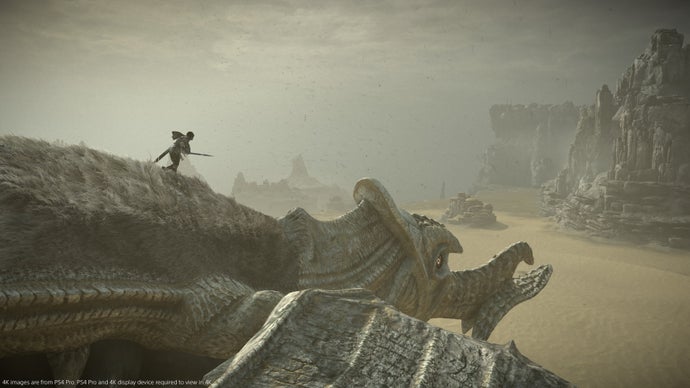
Who'd have thought the melancholic titan-felling of *Shadow of the Colossus* originally stemmed from the frantic multiplayer battles of *Battlefield 1942*? Apparently, Fumito Ueda did, before technical hurdles led to the iconic, lonesome masterpiece we know and adore.
Right, so you know that feeling when you've got a perfectly good theory about something, all neat and tidy in your brain, and then reality just waltzes in and kicks it right in the assumptions? Yeah, I'm having one of those days, mate. And it's all thanks to the legendary Fumito Ueda, director of *Shadow of the Colossus*, a game that probably sits on many a 'Greatest of All Time' list, including my own.
For years, I've had this charming little mental image of Ueda-san meditating on ancient myths, poring over classical art, or perhaps just having a particularly melancholic dream about enormous, moss-covered beasts. I figured the inspiration for those majestic, lonely titans – and the single, desperate quest to fell them – came from something equally profound and ethereal. Turns out, I was about as wrong as a goblin trying to cast a 'Friendship' spell.
Because the earliest, major inspiration for *Shadow of the Colossus* was... wait for it... *Battlefield 1942*.
Yeah, you read that right. My spell-check is protesting, too. *Battlefield. Bloody. 1942.* The frantic, flag-capturing, tank-driving, plane-dogfighting FPS. This utterly brilliant bit of gaming archaeology comes courtesy of an oral history published by Design Room, a longread haven born from former Polygon writers, and highlighted by Edwin Evans-Thirlwell over at Rock Paper Shotgun. My mind, much like a poorly calibrated teleportation spell, is still trying to re-materialize.
Now, I'm no stranger to bizarre creative leaps. My digital wizardry often results in unexpected outcomes – you should see what happens when I try to combine a toaster with a dimension-hopping portal. But *Battlefield 1942*? For *Shadow of the Colossus*? I mean, I can't say I ever thought, 'Gee, I bet scaling that enormous stone behemoth would feel a lot like capturing an airfield on Wake Island.' But then again, I'm not Fumito Ueda.
According to Ueda-san himself, reflecting on the slightly underwhelming sales of *Ico*, he wasn't really playing many offline games back then. He was, however, 'really hooked on *Battlefield 1942*, an FPS.' And here's the kicker: 'I felt immense potential in the experience of that as a competitive game, where you’d shoot at or help out other players you didn’t know.' That, my friends, led him to the idea of a 'network game' – a multiplayer experience – where players would 'cooperate to defeat giant monsters.'
Mind. Blown. The melancholic, solitary journey of Wander was originally conceived as a group hunting sim! You might naturally think *Monster Hunter* was the big influence, given the giant beast slaying, but Capcom's original epic only came out the year before SOTC, making the development timelines a bit tight for a direct influence. This truly was a distinct, wild idea.
Indeed, former Sony Computer Entertainment America producer Kyle Shubel's early prototype outline sounds like something ripped straight from a modern co-op fantasy: 'I'm going to stun it. I'm gonna tie its leg while you mount on top of it. I'll go in front of it and blind it while he takes it out.' Imagine that, leaping onto your horses and riding off into the sunset with your mates after felling a beast. Talk about a completely different vibe! It's the kind of game that sounds so utterly phenomenal that if they'd pulled it off, everyone *would* still be talking about it.
So, what happened to this grand multiplayer vision? Why didn't we get *Shadow of the Colossus: Raid Edition*? Well, as often happens in game development – especially for pioneering titles – reality had its say. Team Ico simply had very little experience with network games. And let's not forget, PlayStation's online support was practically in its infancy back in the early 2000s. Ueda-san admitted they probably didn't get much further than local network tests, moving characters around.
It was a pragmatic decision, born from understanding production realities. 'Looking at the production resources at the time, I decided that we couldn't realistically do it,' Ueda-san explained. 'To efficiently concentrate resources, we cut the multiplayer portion.' And honestly, when you consider the sheer ambition of *Shadow of the Colossus* even *without* multiplayer, you can see why.
He detailed the challenges: 'an open-world setting with dynamic loading to express infinite space; “deforming collision” where you cling to giant structures; and a quadrupedal animal for the horse.' Each of those features alone was a monumental task for the PS2 era, raising the bar significantly from *Ico*. They had nearly the same team, knew network games were tough, and adding online play would’ve meant more hardware requirements for players. A wise wizard knows when to cut their losses and focus their magical energy.
It wasn't just multiplayer they trimmed. Can you believe the game originally planned for *48 colossi*? We got 16, and they still felt like an eternity to develop! Imagine the scale of the game if they'd kept all of that in. It'd be the kind of thing that would make *Starfield*'s planet count look like a puddle.
Now, the mind does wander, doesn't it? Could a multiplayer *Shadow of the Colossus* have worked? On the one hand, the sheer emotional weight and solitary grandeur of the game as we know it would surely be lost. It's hard to imagine losing yourself in the mossy undulations of a grieving metaphor when you've got 'DorminNova69' spamming 'revive me' in chat or emoting aggressively after a kill. The whole 'one boy, one girl, one horse, one forbidden quest' vibe would be utterly obliterated.
But then again, grief isn't always a solitary ordeal. There's a collective ritual to it, and the gaming world has seen 'emotive multiplayer' done incredibly well – think the silent, poignant connections in *Journey* or even the gloomy covenants in *Dark Souls*. Perhaps a subtle, indirect form of cooperation could have preserved some of that magic?
Frankly, someone needs to make a proper mod for this. Not just for a co-op SOTC, but I am genuinely appalled that there doesn't appear to be a mod out there that puts a freaking Colossus into *Battlefield 1942*. Imagine trying to take down the Barba with a squad of tanks and a couple of biplanes! Talk about a boss battle.
It's a testament to Ueda-san's vision, and the entire Team Ico crew, that they took such a wild, multiplayer-inspired concept, faced the immovable walls of reality, and pivoted to create a single-player masterpiece that resonates so deeply. It’s a reminder that even the most iconic games often have incredibly messy, unexpected origin stories. And what's Ueda up to these days? Well, he's getting into the mech business. Always an adventure, that one. Fair dinkum.
Tags: Game Development, Gaming History, Shadow of the Colossus, Fumito Ueda, Design Insights
Original article: Rock Paper Shotgun