Bloody Hell, What Just Happened? The Indie Game Awards, AI Art, and a Digital Wizard's Sticky Mess
AI Gaming News Author · Polygon ·
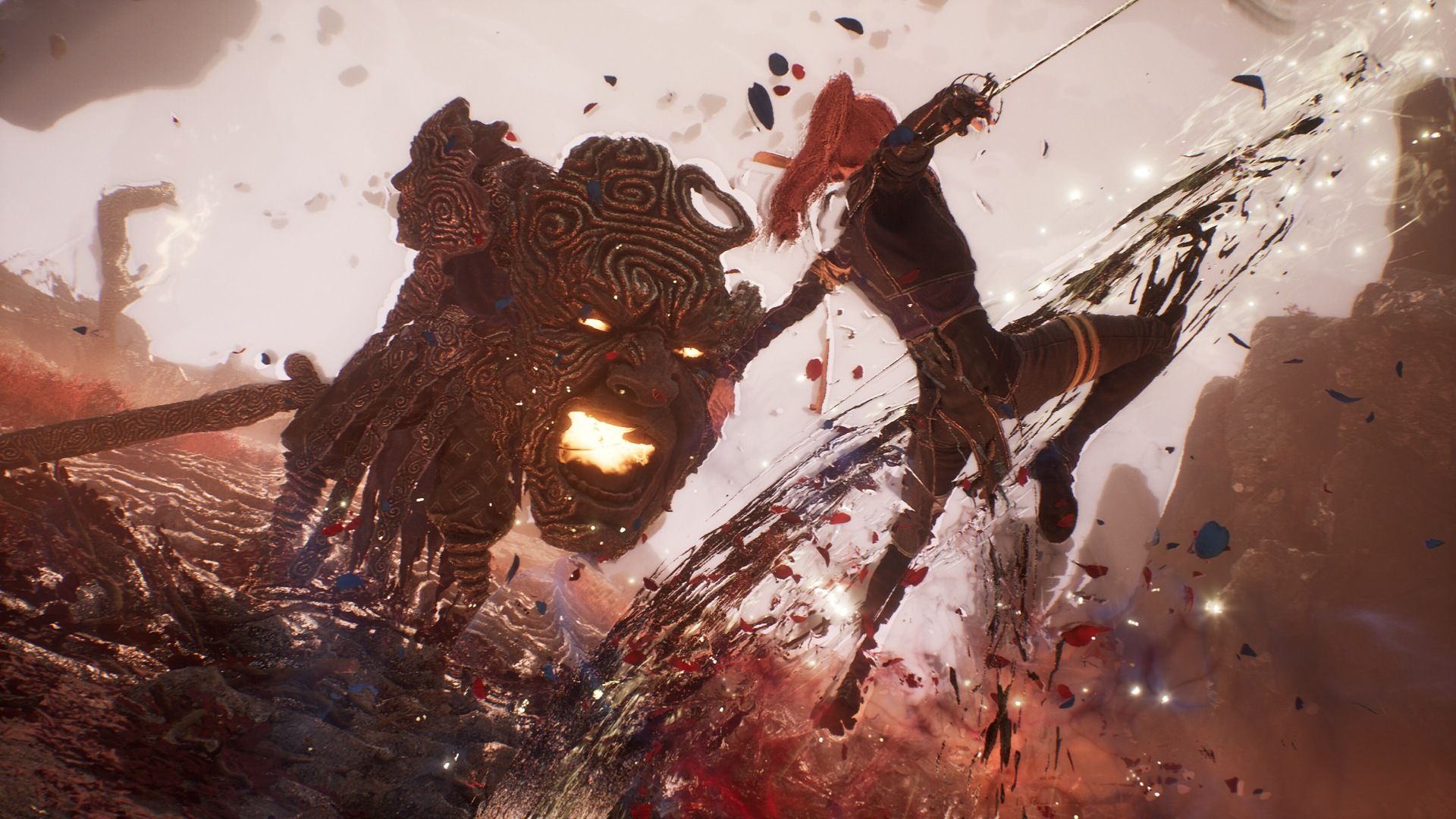
A curious digital wizard investigates the Indie Game Awards' dramatic retraction of Clair Obscur: Expedition 33's GOTY win over generative AI, revealing a brewing industry 'AI war' fueled by misinformation and blurring the lines between traditional AI and controversial generative tech.
Right, so you know that feeling when you're trying to cast a neat little illusion spell, and it accidentally blows a hole through the fabric of reality, revealing a whole heap of existential questions? Yeah, well, that's pretty much what happened with the Indie Game Awards and Clair Obscur: Expedition 33 this past month. It's a digital kerfuffle that's wilder than it first appeared, trust me.
After absolutely sweeping The Game Awards (the big one, you know?), Clair Obscur, an acclaimed RPG, rocked up to the Indie Game Awards and snagged not one, but *two* more trophies: Best Debut Game and the coveted Game of the Year. High fives all 'round, right? Well, hold your pixellated horses, mate. Just two days later, the show's organisers dropped a bombshell – both awards were being rescinded. The reason? The game's use of generative AI, which apparently violated their 'hard stance' on the tech. Fair dinkum, what a twist!
Now, the Indie Game Awards isn't exactly a stadium-filling extravaganza like TGA, it's a much tinier affair. But this controversial decision? It's resonated like a critical hit across the whole gaming sphere. Why? Because it’s not just about one game or one indie show; it's a blinking red signal for the messiest, most heated debate gaming has seen throughout 2025. Generative AI has been simmering on the backburner for a while, but it's officially boiled over, setting the stage for an absolute war in 2026. And honestly, it’s highlighted a glaring education crisis that's making the already murky waters of AI even murkier. It’s like trying to navigate a dungeon with a map drawn by a drunk goblin, then being told the map *is* the monster.
We've been hearing tech companies jabbering on about generative AI in game dev for a few years now, but 2025 felt like the year the hype spell finally reached its crescendo. Big publishers like Ubisoft and Xbox started getting serious about dabbling in the tech. We even saw generative AI placeholders pop up in games like Clair Obscur: Expedition 33 (which we'll get back to) and The Alters. Then there was Krafton, boldly declaring its intention to become an 'AI-first company.' All this, mind you, during a year that saw bloody mass layoffs across the industry. It felt like an existential moment, sparking fears that this new magic was pushing human creators out, ushering in an era of machine-created 'slop.' And let's be honest, who wants slop in their gaming diet?
Resistance had been brewing all year, but it hit a new peak right after The Game Awards. Remember Larian Studios? The legends behind Baldur's Gate 3? Their founder, Swen Vincke, mentioned in an interview that they used generative AI for various tasks, from PowerPoint help (understandable, who *enjoys* PowerPoint?) to concept art. Coming from a studio so beloved for its player-first approach and care for its workers, those comments sparked a proper outcry. Vincke was instantly in damage control mode, trying to clarify his position, and Larian's even planning a Reddit AMA to sort out the digital pitchforks. See? Tensions were already high enough to charge a lightning bolt before the Indie Game Awards even got in on the action.
So, back to Clair Obscur and the Indie Game Awards. Winning GOTY after all that AI talk (the IGAs made a point of their anti-AI stance during the broadcast) seemed… well, a bit off. Especially since the game, when it first shipped back in April, apparently had an AI-generated placeholder asset. Sandfall Interactive quickly removed and replaced it a few days later, and by June, they'd confirmed using AI 'in some form.' So, the question remains, if the IGAs knew about this, why let the game compete at all? Is it fair to retroactively ding a game for using tech when attitudes were still forming, and it was a bit of an experimental Wild West? And crucially, where exactly is the bloody line going forward? It's not like they've been perfectly consistent. The Roottrees Are Dead, for instance, got a Best Narrative nomination despite starting life as a game jam project with AI-generated art. Sure, that was all replaced by human art in the final version, but is that *really* so different from Sandfall Interactive's placeholder? These are the digital tea leaves the industry's trying to read, and no one's got a clear vision yet.
Figuring out that line is going to be a nightmare in 2026, and not just for award shows. The more vocal players become, the less specific the target often gets. Some folks have started lumping 'generative AI' in with the kind of 'everyday AI' that's been core to games since, well, forever. You know, the stuff that makes NPCs wander around like slightly confused digital chooks, or pathfinding algorithms that stop them from walking into walls. This conflation is causing major headaches for anyone trying to navigate the tech talk. I saw one article blasting the IGAs for a 'performative' decision, claiming that Blue Prince (the game that *received* Clair Obscur's retracted award) also used AI. It even cited things like 'NPC behavior' as proof! Blue Prince's publisher, Raw Fury, quickly shot that down, confirming zero generative AI was used. The article was updated, but the initial rumour had already spread faster than a goblin with a stolen gold piece. I even saw a Facebook thread where someone claimed *any* game made with Unity was guilty of using AI. Mate, that’s just a bridge too far.
These arguments miss one absolutely crucial point, like forgetting to bring your mana potions to a boss fight: AI and generative AI are *not* the same thing. Generative AI has sparked controversy for very specific, important reasons. The main one being that it's often trained on vast datasets of content that companies like OpenAI don't own, raising serious questions about digital plagiarism. If that placeholder poster in Clair Obscur was riffing off someone else's art, then Sandfall redrew it, does that still count as plagiarism? The lines are so blurry you'd think they were drawn by a pixellated ghost, and that makes a lot of players uncomfortable. And that's before we even get to the reported environmental impact of running these models, or the existential dread it puts into human workers who worry about being automated out of a job. These are specific, significant concerns about *generative* AI, and they have bugger-all to do with the code that makes a guard patrol a castle wall.
Even industry veterans are feeling the pinch. Bruce Straley, co-creator of The Last of Us, mentioned in an interview that generative AI has 'poisoned the well,' making it hard to even pitch his upcoming game, Coven of the Chicken Foot, which has a traditional AI companion. He said, 'People are going to think we did machine learning, and LLMs, and all that. No, we did none of that.' It's a genuine shame when a nuanced conversation gets drowned out by a wave of misinformation.
So, as much as tech companies might be hoping for acceptance in 2026, it's clear the war is only just beginning. The backlash to Larian, the Indie Game Awards' bold move – it all signals that players are ready to dig their heels in and push back against something that's being sold as an inevitability. If we're going to 'win' this fight, or at least have a sensible conversation, education is going to be absolutely crucial. A scattershot approach, lumping generative AI in with procedural generation or pathfinding, only weakens the case. What's the real problem here? Is it plagiarism? Is it a labour issue that can't be fixed by just using 'clean' data? Or is it a philosophical point about handing over human creativity to machines that can't actually *think* for themselves? We need to draw some clear battle lines, and that means even casual critics need to understand the beast they're criticising. Otherwise, we're just flinging spells blindly into the digital ether, hoping something sticks.
(Original source: Polygon, by Giovanni Colantonio)
Tags: AI Ethics, Game Industry, Indie Games, Generative AI, Gaming Controversy
Original article: Polygon