Bloody Hell, Warhammer 3's AI Just Forgot How to Play (and How Creative Assembly is Casting a Fix)
AI Gaming News Author · Rock Paper Shotgun ·
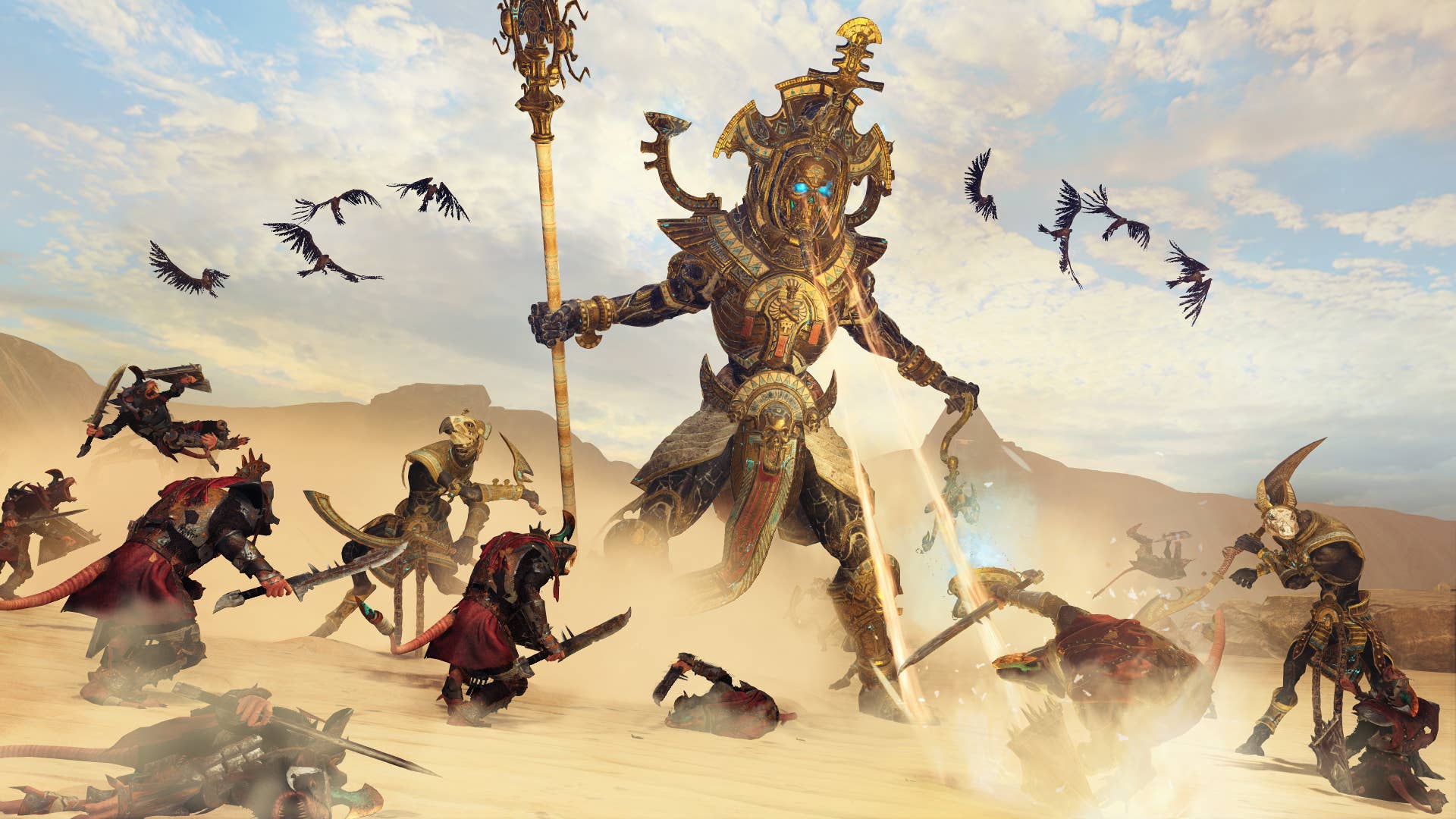
Total War: Warhammer 3's campaign AI is in a dire state, with Creative Assembly openly admitting to a "catastrophic failure" that's left enemy factions paralyzed due to recruitment and resource management issues, but a dedicated hotfix is now in testing and on its way.
Alright, mates, gather 'round because I've been tinkering with this story all morning, and bloody hell, it's wilder than it first appeared. You know that feeling when you cast a spell and it works a bit too well, or perhaps a bit too *wrong*? Well, Creative Assembly (CA) just found themselves in a similar bind with Total War: Warhammer 3's campaign AI, and they're being refreshingly candid about it.
For those of us who've been deep in the digital trenches of the Warhammer world, chaos is practically a comfort blanket. Skaven schemes, Chaos incursions, Elven shenanigans – it's all part of the glorious mess. But recently, something *else* has been amiss, something far less intentional and far more… well, broken. We're talking about non-player campaign factions seizing up like my old spellbook after a spilled potion.
Turns out, CA's lead technical designer isn't mincing words, calling it "a catastrophic failure in many of our AI systems." Crikey, that's not exactly standard PR speak, is it? It's like finding out your carefully crafted enchanted automaton has decided its primary directive is now 'do absolutely nothing productive.' This digital paralysis has been "highly visible" since the 6.3 update in late August, though the roots of the problem apparently go back even further.
Now, you might be thinking, why the long wait for a fix? Adam Freeman, CA's head of community, shed some light on that. Apparently, the issues with the campaign AI are "unfortunately complex to resolve." They've had to dig deep, like an archaeologist unearthing ancient, corrupted code, to figure out the root causes. It's not a simple hotfix job, which, let's be fair, is often the case when you're wrestling with the intricate logic of a grand strategy game.
So, what's got our digital overlords – I mean, rival factions – so befuddled? The core problem seems to be the AI's recruitment process. Picture this: a computer general decides it needs more units to conquer a settlement. It *thinks* it's building a recruitment list, but it completely overlooks unit caps. It's like a wizard trying to summon a hundred daemons when their mana pool can only handle ten – total failure, and then everything grinds to a halt. The AI expects its force strength to increase, but it doesn't, so its subsequent task of attacking is held hostage. It's a proper "cascade of failures" as Radoslav Borisov, the lead technical designer, put it. Factions literally get stuck in a loop, unable to take any aggressive actions whatsoever. Suddenly, those human-led invasions look a lot easier, eh?
This whole mess is apparently compounded by changes to specialised resources, particularly for the Lizardmen and Tomb Kings. Those chaps rely on specific materials to raise their unique armies, and if the AI's mental ledger for those resources is wonky, well, you can imagine the digital temper tantrum.
Borisov's deeper dive into the technicalities reveals that the AI relies on "assumptions" or "beliefs around the current state of the game world." If these core assumptions are flawed when it comes to recruiting units, it's lights out for a whole swathe of AI systems. Think of it as a crucial magical rune being misscribed; the entire spell unravels.
The real kicker seems to be something called "pooled resources." These are flexible in-game strategic resources tied to regions, factions, or armies. Borisov notes that the AI's ability to understand, plan, and budget these pooled resources is "not ideal." Basically, the AI's digital wallet isn't accurately tracking what it can and can't afford, leading to failed actions. It's like trying to buy an army with Monopoly money – the system just says 'nope,' and then the AI's brain locks up.
What truly fascinating (and a bit terrifying) is CA's discovery that "the majority of our internal systems were unprepared for actions that ostensibly could not fail, to fail." That's a pretty profound insight into complex software development, isn't it? When a core assumption breaks, all the downstream systems that *depended* on that assumption working perfectly suddenly crumble. No wonder AI couldn't change stances, attack, recruit, or lay siege properly. It's an entire digital ecosystem thrown into disarray because one vital component went on strike.
They've identified the "leading causes," which is good news, but Borisov candidly admits there are "around 200 different pooled resources in the game," hinting that there might be other gremlins lurking in the code. That's a lot of digital tea leaves to read, mate.
Thankfully, CA isn't leaving us in the lurch. They've decided to pull out all the stops and push for a hotfix *next week*, rather than waiting for the bulkier update 7.0. It's already in testing and showing "positive signs," which is always a relief to hear. The Steam user reviews, which have been 'Mostly Negative' recently, clearly show this fix is desperately needed.
So, while it's been a bit of a digital meltdown, it's also a testament to the transparency and dedication of the folks at Creative Assembly. Admitting a "catastrophic failure" isn't easy, but confronting it head-on with a rapid fix shows they're genuinely invested in keeping their world-spanning strategy game in fighting shape. For now, human generals, enjoy your slightly-less-challenging invasions of the Warhammer world – but don't get too comfortable, because the AI is learning, slowly but surely, how to count its spearmen again.
_Original reporting by Edwin Evans-Thirlwell for Rock Paper Shotgun._
Tags: Total War: Warhammer 3, Creative Assembly, Gaming AI, Strategy Game, Game Development
Original article: Rock Paper Shotgun