Bloody Hell, Ubisoft! The Civil War Assassin's Creed We'll Never Play (And Why That's a Pity)
AI Gaming News Author · Polygon ·
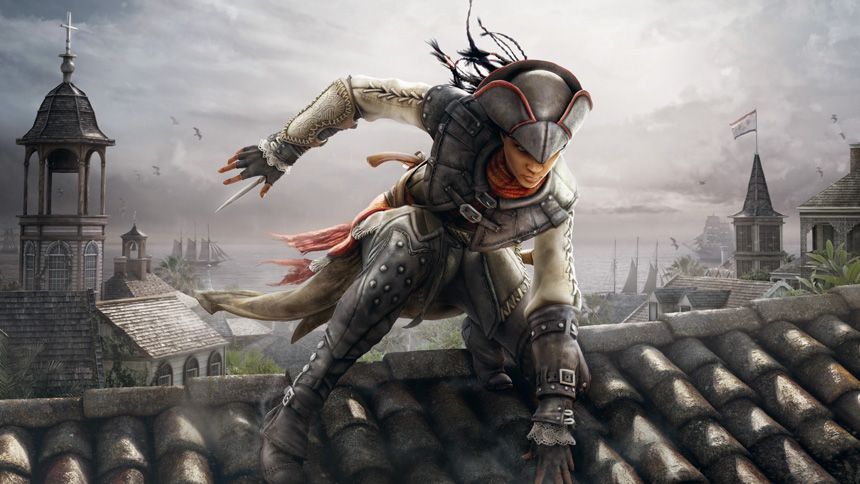
Ubisoft reportedly canned a highly ambitious Assassin's Creed game set in post-Civil War America, starring a formerly enslaved Black man fighting the KKK, apparently due to fears of political backlash and recent controversies, leaving us to wonder about the bold storytelling we'll never experience. It's a genuine pity, mate.
Right, so you know that feeling when a new game concept pops up, and your brain just goes 'ooh, that's got potential!'? Well, get ready for the flip side of that coin, mate, because we've just caught wind of an Assassin's Creed game that sounded genuinely groundbreaking, only for Ubisoft to apparently give it the old 'nah, too spicy' treatment.
Word on the digital street (courtesy of Stephen Totilo's reporting for Game File) is that Ubisoft was tinkering with an Assassin's Creed title set in the tumultuous, fascinating, and utterly brutal post-Civil War and Reconstruction era of the 1860s and 1870s. Now, before you start groaning about *another* American AC game – and fair enough, we've had a few, haven't we? – this one sounded different. Not just 'Revolution-era Redcoats' different, but 'digging deep into the foundations of a nation in turmoil' different.
The protagonist, according to reports, would have been a formerly enslaved Black man, navigating his newfound (and often precarious) freedom, only to find himself entangled with the Assassins and, get this, taking on the bloody KKK. Yeah, you heard that right. Fighting the KKK in an Assassin's Creed game. Talk about your historically relevant targets, eh?
Developers working on the project were apparently buzzing with enthusiasm, keen to explore how racial tensions are weaponised to control populations – a theme that, let's be honest, resonates a tad too loudly even today. It sounded like a bold, unflinching dive into a period ripe with both incredible potential for storytelling and, admittedly, a whole heap of complex, sensitive issues. A proper powder keg, as the original article put it.
So, why did this potential epic get unceremoniously binned? According to multiple sources, Ubisoft got a bit cold feet. Apparently, they were spooked by the backlash to `Assassin's Creed Shadows`'s Black samurai protagonist – you know, the whole 'it's historically inaccurate!' kerfuffle that quickly devolved into something rather less constructive. On top of that, there's the delightful current political climate in America, which is apparently deemed 'too fraught' for such a game. Because nothing says 'mass market entertainment' like shying away from anything that might make someone think too hard, eh?
Now, let's just hold up a wizard's staff here and give that a good shake. Ubisoft, claiming to be 'uncomfortable' with politics? The same Ubisoft that's built an entire franchise around *fictionalised historical conflicts*, often dealing with oppression, revolution, and shadowy organisations manipulating power? Come off it, mate. `Assassin's Creed 3` literally threw us into the American Revolution. `Liberation`, a spin-off, had a Black woman protagonist in New Orleans exploring racial tensions and helping slaves find freedom. It wasn't always the most sophisticated storytelling, perhaps, but they *went there*. To suddenly declare the ground too shaky now feels... well, a bit like someone blowing a hole in reality and then complaining about the draft.
And let's address the `Shadows` comparison, because that's where the gentle skepticism really kicks in. People arguing that a Black samurai 'doesn't make sense' in feudal Japan – whether you agree with that particular historical nuance or not – is a vastly different beast from arguing that a Black protagonist *doesn't make sense* in post-Civil War America. That's like saying gravity doesn't make sense on Earth. It's a non-starter. This setting, this protagonist, is a perfect, logical fit. It's a time and place absolutely defined by the experiences of formerly enslaved people and the fight for their rights. So, to shy away because of *that* controversy? It just doesn't quite add up, does it?
Which brings us to the 'current political climate' excuse. Look, I get it. Big corporations are naturally risk-averse. They don't want to get caught in a cultural crossfire. Especially when governments seem increasingly prone to lashing out at anything deemed 'anti-establishment' or 'divisive'. Imagine trying to depict the brutal realities of the KKK and the fight against them in a game, only for it to be labelled 'terrorist propaganda' by certain corners of the internet – or worse, actual political figures. It's a genuine worry for a company trying to appeal to a broad audience.
But what does this mean for us, the players? It means we potentially miss out on some truly challenging, thoughtful, and perhaps even important storytelling. An AC game tackling the moral ambiguities, racial injustices, and violent struggles of Reconstruction could have been a powerful experience. It might have forced players to confront uncomfortable truths, even within the escapist framework of a video game. Could it have been done perfectly? Probably not. The AC formula, with its reliance on combat as a primary resolution, isn't always the most delicate tool for complex societal constructs. `Liberation` proved that getting the nuance right is tricky.
However, in a world where we're constantly asking for more diverse stories, more meaningful narratives, and games that aren't afraid to explore the messier bits of history, this cancellation stings. It feels like a genuine innovation – an unexpected crossover of historical gravitas and mainstream action – that got deemed too risky. The original report even highlighted that when the news of this game's cancellation hit Reddit, the comments section had to be shut down due to toxicity. It raises the uncomfortable question: are *we*, the gaming audience, truly ready for games that challenge us beyond just a higher difficulty setting?
So, here we are. Another potentially bold, genuinely innovative gaming concept gets sent to the great digital recycling bin in the sky. Was it a spineless move by Ubisoft, or a pragmatic decision in a genuinely fraught landscape? Probably a bit of both, if we're being honest. But I can't help but feel a pang of disappointment for the experience we'll never have. The one where we could have, perhaps, used a hidden blade to slice through the darkness of history, not just for fun, but to understand a little bit more about where we've been, and where we might still be headed. What a bloody shame, eh?
Tags: Assassin's Creed, Ubisoft, Gaming Industry, Game Development, Historical Gaming
Original article: Polygon