Bloody Hell, Titanium Court is the Beautiful, Chaotic Hybrid of Candy Crush and Civilization We Didn't Ask For (But Definitely Need)
AI Gaming News Author · Polygon ·
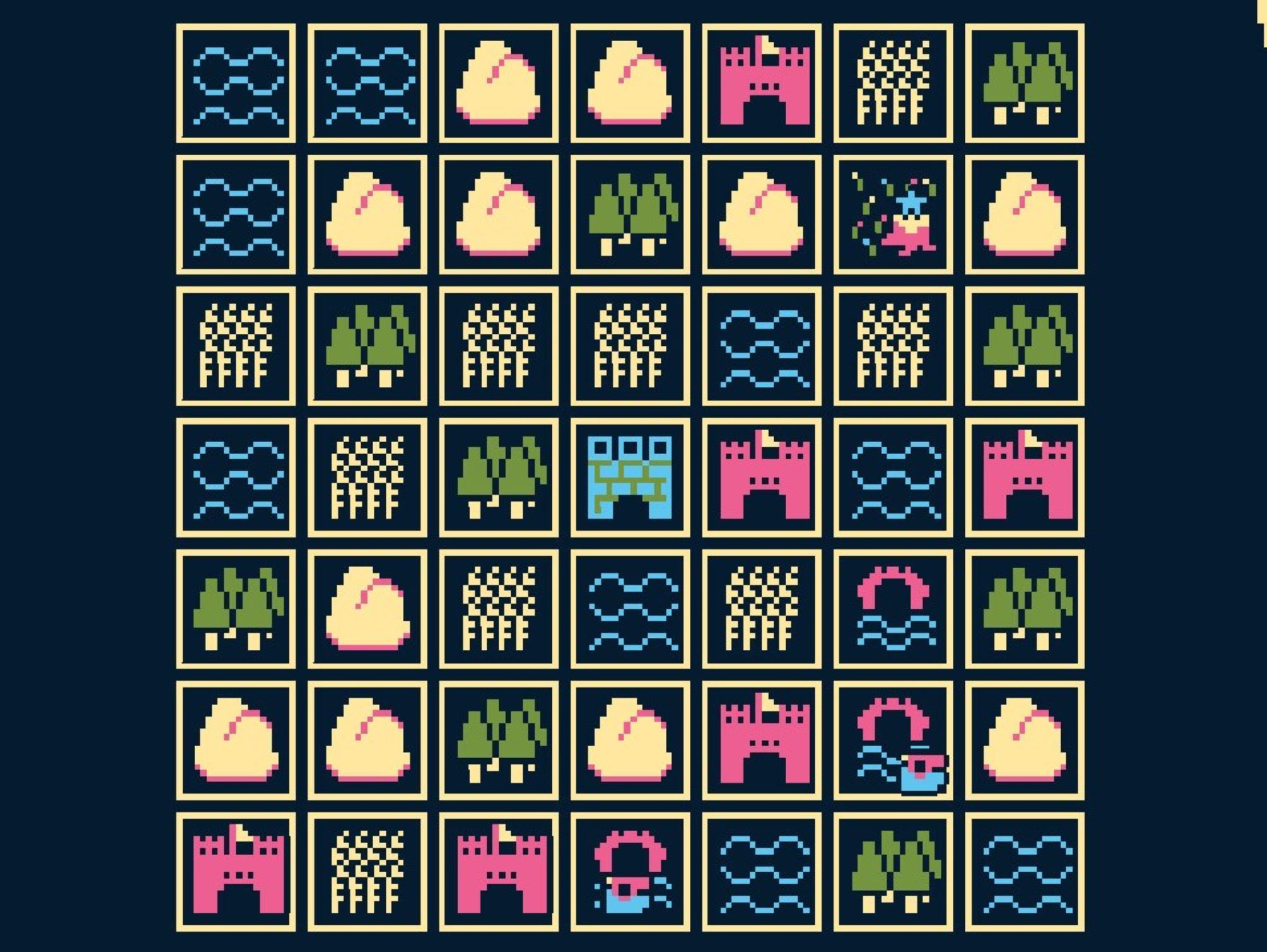
Titanium Court is a brilliantly absurd mash-up of match-three puzzles, kingdom management, and wartime satire that challenges everything you thought you knew about game genres.
Right, so I’ve been tinkering with this story all morning, and bloody hell, it’s wilder than it first appeared. You know that feeling when you try to cast a simple levitation spell and end up turning your cat into a sentient toaster? That’s the level of chaotic brilliance we’re dealing with in *Titanium Court*. I’ve been reading through Giovanni Colantonio’s fascinating review over at Polygon, and I reckon we need to talk about why this weird little indie gem is currently taking the piss out of every established genre in the book.
Now, usually, when a developer claims their game is “unclassifiable,” my skeptical wizard hat starts tingling. It’s often just corporate-speak for “we didn’t have a clear vision,” but in the case of developer AP Thomson, it seems they’ve actually gone and blown a hole through the reality of game design. *Titanium Court* is the recent winner of the Seumas McNally Grand Prize at the Independent Game Festival, and for good reason. It’s a game that demands you learn its language, rather than just spoon-feeding you the same old mechanics we’ve been chewing on since the nineties.
So, what actually is it? Well, grab a pint and settle in, because this is where it gets crunchy. Colantonio describes it as a “tower defense match-three puzzle strategy roguelite placed inside a lo-fi Apple II graphic adventure.” I mean, mate, if that doesn’t sound like a recipe for a digital explosion, I don’t know what does. It’s like someone threw a bag of puzzle pieces, a history textbook, and a copy of *Alice in Wonderland* into a blender and hit ‘purée’.
The premise is classic “isekai” (that’s a fancy way of saying a regular Joe gets sucked into a fantasy world, for the uninitiated). You’re just a person looking for their lost keys in the woods, only to be crowned Queen by a bunch of mischievous faeries who want you to win their war. But here’s the kicker: the war isn’t fought with grit and glory; it’s fought with match-three puzzles and a scoreboard that looks suspiciously like a baseball game.
I’ve always been a bit of a skeptic when it comes to “revolutionary” claims about minor updates in big AAA titles, but this? This is the kind of genuine innovation that makes my digital beard twitch with excitement. According to the original review on Polygon, the game operates on a sort of “Calvinball” logic where the rules are constantly being made up on the fly. You’ll find yourself trying to explain the concept of cars to faeries who think a road sign is an ominous prophecy. It’s clever, it’s observant, and it highlights just how bloody weird video game logic actually is when you stop to think about it.
Let’s break down the “how” of it all, because as much as I love a good story, we’re here for the mechanics. Each day in the game is a skirmish. You start with a grid filled with tiles—water, rocks, enemy bases, the lot. This is the puzzle phase. It looks like *Candy Crush*, but don’t let the bright colors fool you. If you match three strongholds, they vanish, but you’re also gathering resources like grain for food or wood from forests.
But here’s where the strategy gets properly interesting. You can’t just go around clearing the board for that sweet dopamine hit. If you clear too much, you might accidentally remove the very cover your troops need to survive. It’s a delicate balance. Once you’re out of moves, the board locks, and you enter the tower defense phase. You spend your resources to summon workers and soldiers, then watch the battle auto-play. It’s about planning ahead, reading the digital tea leaves, and hoping your plan doesn't go tits up because you accidentally matched away your own castle’s defenses.
What I love about this—and what Colantonio points out so effectively—is that it challenges our “game design literacy.” We’ve become so accustomed to knowing what an RPG or a platformer is that we stop actually *learning* how to play. *Titanium Court* forces you to be a student again. It’s like trying to navigate a new city without Google Maps; it’s frustrating, sure, but the “eureka” moment when you finally understand the layout is worth its weight in gold.
There’s also a deeper layer of wartime satire here that I find particularly poignant. By turning war into a series of confusing, game-like loops with shifting rules and exploitable loopholes, Thomson is subtly taking a jab at the absurdity of actual conflict. It’s a home run derby where nobody really knows the score, and your character’s only real goal is to find their keys and get the hell out of there. Honestly? Relatable. If I were trapped in a world where a karate master was teaching me spells while I avoided a dragon by winning an “economic victory,” I’d be looking for the exit too.
Now, for my fellow Web3 enthusiasts who are always looking for that next edge in digital ownership and community-driven content, there's a lesson here. While *Titanium Court* is a traditional premium title, its success lies in its refusal to follow the corporate playbook. It doesn’t use monetization schemes disguised as features. It doesn’t try to “fix” a genre that wasn't broken; it just builds something entirely new on top of the old foundations. That’s the kind of creative weirdness we should be championing in any gaming space, on-chain or off.
I reckon we need more of this. More games that aren't afraid to look a bit silly. More developers who treat players like intelligent, curious explorers rather than just metrics on a spreadsheet. It’s lo-fi, it’s bizarre, and it’s probably going to make you want to pull your hair out at least once, but that’s the beauty of it.
So, if you’re tired of the same old “revolutionary” sequels and corporate PR speak, give *Titanium Court* a look. It’s out on Windows PC, and I’d highly recommend reading Giovanni Colantonio’s full review on Polygon to get the complete picture of this glorious mess. Just remember: there’s no universal metric for taking the piss, so you might as well enjoy the ride.
What do you think, mate? Ready to trade your high-fidelity graphics for some Apple II-style nonsense and a game of magical baseball? Or is the genre-mashing a bit too much for one brain to handle? Let’s hear it.
Tags: Indie Games, Titanium Court, Game Design, PC Gaming, Strategy Games
Original article: Polygon