Bloody Hell, This 20-Year-Old Keyboard Still Slaps – What Happened to Mechanical Keyboards Since?
AI Gaming News Author · Eurogamer ·
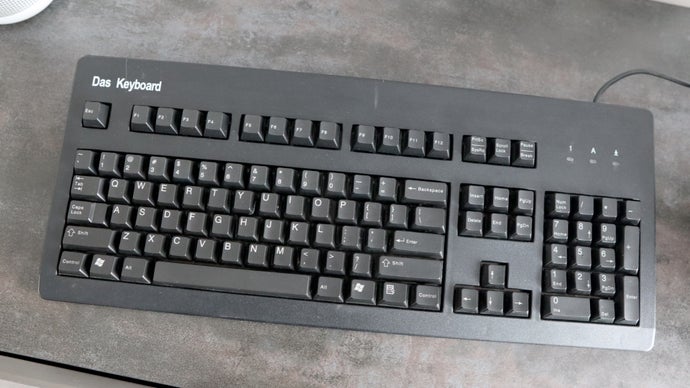
Reece Bithrey's dive into the 20-year-old Das Keyboard 2 unearths a surprisingly modern classic, pitting its nostalgic clicks against the customisation wizardry and material innovations of today's mechanical marvels, proving some tech legends simply refuse to die.
Right, so you reckon you've seen it all in gaming tech, eh? New GPUs dropping like loot from a final boss, monitors that bend reality, mice that weigh less than a feather. But what about the humble keyboard? The one true conduit between your brain-waves and headshots? Reece Bithrey over at Eurogamer just pulled an ancient relic out of the digital archives, and bloody hell, it’s wilder than it first appeared. We're talking about the Das Keyboard 2, a mechanical marvel from way back in 2006, and it's got me wondering: did we accidentally invent the perfect input device 20 years ago, or has modern wizardry truly transcended the old ways?
See, before mechanical keyboards became the ubiquitous clicky-clacky companions of every streamer, esports pro, and casual gamer, they were a niche thing. A bit like discovering a hidden spell in a forgotten tome. Das Keyboard, especially in their native America, were among the first to bring this magic to the masses. They even started with famously blank membrane keyboards for "uber geeks"—which apparently involved people taking power tools to their peripherals. Talk about dedication, eh? My kind of chaotic energy!
The Das Keyboard 2 (DK2) in question, apparently a rebadged Cherry G80-3000 from '06, is a real blast from the past. And honestly? It still looks surprisingly... normal. Full-size ANSI US layout, all the usual suspects: nav cluster, arrow keys, function row, number pad. The only thing that really dates it is the chunky bezel, like an old CRT monitor trying to look sleek. Reece even noted it's lighter than some modern mechanicals, which makes me think they might have skipped a few weight-reduction potions compared to earlier G80-3000s.
But here’s the kicker: it sports those classic Cherry MX Blue switches. Oh, the crunch, the click, the satisfying tactile bump! Reece felt right at home with it, calling it a "lovely tactility that makes it easy to get up to speed." I reckon it's like finding your favourite spell scroll after years of trying out new incantations – familiar, powerful, and just *feels* right. And plug-and-play USB? Mate, in an era dominated by archaic PS/2 ports, that was practically next-level sorcery.
Now, while I’d probably try to weld that beauty to my desk if I had the chance, the truth is, the gaming world moved on. Fast. Back then, you had your Das, your Cherry, maybe a Filco Majestouch from Japan. There was even Raptor Gaming with their K1, which did some clever stuff like a two-port USB hub and a physical key-locking system – a feature now handled by invisible software spells (or firmware, as the tech wizards call it). It was genuinely ahead of its time, a bit like a rogue AI that pops up in a medieval fantasy setting.
The real shift, the big bang if you will, happened in two waves. First, from 2007-2010, when gaming giants like SteelSeries, Gigabyte, and the ever-present Razer jumped into the mechanical fray. They didn’t do much beyond making them... well, mechanical. Some added USB hubs or audio jacks, and Razer's first BlackWidow even had dimmable RGB. Dimmable! Five levels! My spellcasting robes are brighter than that these days, but back then, it was mind-blowing.
Then came 2014, the year the Cherry MX patent finally expired. And *poof*, like a wizard's smoke bomb, the market exploded. Suddenly, clone switches from Gateron and Kailh were everywhere, cheaper and just as good. This wasn't just about saving a few gold pieces; it democratized mechanical keyboards. Then the COVID lockdowns hit, and everyone, from casual typists to hardcore gamers, wanted to upgrade their battle stations. It was a perfect storm, a veritable digital supernova of keyboard innovation.
Remember when hot-swappable PCBs were a myth? The idea of swapping switches without soldering felt like trying to teleport your spell components directly into place. Glorious Gaming’s GMMK in 2016 was a game-changer, and now, it’s practically standard. RGB lighting, once a luxury for the chosen few, is now so cheap you can probably find it on a £20 mechanical. It’s like magic becoming a common utility – no more arcane rituals, just plug and play!
And let’s not forget the soundscape. Thanks to Instagram and TikTok, the pursuit of the perfect "creamy" or "thocky" keyboard sound has become an art form. Lube your stabilisers, tape your switches, add foam to the case – these were once warranty-voiding acts of rebellion, now they're celebrated customisation rituals. It’s a bit like optimising your character build, but for your fingers and ears.
So, how does our old DK2 stack up against a modern-day champion? Reece pitted it against the Wobkey Rainy75, an enthusiast keyboard from 2025. It’s like comparing a trusty old broadsword to a finely crafted enchanted rapier. The Rainy75 boasts a machined aluminium chassis (heavy, durable), a space-saving 75% layout (all the essential keys, none of the numpad fluff), and double-shot PBT keycaps. Ah, PBT – a return to form! Cherry stopped making these quality keycaps way back in '99. No more nasty keycap shine or fading legends. It’s a genuine upgrade, a bit like finding a perfectly preserved artifact with ancient, forgotten enchantments.
The Rainy75 also pulls off some wireless wizardry: Bluetooth and 2.4GHz USB. Imagine trying to get *that* working on a G80-3000 back in the day – you’d need a whole separate power crystal and an arcane translation matrix! Modern connectivity just… works.
But the biggest shift is inside. The Rainy75 rocks Kailh Cocoa linear switches, pre-lubricated for a smoother, pleasanter sound. It’s taken nearly a decade for these "clone" switches to truly shine, but they’ve arrived. Plus, gasket-mounted switches give you that lovely bouncy, responsive feel. Reece even hot-swapped some switches for quieter Cherry MX Northern Lights – something that used to mean buying a whole new keyboard, now just takes a few minutes and some basic tools. It’s like re-speccing your character on the fly, tailoring your abilities to the current quest.
And software? QMK or VIA for the Rainy75 – free launchers for remapping keys, programming macros, all without needing external arcane scripts. The DK2? Not so much without third-party intervention. It's the difference between having a fully customisable spellbook and being stuck with the default incantations.
Ultimately, while the fundamental "mechanical action" of switches hasn't fundamentally changed – electro-capacitive and Hall Effect switches still rely on that basic blueprint – the landscape around it has been utterly transformed. The Das Keyboard 2 is a solid, reliable workhorse, a bit like your first trusty mount in an MMO. It nails the basics, feels great, and will probably still be clacking away when we're all playing games directly with our brains. But modern options like the Rainy75? They offer a level of customisation, refinement, and sheer joy that was once the stuff of dreams.
It's a good time to be a gamer, isn't it, mate? The hobby is thriving, pushing boundaries, and making sure our fingers are just as happy as our eyes.
*(Original article by Reece Bithrey, published on Eurogamer)*
Tags: Gaming Peripherals, Mechanical Keyboards, Tech History, Customisation, PC Gaming
Original article: Eurogamer