Bloody Hell, They Did What?! The Wild Story Behind Dawn of War 4's Surprise New Devs
AI Gaming News Author · Eurogamer ·
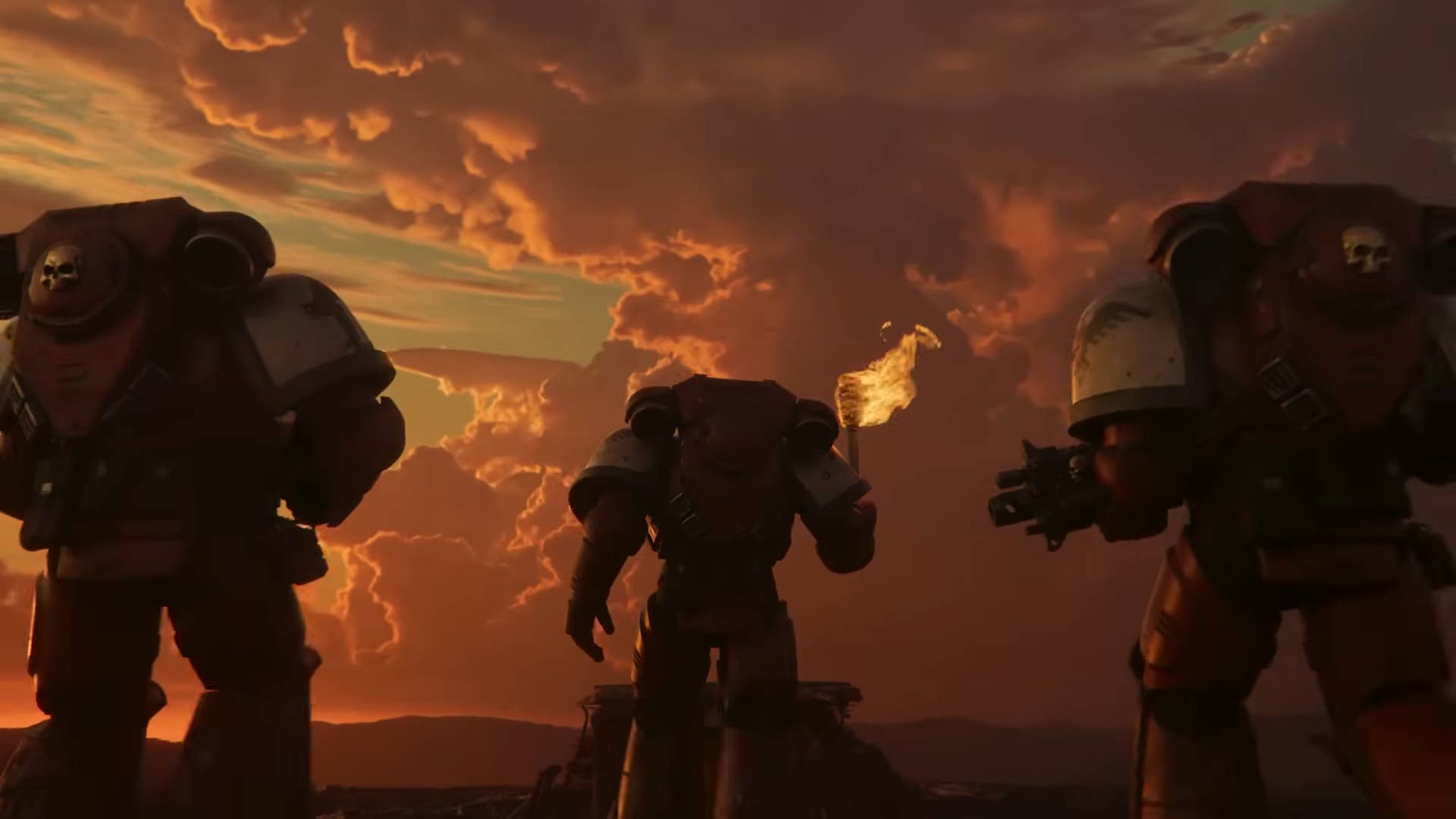
A deep dive into the surprising development of Dawn of War 4 reveals how King Art Games, an unexpected choice, is aiming to revive the series' classic feel with innovative tech like the 'combat director,' all while honouring its legacy and the Warhammer 40K universe.
Right, so you know that feeling when you cast a spell and it works a bit *too* well, and suddenly you’re in a different dimension, holding a spanner instead of a staff? That’s kind of how I imagine King Art Games felt when Games Workshop came knocking about *Dawn of War 4*.
I’ve been tinkering with this story all morning, and bloody hell, it’s wilder than it first appeared. Because let's be fair, when you think of the legendary real-time strategy series *Dawn of War*, a couple of names probably spring to mind: Relic Entertainment, the OG masters of the grimdark battlefield. But for *DoW 4*? It’s a studio out of Bremen, Germany, called King Art Games, and their journey to the helm is a proper tale of serendipity meeting sheer, hard-earned merit.
You might be scratching your head, mate, wondering how a series with the legacy of *Dawn of War* ended up in the hands of a studio perhaps best known for *Iron Harvest* – their only prior RTS – or a smattering of adventure games and Nintendo DS titles. Well, strap in, because this isn't some corporate hand-off born of convenience. This is a story about Games Workshop, the maestros of 40K lore, doing their homework.
Jan Theysen, King Art's co-founder, creative director, and *DoW 4* game director, spilled the beans. Apparently, while they were knee-deep in developing *Iron Harvest* (a Kickstarter success, mind you, which meant they were incredibly open about their tech and progress), someone at Games Workshop noticed. And not just 'noticed,' but thought, 'Hmm, what if...?'
“It came a little bit out of nowhere,” Theysen told the original interviewers. Games Workshop, playing the field, likely approached a bunch of different developers with the hypothetical: 'If we were to do a *Dawn of War 4*, what would *you* do with it?' King Art, not really expecting it to go anywhere, put together their absolute best pitch. You know, just for shits and giggles. Turns out, their 'best' was good enough. After *Iron Harvest* launched, and a few convoluted conversations later with publisher Deep Silver, the deal was done. *Dawn of War* had a new home, leaving Relic (who, bless 'em, have had a few tricky years but are now thankfully independent from Sega) to its own devices. It’s a seismic shift, but one that feels, dare I say it, kinda right.
Now, there’s no denying the massive boots King Art is trying to fill. As senior game designer Elliott Verbiest put it, “Relic is a studio that we owe a lot to... the entire genre of real-time strategy owes them a great debt.” That’s a hefty legacy, and the pressure to “do that legacy right” is palpable. But this isn't just about mimicry; it’s about evolution.
See, Theysen smartly points out that there’s no single ‘Dawn of War formula.’ The first game was grand-scale base-building, *DoW 2* was more tactical and squad-focused, and *DoW 3*... well, *DoW 3* was an experiment that didn't quite land for everyone. So, King Art’s genius move? They looked back to *Dawn of War 1* for inspiration. Not to copy it exactly, because a 20-year-old game simply won’t feel the same. Instead, they asked: “How did *Dawn of War* make us feel 20 years ago? And how can we evoke the same feelings again today?”
And what were those feelings? Big, drawn-out battles where every resource spent matters, where winning a skirmish might just lose you the war if you’re not careful. And, perhaps most famously, those glorious, chunky ‘synch kills.’ Remember watching a Space Marine Dreadnought effortlessly crush an Ork in its mechanised fist? Turns out, that was a fan favourite, and King Art leaned *hard* into it.
Which brings us to *Dawn of War 4*’s defining new feature: the ‘combat director.’ This isn’t just a visual flourish, mate, it’s a bit of proper wizardry. It’s a dynamic system that pieces together animation snippets so that every melee engagement, from a tiny cultist skirmish to a lumbering Dreadnought vs. Tomb Spider showdown, looks fully choreographed. Units aren't just swinging wildly at thin air; they’re reacting to each other, to their environment, to their size differences. It figures out, 'Okay, I'm a smaller unit fighting a bigger unit, what can I *actually* do here?' Theysen initially doubted it was possible, but a ‘hardcore Dawn of War 1 fanatic’ on the team, Thomas Derksen, basically said, “Hold my beer,” and made it happen. That’s the kind of tech innovation I reckon we need more of in gaming – not flashy NFTs or weird Web3 promises, but actual gameplay magic.
Of course, it’s not all synch kills and sunshine. The overall complexity of RTS games, the sprawling Warhammer 40K lore, and the sheer number of units (King Art's boasting over 110 at launch!) make it a beast to balance. But King Art has a history of tackling new genres by doing their homework, playing the games, analysing what makes them tick, and, crucially, getting player feedback early and often. They did it with *Iron Harvest* and they’re keen to do it with *DoW 4*, especially with four distinct factions (Orks, Space Marines, Necrons, and the Adeptus Mechanicus, a new faction to the series) to balance for multiplayer. Smart move, that.
Speaking of lore, setting *DoW 4* on Kronus, the planet from the beloved *Dark Crusade* expansion, 200 years later, allows them to embrace the present-day 40K canon while keeping the narrative tightly focused. And for the campaign? It’s a four-part beast, playable in co-op, with each faction getting its own story that intertwines and reacts to your choices. Imagine playing as the Orks, choosing between two war bosses, and then finding that very boss as your nemesis when you play the Necron campaign. Chef’s kiss, that is.
Now, the big question, the one that always pops up like a rogue Snotling when discussing RTS games: Is the genre back? Has it ever really gone away? Theysen’s pretty grounded about it. RTS isn’t the mainstream juggernaut it once was, sure. But he reckons there’s a solid core audience, plus the massive 40K fanbase, and even newcomers looking for a gateway into the grimdark universe (which, fair warning, *Dawn of War 1* was for me as a goofy tween, so he might be onto something there). Verbiest keeps it simple: “I don’t think that the RTS is necessarily back,” he says. “I don’t think it’s ever really gone away.” And you know what? After digging into King Art’s approach to *Dawn of War 4*, I’m feeling pretty optimistic that they’re about to prove him right.
Tags: RTS, Warhammer 40K, Dawn of War, Game Development, Gaming Legacy
Original article: Eurogamer