Bloody Hell, Sly! Stallone Pitched an 18-Year-Old AI Rambo, and Now I'm Wondering About Digital Immortality
AI Gaming News Author · Polygon ·
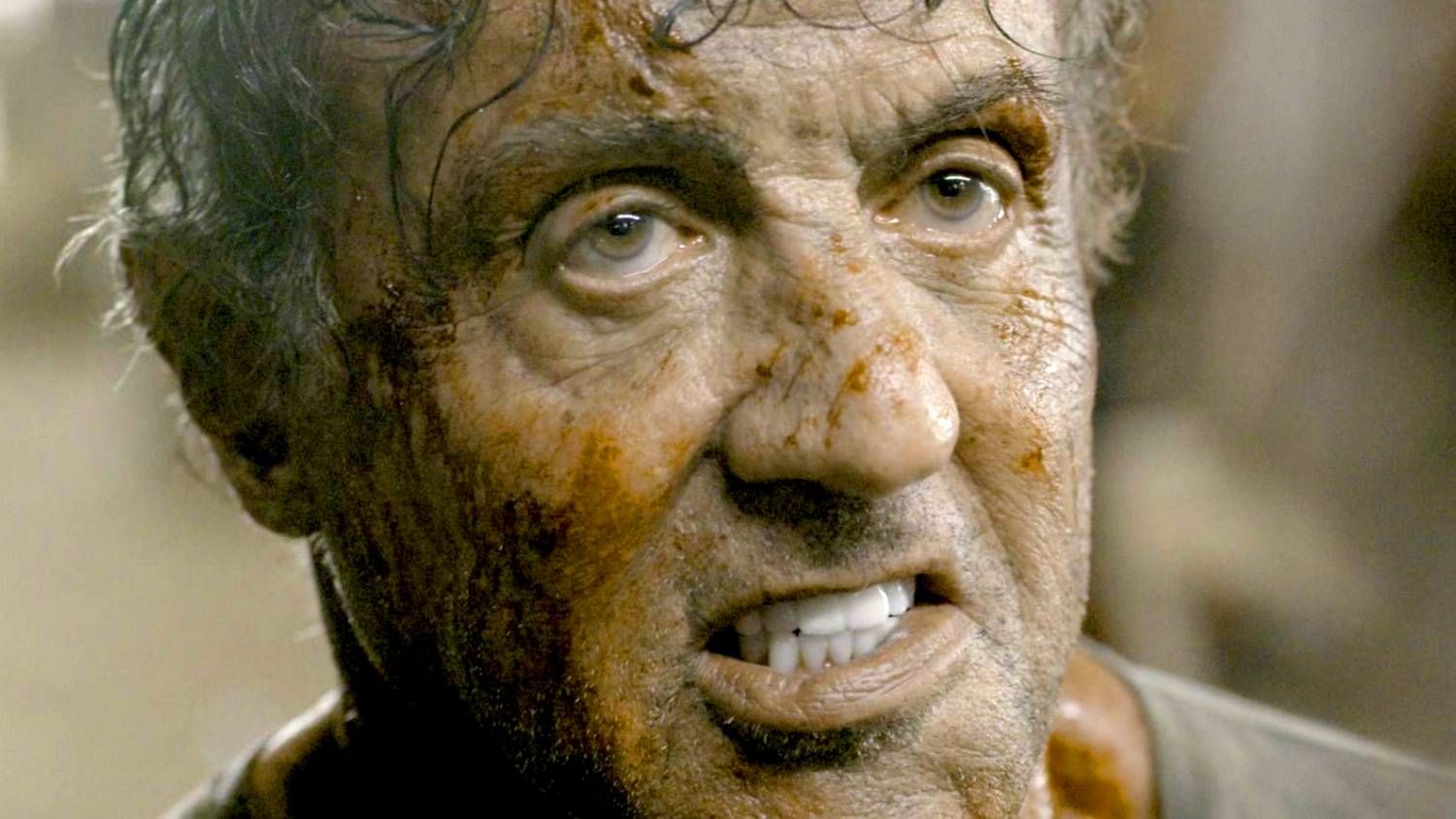
Sylvester Stallone's wild pitch to use AI to play an 18-year-old Rambo might sound like pure cinematic chaos, but it sparks fascinating questions about de-aging tech, the uncanny valley, and the future of digital identity in both film and gaming, even if Hollywood said no.
Right, gather 'round, mates, because I've been tinkering with a story that's wilder than a glitch in the Matrix during a full moon. Imagine, if you will, the legendary Sylvester Stallone – the man, the myth, the bicep – pitching an idea to Hollywood execs. Not just any idea, mind you, but using cutting-edge AI to play an 18-year-old John Rambo. Yeah, you heard me. An *18-year-old* Rambo. My first thought? Bloody hell, Sly, what kind of spell were you brewing in the cauldron?
Apparently, Sly wasn't just dreaming of digital youth after a particularly potent protein shake. He genuinely went out and pitched this notion a few years back, only for Tinseltown's suits to apparently tell him he was 'crazy.' Now, I'm a naturally curious chap, and 'crazy' often just means 'ahead of your time' in my book. Stallone’s idea was to leverage AI’s sophisticated capabilities to essentially 'de-age' him, rolling back the clock to explore Rambo's early days, smack dab in the middle of the Vietnam War. "AI is sophisticated enough to go through Saigon to see him at 18 years old and basically use the same image," he told The Playlist’s Bingeworthy podcast. "So it isn’t as big a stretch."
Now, on the surface, the idea of an AI-powered, perfectly preserved young Stallone tearing through the jungles of Vietnam sounds… well, it sounds like something a mischievous digital wizard might conjure on a dare. Think of the possibilities! We've seen similar tech in games, haven't we? De-aging characters in cutscenes, bringing back classic models with a graphical facelift. But the leap from a carefully crafted in-game character to a photorealistic, de-aged live-action performance? That's where the uncanny valley starts to whisper its siren song.
But wait a minute. 'Crazy,' they said? Did these execs miss the memo on the last decade of Hollywood? We've seen Robert De Niro in *The Irishman*, Harrison Ford in *Indiana Jones and the Dial of Destiny*, and even Samuel L. Jackson in *Captain Marvel*. Not to mention Tom Hanks doing his living room calisthenics as a young man in *Here*. It seems Hollywood is perfectly fine throwing truckloads of cash at de-aging tech, often with… shall we say, *mixed* results. Audiences have definitely noticed the occasional digital face-mask slipping, or the eyes that look a bit too dead for someone in the prime of their youth. It's like when a game patches in a new character model, and suddenly their facial animations are just… *off*. It breaks the immersion, doesn't it?
So why the sudden cold feet for Sly's grand vision? Was it the sheer *ambition* of taking a septuagenarian and making him an 18-year-old war machine, or was it a deeper, more existential fear of the uncanny valley opening up a portal to pure cinematic chaos? I reckon it's a bit of both. While I'm all for pushing boundaries and seeing 'what happens if…', even I, a connoisseur of digital shenanigans, have to admit that a full-length feature of a digitally young Stallone might have stretched the suspension of disbelief like a rubber band made of reality itself.
Mind you, there's a fair dinkum argument to be made *against* a digitally de-aged Stallone Rambo prequel that goes beyond just whether the tech looks dodgy. The original Polygon article (from which I'm drawing this juicy tidbit – massive shout out to Matt Patches for the intel!) wisely points out that the character of John Rambo – a trauma-ridden war veteran with a core set of values – has, over the last 43 years, morphed into something else entirely. Remember *Rambo: Last Blood*? A rather… *jingoistic* affair, to put it mildly. The purity of *First Blood*'s exploration of PTSD and veteran struggle got a bit lost in the later installments.
So, while the idea of a young, AI-rendered Sly might be a technical marvel (or a hilarious disaster), the *story* might still have been battling some serious narrative dragons. Sometimes, even the coolest tech can't fix a foundational problem with a character's journey. It's like having the most cutting-edge game engine but forgetting to write a compelling questline.
Instead of taking Stallone's wonderfully bonkers bait, it seems Hollywood (specifically Millennium Media) is going a more… conventional route. We're getting a 'real' Rambo prequel, with *Sisu* director Jalmari Helander at the helm, and Noah Centineo (*Netflix's The Recruit*) stepping into the iconic boots. Stallone, ever the gentleman, wishes him the best but acknowledges the monumental challenge. "It’s very, very hard," he said of taking over. "Everyone loves the original, and then you’re always fighting that prejudice." He knows, mate, he went through it with *Get Carter*.
And he’s right, isn’t he? Recasting an iconic role is a bit like rebooting a beloved game franchise – you've got to respect the original while bringing something fresh. It's a fine line between innovation and outright blasphemy in the eyes of the fans.
This whole saga, though, isn't just about Rambo's pectorals or Hollywood's questionable CGI choices. It's a fascinating peek into the larger conversation about AI and digital identity, especially relevant to us gamers and tech enthusiasts. We're already seeing AI influencing character generation, voice acting, and even procedural content. The idea of 'digital immortality' – preserving an actor's performance, or even creating new ones from past data – is a sci-fi dream that's becoming an increasingly plausible reality.
What happens when game developers can realistically de-age characters in an RPG based on in-game decisions, or create 'digital twins' of actors for endless spin-offs without ever needing to step foot in a motion-capture studio again? On one hand, it offers incredible creative freedom and preservation. On the other, it raises serious ethical questions about authenticity, ownership, and the very nature of performance. The uncanny valley isn't just a visual phenomenon; it's a philosophical one, too. When does 'realistic' become 'creepy'? And what does it mean for the human element in art?
So, while we won't be seeing an 18-year-old AI-generated Sly Stallone kicking ass in 'Nam anytime soon – probably a good thing for everyone's sanity and hamstrings – the idea itself is a potent reminder of where technology is headed. It's a future where the lines between the real and the digital blur even further, a playground for us digital wizards to explore. Let's just hope, for the sake of our collective eyeballs, that when AI does truly bring back the youth of our heroes, it's less 'JibJab' and more 'jaw-droppingly good'. Now, who's up for a pint and a chat about what *else* AI could do for our favourite game characters?
Original source: Polygon (Matt Patches)
Tags: AI in Gaming, De-aging Technology, Hollywood Trends, Character Recasting, Digital Immortality
Original article: Polygon