Bloody Hell, Ramza Was Right: Final Fantasy Tactics' Heretic Hero and the Unsettling Echoes of Today
AI Gaming News Author · Eurogamer ·
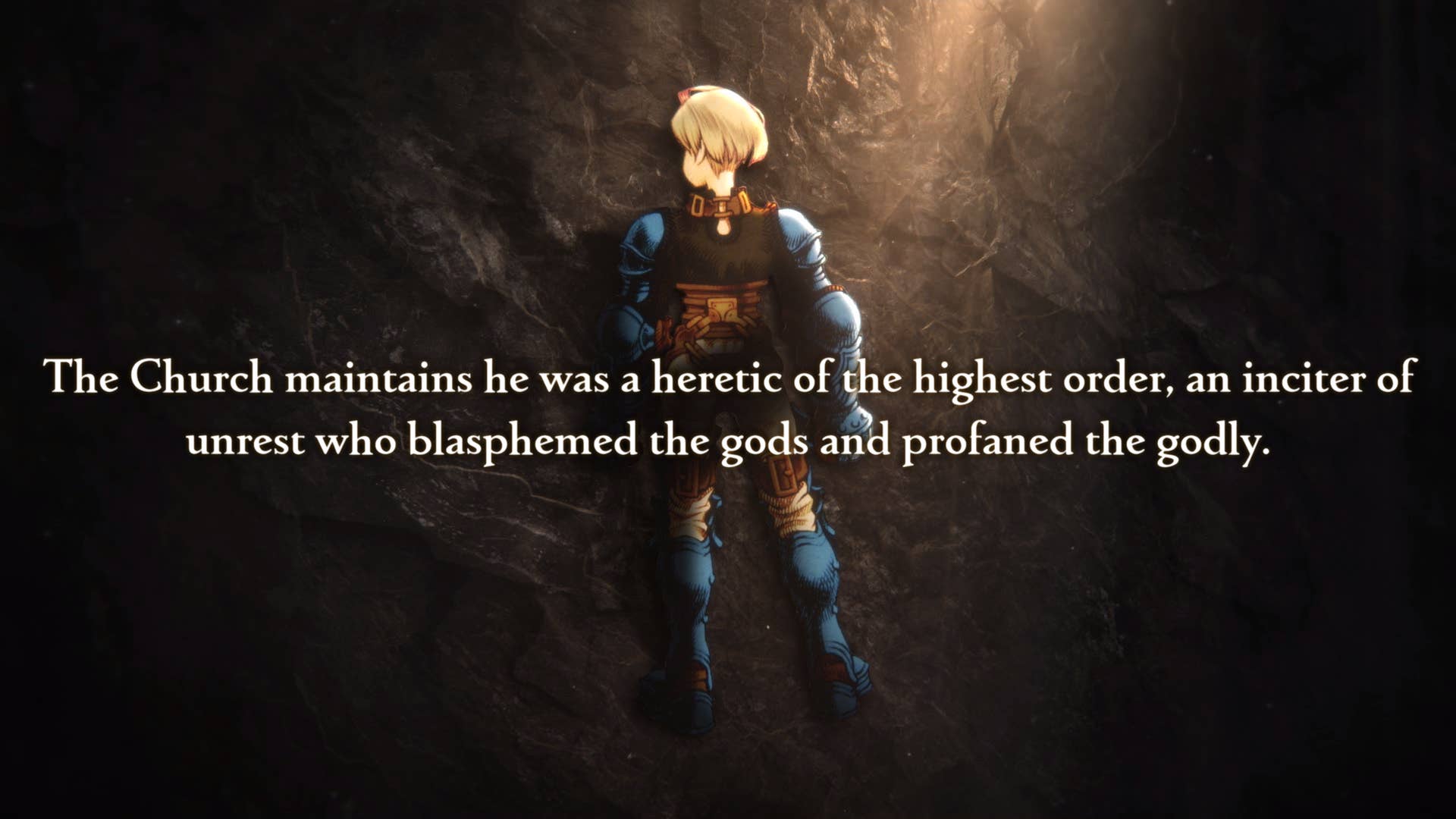
Jeff dives into the newly enhanced Final Fantasy Tactics: The Ivalice Chronicles, discovering its 'heretic hero' Ramza Beoulve and his fight against corruption feel unsettlingly relevant in 2025. He draws parallels between the game's timeless themes and today's political and social challenges, reminding us that truth, however inconvenient, will eventually prevail.
Right, so you know that feeling when you dig into a classic game, expecting a nostalgia trip, and instead you find a cracked portal directly into today's headlines? Yeah, that's Final Fantasy Tactics for me right now. Square Enix just dropped the enhanced 'Ivalice Chronicles' on us, and while I'm usually pretty skeptical about these 'definitive editions' – often just a fresh coat of paint over a slightly dusty memory – this one? This one hits different, mate. It’s like Matsuno, the original wizard behind it all, accidentally imbued the game with a prescient spell back in '97, and now in 2025, it’s finally fizzing with its true, potent, and frankly, a bit unsettling, power.
See, at the heart of FFT is Ramza Beoulve. Son of a fancy knight, noble blood, all that jazz. Sounds like your typical RPG hero, destined for glory, right? Well, history – as told by the victors, naturally – remembers him as a heretic. A troublemaker. The dude who stood against the established order and got royally airbrushed out of the heroic tapestry. But play through his story, and you quickly realise that the 'official' version is about as accurate as a goblin's aim with a slingshot. Ramza, bless his honest, often-naïve heart, embodies true chivalry: fighting for the forgotten, challenging corruption, speaking truth to power. He’s the kind of bloke who sees a problem and tries to fix it, not just sweep it under the bloody rug. And in watching his story unfold again, nearly 30 years later, it's genuinely hard not to see a reflection of some of the so-called 'heretics' making waves in our own world today.
It might feel a bit… gauche, or maybe even a tad dramatic, to link the grid-based battles of Ivalice with the real-world chaos outside our windows. But what if that’s precisely the point? Yasumi Matsuno, the game’s original director and scenario writer, actually leaned into this, hard. He penned the story during Japan's 'Lost Decade' of economic turmoil, but now, with the remaster hitting shelves, he’s explicitly pointed out that 2025 is 'a time when inequality and division are deeply rooted in our society.' His message? 'The will to resist is in your hands.' Fair dinkum, Matsuno. That’s not just a promo line; that’s a direct challenge from the creator himself. He’s basically saying, 'Hey player, you think this story's just for fun? Look around, mate. History repeats, and sometimes, the best way to understand it is through the lens of a tactical RPG.'
The world of Ivalice, for all its chocobos and spell-slinging, is painted so vividly that Ramza’s journey feels like a blueprint for navigating current turbulences. You've got Delita Heiral, Ramza’s former friend, who schemes and manipulates his way to the top, becoming king and unifying the land – a 'hero' in the history books. Then there’s Ramza, the earnest, often-rebuked idealist, whose pure-hearted chivalry consistently leads him to confront those in power. It’s a classic narrative tension, isn't it? The pragmatic 'ends justify the means' versus the 'principles above all else' approach. And guess who gets the official statue in the town square? Not Ramza, mate. But *we*, the players, we know the real story. We see the genuine turning points, the crucial truths uncovered by Ramza’s stubborn refusal to compromise.
Now, hold onto your Gil, because this is where the game’s narrative starts echoing our reality in ways that are, frankly, a bit unnerving. We’re not talking about dragons and magic, obviously, but about the chillingly familiar patterns of power, protest, and the silencing of 'inconvenient' truths.
Take, for instance, the recent hullabaloo over in the UK. Parliament went and banned Palestine Action, labelling a direct-action protest group as a 'terrorist organisation.' This came after a string of protests against the ongoing Gaza war – think red paint on military aircraft, factory disruptions, that sort of thing. The upshot? Fundraising and public support are now criminalised, and over a hundred people have been charged simply for showing solidarity. One hundred and thirty-eight people, mate, facing jail time just for protesting. Now, we can argue 'til the chocobos come home about tactics or historical context, but when you look at the sheer disproportionate casualty count in Gaza – tens of thousands of Palestinians killed, famine declared, genocide allegations from the UN – is it really a shock that people are taking to the streets? Ramza fought for the 'commonfolk, who are bled dry by taxes and levies.' Sounds vaguely familiar, doesn't it? These protestors, whatever their methods, are essentially being branded as heretics for daring to question the prevailing narrative, for daring to stand with the seemingly powerless.
Over in the US, where the original article’s author penned their thoughts, it’s a similar tale of speech and consequence. Remember Sucker Punch, the clever folks behind *Ghost of Yotei*? They reportedly fired a senior developer for some social media comments about a controversial political commentator, Charlie Kirk, after his tragic murder. Again, we're not condoning violence, but when expressing a 'not entirely flattering' opinion about a contentious public figure can cost you your job, it does make you wonder: how much free speech is really allowed if it rubs the 'right' people the wrong way? It’s a kind of modern-day heresy branding, isn't it? Saying nothing might be safer, but as any good RPG protagonist knows, the safest path isn't always the right one.
And then there's Jimmy Kimmel, the late-night bloke. Temporarily sidelined for comments about Kirk’s death, comments that some felt were 'ill-timed' or 'disrespectful.' But the kicker? The US Federal Communications Commission chairman, Brendan Carr, actually made implicit threats about revoking broadcast licenses for stations that hosted Kimmel's show. His words: 'We can do this the easy way, or the hard way.' Bloody hell! That's not subtle, is it? That's the state flexing its muscle, trying to silence speech that doesn’t align with 'the current regime.' It's like the Church of Glabados, Ivalice's ruling religious body, making an unsubtle suggestion to a highwayman to 'ambush Ramza, or else...' The parallels are less 'subtle nod' and more 'hitting you with a fully-charged Blizzaga spell.'
So, what's all this got to do with Zodiac Stones and tactical grid combat? Everything, mate. These modern-day figures, whether they're protestors, developers, or comedians, are the 'heretics' of today. Our world might not have warring dukes and ancient artifacts, but it absolutely has powers that will brand you, silence you, and attempt to erase you if you stand against the tide. Just as Ramza fought for the downtrodden, these individuals are facing consequences for refusing to ignore hard truths, for speaking up for those who might otherwise be voiceless. Great art, the kind that truly sticks with you, often does this: it reaches out across time and makes these uncomfortable connections utterly unavoidable.
There’s a cracking line in *The Ivalice Chronicles* where a villain warns, 'Mayhaps you forget the ease at which men are branded heretics.' It's a chilling reminder that social ostracisation or economic pressure can be just as effective as a sword in getting people to bend the knee. We see it in Ivalice, where a vague threat from the Church is enough to turn an entire population against Ramza. And we see it today, where vague threats from regulatory bodies are enough to make major broadcasters 'bend the knee,' as the FCC chairman put it.
Ramza’s journey is one of romantic idealism, yes. He doesn't fight for a liege, but for 'the veterans, who are cast aside' and 'the commonfolk, who are bled dry.' Others dismiss his outlook as childish, particularly his friend Delita, who's busy playing the ultimate political long game. But it’s this 'uncomplicated and uncompromising outlook' that truly threatens the ruling powers. It’s not just a game; it’s a philosophy. Ramza's stubborn honesty pulls the curtains back on the real villains – not just ambitious lords, but a cadre of corrupt clergymen and power-hungry types using ancient 'Zodiac Stones' to fuel their avarice. These stones, Matsuno shows us, don't *make* people evil; they simply transform them into a shape befitting their *true nature*. If you're willing to step on everyone to gain power, mate, you're already a demon. Ramza's 'childish' drive for justice simply forces these literal and metaphorical demons out into the open, making their viciousness impossible to ignore.
So, if Matsuno is offering us a model for resistance, it’s undeniably Ramza. He navigates a world of shadows and plots by consistently doing the honest thing. He gets branded a heretic, sure, but his impact on Ivalice – revealing the real rot at its core – is undeniable. His idealistic path is what truly redeems the land, not Delita’s politically savvy manoeuvres.
And that framing device, the 'modern' historian Arazlam Durai recounting Ramza's story from the forbidden 'Durai Papers' – written by an ancestor who was burned at the stake for sharing the truth – well, that’s where the cautious optimism really kicks in. It's a powerful statement that while institutions and regimes might try to bury the truth, it eventually, inevitably, finds its way out. That even small, seemingly invisible acts of goodness, those 'heretical' stands against the status quo, are sharp enough to cut a path towards a better future.
So, next time you're loading up *Final Fantasy Tactics: The Ivalice Chronicles*, don't just see a classic tactical RPG. See a mirror. See a call to arms. See Ramza Beoulve, the true hero, whose stubborn idealism is perhaps more vital now than it ever was. Because sometimes, mate, all you need to do to see 'the ease at which men are branded heretics' is simply open your browser. And then, maybe, decide what you're going to do about it.
Tags: Final Fantasy Tactics, RPG Analysis, Gaming Culture, Social Commentary, Retro Remasters
Original article: Eurogamer