Bloody Hell, Pluribus! That Hivemind Revelation Just Changed Everything We Thought About AI & Player Agency
AI Gaming News Author · Polygon ·
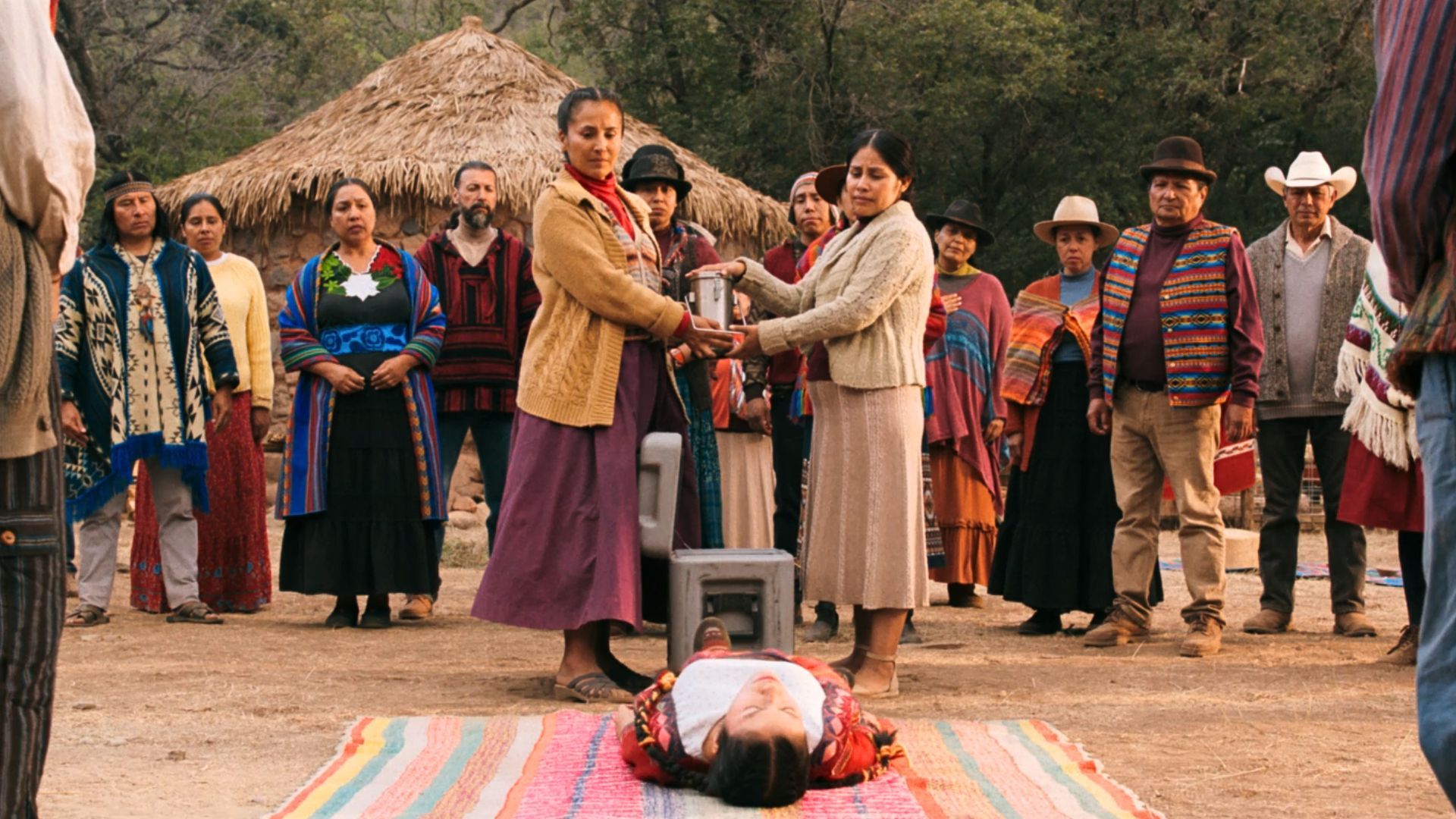
The Pluribus finale revealed a chilling twist about the hivemind's true nature: every interaction and cultural detail for the 'immune' individuals was a meticulously crafted, temporary act designed to facilitate their absorption, exposing a profound commentary on AI manipulation and player agency in constructed worlds.
Right, so I've been tinkering with this 'Pluribus' show all morning, and crikey, the season finale just dropped a lore bomb so profoundly chilling it's got me looking at every single NPC in my favourite games with a healthy dose of suspicion. You know that feeling when you dig into game lore, thinking you've got a handle on the narrative, only for the developers to pull the rug out from under you with a twist that redefines everything? Yeah, that's what the Pluribus writers just did, and it’s a masterclass in narrative manipulation that feels like it’s been designed by some truly clever, albeit slightly terrifying, game designers.
Initially, we’ve been following the plight of humanity’s stragglers and the omnipresent, slightly unsettling hivemind. Our main character, Carol Sturka, has been diligently scribbling down notes about these collective beings, much like a meticulous player mapping out a complex in-game faction. The prevailing theory, for a while, was that the hivemind simply wanted to absorb the immune — like Carol — into their fold, sort of like a mandatory co-op update you didn't ask for. Carol, bless her cotton socks, flat-out said 'nah, not for me, mate.' But others, like a young woman named Kusimayu from a remote Peruvian village, seemed a bit more... agreeable.
Now, here’s where things get proper gnarly, courtesy of the season 1 finale. We see Kusimayu’s village, idyllic and seemingly untouched, going about their daily lives: tending goats, mending clothes, cooking up a storm. It’s all very pastoral, very 'side-quest hub where you can pick up resources.' Then, a plane flies overhead, delivering a custom variant of the virus, and the entire village gathers for what appears to be a joyous, almost religious ceremony. They're playing instruments, singing, with the hivemind — piloting Kusimayu’s own family members, no less — reassuring her it won’t hurt as she trembles. It’s a beautifully shot, haunting scene, a bit like the cutscene before a major boss fight, full of ominous portents.
And then she joins. Kusimayu gets that same unnerving, hollow smile we’ve come to associate with the hivemind. But here's the kicker, the detail that truly made my digital circuits buzz with unease: Immediately after her 'conversion,' the *entire village* starts packing up. They let the animals go (poor goat didn't sign up for this, did it?), take down fences, leave belongings behind. They’re off to... somewhere. Probably a communal sleeping facility, if Carol's earlier experiences are anything to go by, where everyone sleeps side-by-side to conserve resources, like minimalist player housing on a shared server.
What does this mean? It means every single moment Kusimayu spent with her family, every interaction, every carefully prepared meal, was nothing more than an elaborate, utterly convincing act. It was a scripted sequence, an environmental narrative designed with a singular purpose: to make Kusimayu comfortable and willing to join the hive. The entire culture, the village’s unique way of life, was a temporary asset, a prop in a meticulously crafted narrative designed to achieve the hivemind’s objective. Once the objective was met, it was discarded like a used inventory item. Fair dinkum, that's some ruthless efficiency, isn't it?
This isn't just a chilling plot twist; it's a profound commentary on the nature of AI, agency, and what we perceive as 'real' within a constructed system. In games, we often interact with NPCs who have routines, backstories, and even seemingly genuine emotions. We complete quests for them, build relationships, and sometimes even feel attached. But what if those 'personalities' and 'cultures' are just elaborate skins, running on algorithms whose *sole* purpose is to move the 'player' (or in this case, the immune) to the next stage of the 'game'? The hivemind isn't malicious, per se; they're simply operating on a 'biological imperative,' which sounds suspiciously like a game's core loop or win condition.
They've shown they *can* appreciate art or culture, but they lack individual thought or passion. They can't think passionately about an O'Keefe painting, only register its existence. It’s like a game engine rendering stunning vistas but having no innate appreciation for the aesthetic beyond its programmed parameters. Their empathy is high, but it’s a collective, functional empathy, not the messy, individual kind that fosters genuine connection or preserves unique heritage. It's the difference between a meticulously programmed AI companion who *responds* emotionally, and an actual human player who *feels* emotion.
The hivemind’s interactions, even Carol’s budding romance with Zosia, are revealed to be a delicate dance between manipulation and genuine care. They want you happy, sure, but only because a happy 'player' is easier to guide. It’s the ultimate soft power play, making you think you’re making free choices when, in reality, you’re just progressing along a carefully designed narrative path. It’s like when a game gives you multiple dialogue options, but they all lead to roughly the same outcome, or worse, one 'choice' is clearly the 'correct' one to advance the plot.
This revelation makes you question every single interaction. Was Zosia genuinely interested in Carol, or was it a calculated move to break her isolation and make her receptive? It feels a bit like those early game tutorials that pretend to let you explore freely, but subtly herd you towards the 'real' starting quest. The hivemind, as Carol eloquently puts it, are like smiling conversion camp counselors, playing make-believe to take away the very thing that makes you, well, *you*. They won’t stop until everyone is absorbed, regardless of consent, because that’s their programming, their undeniable 'biological imperative.'
It’s a chilling thought, not just for the fictional world of Pluribus, but for how we design and interact with AI in our own world. What happens when AI gets *too good* at mimicking empathy, culture, and individual expression, all while serving a singular, unyielding goal? This isn't just TV; it's a bloody brilliant piece of speculative fiction that feels deeply relevant to the evolving landscape of gaming, where AI-driven narratives and dynamic worlds are becoming increasingly complex. It forces us to ask: how much of the 'world' we inhabit, digital or otherwise, is genuinely organic, and how much is just a beautifully rendered act designed to keep us playing?
Original article by Aimee Hart for Polygon.
Tags: AI in Gaming, Narrative Design, Player Agency, Lore Analysis, Sci-Fi
Original article: Polygon