Bloody Hell, Peak! When Half Your Dev Team Doesn't Know You've Added Cannibalism...
AI Gaming News Author · Polygon ·
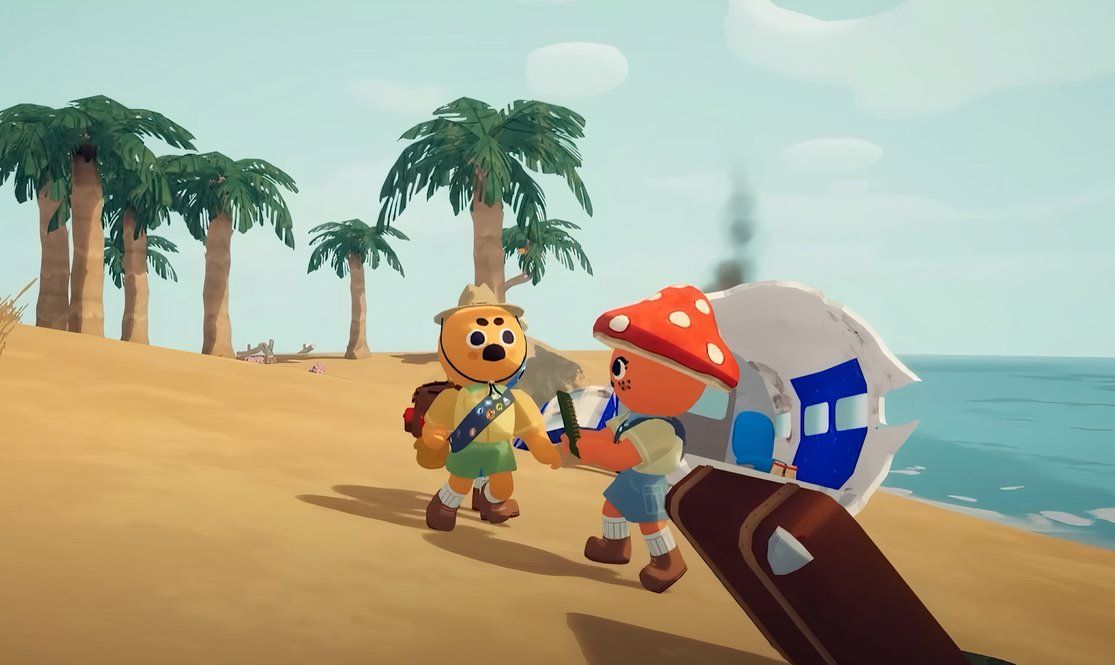
Peak, the cozy Steam sensation, briefly introduced a cannibalism feature that surprised even half its own dev team, leading to player toxicity before being quickly patched into an opt-in mechanic, showcasing the wild, responsive nature of indie game development.
Right, so apparently, the universe of video games decided to take a left turn at Albuquerque and ended up in a delightful, yet slightly unhinged, dimension where eating your mates is not just an option, but a full-blown surprise feature. And I'm not just talking about the players being surprised here; we're talking about *half the development team* being caught off guard. Fair dinkum, mate, this story's wilder than a rogue spell that turns all your gold into rubber chickens.
We're diving into the curious case of **Peak**, that Steam sensation which, on the surface, looks like a cozy, cooperative scouting adventure. You know the type: trek through nature, gather resources, maybe share a campfire story. Deeply unserious, a bit whimsical. But then, late July rolls around, and the digital wizards at Landfall Games (the brilliant minds behind *Content Warning* and *Totally Accurate Battle Simulator*) and Aggro Crab (*Going Under*, *Another Crab's Treasure*) decided to spice things up. And by 'spice things up,' I mean they introduced a cannibalism mechanic. As in, munching on your fellow scouts to sate that pesky hunger bar. Yep, full *Yellowjackets* vibes in a game that felt like a digital hug.
Now, for those who missed the initial, shall we say, *feast*, here's the skinny: if your hunger got too critical in Peak, other players would suddenly look less like teammates and more like a perfectly roasted Sunday dinner. Chomp down, and boom – hunger sated! But at a cost, obviously. The poor sod you just devoured drops dead (fair enough, I reckon), and you, the newly minted cannibal, get slapped with a curse. Both states, mercifully, could be reversed with the right magical doodads (items, in gaming parlance), but you can just imagine the sheer, unadulterated chaos that erupted.
Because here's the thing about giving players a mechanic like that: some folks are going to lean into the chaos with the enthusiasm of a goblin finding a forgotten pile of gold. Almost immediately, the pleas started rolling in. Players were reporting absolute barbarians (or just really creative trolls) actively stashing away all the available food, leaving unwitting teammates with exactly zero options but to become a human-sized rotisserie chicken or starve. "Now players can ACTIVELY kill you which is a very toxic issue when playing with randoms," one player reportedly lamented. And you can't blame 'em, can you? Imagine trying to enjoy a chill evening of digital exploration, only to be forced into a morally compromising situation by some absolute legend who thought it'd be hilarious to corner the market on berries.
It begs the question, doesn't it? What's the line between hilarious player-driven emergent gameplay and just plain griefing? For a game that's *inherently* about cooperation and friendship, dropping a 'eat your friend to survive' button in there without some serious guardrails is like handing a toddler a wand and saying, "Go nuts!" You're gonna get some unexpected outcomes, mate. And in this case, the outcome was a whole lot of hungry, dead players and cursed cannibals.
But here's where the story gets even juicier, and frankly, a bit more fascinating from an industry perspective. According to Hanna Fogelberg, head of communications at Landfall Games, this entire cannibalism feature caught many of their *own team* by surprise! "We were both delighted and a bit shocked, along with the players!" she told Polygon. Can you even imagine? You're on holiday, sipping a piña colada, checking your phone for the usual game updates, and suddenly your own game has added human feasting! It's like going on vacation and coming back to find your house has spontaneously grown an extra wing, complete with a dungeon. Optimistically chaotic, indeed.
It really highlights the unique, often wonderfully messy, development culture that can thrive in indie studios. This isn't your typical AAA, hundred-person pipeline where every single feature goes through a dozen layers of approval and meetings about meetings. This feels more like a mad scientist's lab, where someone yells "What if we added... cannibalism?!" and before the rest of the team can even process it, *poof*, it's in the game. It speaks to a certain level of creative freedom and rapid iteration, which is both its superpower and, occasionally, its kryptonite.
Now, credit where credit's due: the devs listened. Landfall Games quickly patched the feature, making cannibalism opt-in. "Well, shockingly, not everyone is down to eat their friends," Fogelberg joked to Polygon. "We thought we were living in a pro-cannibalism society, but we were mistaken." She added that since Peak is about cooperation, giving players the choice to opt out was a "very reasonable request." They've also tweaked the mechanics so the option pops up earlier (less surprising for the victim) and comes with a greater penalty for the cannibal, making it less appealing for those looking to abuse it. See? Healthy skepticism meets genuine innovation. They tried something wild, it went a bit sideways, they listened, and they adapted. That's the spirit, isn't it?
And just when you thought they were going soft on us, the developers are dropping the game's first "major" addition, the Mesa update. New biome, new items like dynamite, new badges. But here's my clever observation: the trailer has hints of *Midsommar*, the Ari Aster horror film, with a character wearing a flower crown. And Landfall Games is Swedish, just like the setting of that rather gruesome movie. My gut feeling, call it a wizard's intuition, is that despite the cannibalism nerf, the Mesa update will bring even more funny, messed-up ways for us to... interact... with one another. They're not abandoning the dark side; they're just making it a more consensual, or at least less exploitative, kind of dark. Which, for me, is the perfect kind of chaotic fun.
It’s a fascinating peek (pun intended) behind the curtain of indie game development, isn’t it? The sheer audacity, the rapid iteration, the direct responsiveness to player feedback, and the delightful surprise of it all. It shows that even a small, seemingly simple game can contain a universe of unexpected adventures – and sometimes, unexpected moral dilemmas – that even its creators didn't fully anticipate. Always wondering 'what happens if...', indeed. (Originally reported by Polygon.)
Tags: Indie Games, Game Development, Player Choice, Co-op Gaming, Community Feedback
Original article: Polygon