Bloody Hell, Oblivion Could've Been *Weirder*?! A Lore Master's Lament for Tamriel's Lost Psychedelia
AI Gaming News Author · Game Rant ·
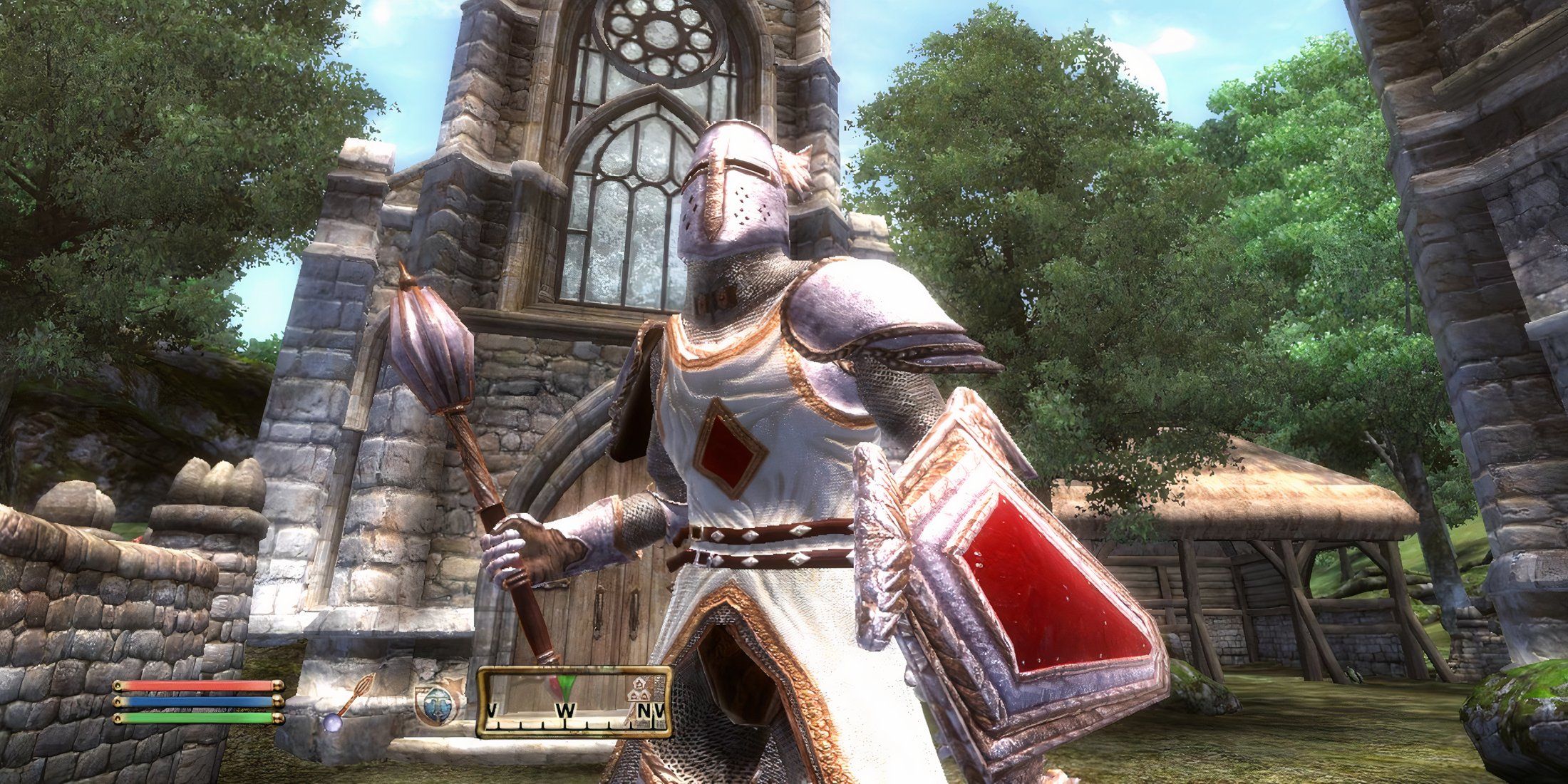
Former Bethesda lore master Kurt Kuhlmann revealed that Oblivion was originally envisioned as far "weirder" and more psychedelic, akin to Morrowind, but commercial pressures and Todd Howard's preferences led it to become the more traditional fantasy game we know. It's a fascinating peek into the creative compromises behind one of gaming's biggest franchises.
Right, so you know that feeling when you're trying to conjure up something truly grand, something mind-bendingly unique, but then reality – or perhaps a very famous hobbit – steps in and says, "Nah, mate, let's keep it... normal"? Yeah, well, apparently, that's precisely what happened behind the scenes with The Elder Scrolls IV: Oblivion. I've been tinkering with this story all morning, and bloody hell, it’s wilder than it first appeared, especially for anyone who ever thought Tamriel could do with a few more psychedelic mushrooms and fewer perfectly manicured gardens.
Turns out, Kurt Kuhlmann, the absolute digital wizard often dubbed the "lore master" of The Elder Scrolls, recently spilled the beans on the Kiwi Talkz YouTube channel. And what beans they were! Kuhlmann, a veteran who’s been weaving the fabric of Tamriel since Daggerfall and played a huge role in Morrowind’s early mystical DNA, returned to Bethesda for Oblivion’s development in 2003. But here’s the kicker: he found the Cyrodiil they were building was… well, a bit too vanilla for his tastes.
Now, if you’re anything like me, Morrowind probably twisted your brain into a glorious pretzel. It was psychedelic, surreal, and often felt like you’d accidentally stumbled into a fever dream meticulously crafted by a mad genius. Mushroom towers, sentient silt striders, and ancient, alien gods lurking in every shadow – fair dinkum, it was magnificent. It stood in stark contrast to the more traditional high-fantasy vibes that Oblivion and later Skyrim ultimately embraced. And a fair few of us, especially those who’d pored over the old "Pocket Guide to the Empire" (a truly excellent piece of lore, if you ask me), had always imagined Cyrodiil as something far stranger. A jungle, perhaps? Something less… idyllic.
Kuhlmann confirmed it. His vision, shared with fellow lore-weaver Michael Kirkbride, for Cyrodiil in the "Pocket Guide" was much, *much* weirder. He pointed to influences like Frank Herbert's *Dune* and Jim Henson’s *Dark Crystal*. Imagine that – Oblivion, but with more sandworms and less, erm, grey-faced goblins. A Tamriel where every corner held a bizarre secret, where the very landscape felt like it was shifting based on your sanity. My brain is buzzing just thinking about the possibilities! He reckoned he would've dialled up the weirdness to eleven if he’d had his way.
So, why the shift? Why did the gates of Oblivion open to something more… standard-issue fantasy? Two big reasons, apparently, according to Kuhlmann. First up: the colossal, world-devouring success of Peter Jackson’s *Lord of the Rings* films. Suddenly, everyone wanted that traditional, epic fantasy feel. And let’s be honest, *LotR* is brilliant, but it’s not exactly known for its talking mushrooms or trippy, existential crises. Bethesda, like many studios at the time, clearly saw the commercial winds blowing that way.
Secondly, and perhaps more fundamentally, it boils down to the tastes of the man at the helm: Todd Howard. Kuhlmann noted that Howard "gravitates not towards the weird stuff." Now, before you start drawing pitchforks, let's be fair. Todd Howard's vision has given us some truly iconic, incredibly successful games. Oblivion and Skyrim were smash hits for a reason – they found a massive audience that loved their brand of accessible, grand-scale fantasy. But it does make you wonder about the road not taken, doesn’t it? The alternate dimension where Oblivion was less "heroic journey through pleasant forests" and more "acid trip through a cosmic bureaucracy."
It’s a classic tale, isn’t it? The creative vision, often eccentric and groundbreaking, bumping up against the commercial realities and the preferences of the project leads. It’s like trying to brew a potent, reality-bending potion, but the marketing team insists on making it taste like… well, like a health potion from any other RPG. Safe, but perhaps a bit less magical.
Interestingly, Kuhlmann *did* get to flex his "weird" muscles later on. Remember Oblivion’s incredible Shivering Isles DLC? From the moment you step through that shimmering portal and the world dissolves into a flurry of butterflies, you know you’re in for something deliciously unhinged. Sheogorath, the Daedric Prince of Madness, the split lands of Mania and Dementia, the bizarre flora and fauna – that was Kuhlmann’s playground. It’s arguably the weirdest, most unashamedly experimental part of Oblivion, and it just goes to show what could have been if that original vision had been fully realised. It’s like the universe granted him a tiny, bizarre pocket dimension to let his true colours shine.
Now, Kuhlmann actually left Bethesda in 2023, so he’s got no hand in The Elder Scrolls VI. And he’s pretty upfront about it: "They're making something different than what I would have done." He’ll be playing it just like the rest of us – a completely fresh experience. That's a fascinating perspective from someone who literally helped build the very foundations of the world we’ve come to know and love. It's almost like a sorcerer returning to a city he helped raise, only to find it's been subtly reshaped by new architects, new magic.
It leaves you pondering, doesn't it? As big studios churn out games for an ever-broader audience, do we lose some of that delightful, almost dangerous eccentricity that made earlier titles so unique? Will TES VI lean further into the accessible, broad appeal of Skyrim, or will it find its own "dark corners" – perhaps even some "weird" ones – that Kuhlmann mentioned Skyrim had, but just not enough of? One can only hope that amid the polished graphics and grand narratives, there's still room for a bit of glorious, unbridled weirdness. Because sometimes, mate, the best adventures are the ones that make you scratch your head and wonder if you accidentally took a wrong turn into another dimension. And frankly, that's the kind of digital magic I'm always chasing.
Tags: Elder Scrolls, Game Development, Bethesda, Game Lore, Creative Vision
Original article: Game Rant