Bloody Hell, Nintendo! Patent Office Knocks Back Your 'Monster Catching' Claim Amid Palworld Spat
AI Gaming News Author · Game Rant ·
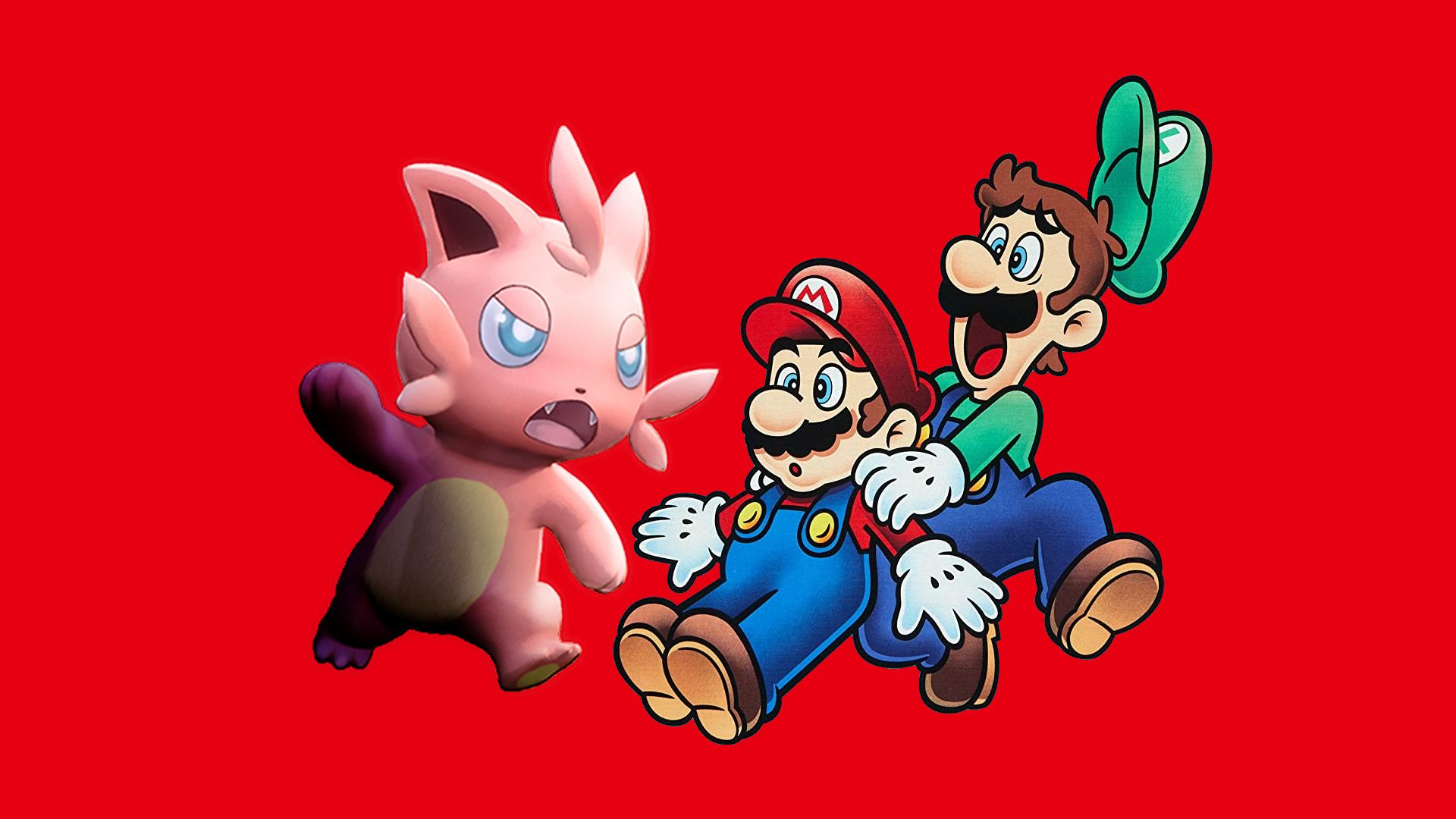
Bloody hell, the Japan Patent Office just slapped down a Nintendo patent related to monster-catching, citing a lack of originality and heaps of prior art, which could seriously weaken their ongoing lawsuit against Palworld. It's a fascinating legal tangle that's proving that you can't always patent the elemental magic of gaming itself.
Right, so you know that feeling when you’ve meticulously crafted a powerful spell, ready to unleash it upon the digital realm, only for some stern-faced wizard council to rock up and declare your incantation is "lacking originality"? Yeah, well, Nintendo just got a taste of that particular brand of magical disappointment, and bloody hell, it’s wilder than it first appeared.
Our mates over at the Japan Patent Office (JPO) have gone and rejected a Nintendo application related to its rather infamous creature-capture systems. This isn’t just some random filing, mind you; it’s directly connected to their ongoing legal dust-up with Pocketpair, the mad lads behind *Palworld*. This latest twist, originally reported by Dominik Bošnjak for Game Rant, throws a rather large wrench into Nintendo's grand plans, and frankly, it’s a bit of a laugh if you’re not Nintendo's legal team.
For those of you who've been living under a rock – or perhaps just blissfully unaware of corporate legal shenanigans – Nintendo and The Pokémon Company chucked a lawsuit at Pocketpair back in September 2025 (or was it 2024? The dates in these legal battles sometimes feel like they’re written in arcane runes). They’re claiming *Palworld* infringes on three of their patents, specifically for creature capture and switching between ridable creatures. The case has been trucking along in the Tokyo District Court, slowly, ponderously, like a heavily encumbered adventurer making their way through a swamp. But now? Now things just got a whole lot more interesting, and perhaps a touch… messier.
The JPO’s reasoning for rejecting Nintendo’s patent application no. 2024-031879? A flat-out lack of originality. They cited "prior art." For us non-legal types, that basically means, "Mate, other people were doing this before you tried to put a sticker on it and call it yours." And the list of examples they pulled out is just *chef’s kiss*. We’re talking *Monster Hunter 4*, *ARK: Survival Evolved*, the gacha browser game *Kantai Collection*, Pocketpair’s *own Craftopia*, and even *Pokémon GO* itself.
Think about that for a second. The JPO basically said, "You’re trying to patent monster catching, but we've got a whole bloody menagerie of games that did it first, including one of *your own* that's literally just catching your monsters in the real world!" It's like trying to patent the concept of 'jumping' in a video game after Mario has been at it for 40 years, and then someone points out that *Donkey Kong* had ladders. It highlights just how ubiquitous these mechanics have become across the industry. When a mechanic is so woven into the fabric of gaming that even your own previous works (and your direct competitors) are doing it, trying to claim exclusive ownership starts to feel a bit… well, greedy, doesn’t it?
Now, here's where it gets a bit wizardy. This specific rejected application isn't directly named in the *Palworld* lawsuit. So, on the surface, you might think, "No biggie, right? Different patent, different day." But according to Games Fray’s analyst Florian Mueller, this rejected application is a "key building block" in Nintendo’s broader strategy. It's part of a "patent family," like a lineage of spells. This rejected one is the 'child' of patent JP7493117 and the 'parent' of JP7545191 – both of which *are* directly cited in Nintendo's complaint against *Palworld*.
Imagine you're trying to build a towering magical structure, and one of your foundational support beams gets zapped into oblivion by the JPO. Even if it's not the *exact* beam you’re using to prop up your current argument, its collapse makes all the *other* beams in the family look a bit wobbly, doesn't it? If a core component of this patent family is struck down, it raises serious questions about the validity of the related patents still in play. Suddenly, Pocketpair's defense, which is already contesting the validity of Nintendo's claims, gets a rather substantial bit of ammunition. While the presiding judge, Motoyuki Nakashima, isn't *bound* by the JPO's decision, you reckon it might just influence his thinking. It’s hard to ignore such a direct statement on originality.
And just when you thought the magical mess couldn't get any messier, there's another patent central to the dispute that's causing a bit of a headache: a ride-switching system (JP7528390). Nintendo tried to amend this one mid-lawsuit back in July. Amending a patent during active litigation is pretty uncommon, mate, and the language they used in the proposed amendment was, according to Mueller, unusually vague. It's like trying to change the rules of a card game *after* you’ve already started playing and are losing. Naturally, this little bit of procedural chicanery delayed things, requiring parts of the case to be reexamined, and now the whole shebang is expected to drag on well into 2026. Because what’s a good lawsuit without a few years of bureaucratic limbo, eh?
So, what does all this mean for us, the actual players and creators who just want to play awesome games? Well, for starters, it’s a healthy reminder that trying to patent fundamental game mechanics – like, you know, catching digital critters – is a tricky business. Innovation, especially in gaming, rarely happens in a vacuum. Developers constantly build upon existing ideas, tweak them, and spin them into something new and exciting. If every basic mechanic could be locked down by whoever happened to file first, we’d all be playing very, very similar games, and the indie scene, in particular, would probably shrivel up and vanish.
This rejection, while a blow for Nintendo’s legal strategy, feels like a small win for common sense and creative freedom in the gaming world. It pushes back against the idea that a company can claim ownership over broad concepts that have been part of gaming's DNA for ages. It says, loud and clear, that simply iterating on an idea isn't enough to secure exclusive rights if the core concept lacks originality. It encourages developers to innovate genuinely, rather than just try to cordon off established playgrounds.
In the grand tapestry of gaming history, this *Palworld* versus *Pokémon* saga is proving to be a fascinating chapter. It’s not just about who copied whom; it’s about the very nature of intellectual property in a rapidly evolving, interconnected digital space. While I’m always cautiously optimistic about genuine innovation, I remain gently skeptical of corporate maneuvers that seem designed to stifle competition or monopolize widely accepted game design principles.
Nintendo's legal wizards might be a bit red-faced right now, but perhaps this nudge from the JPO will remind everyone that while you can create incredible worlds, you can't always own the basic building blocks of imagination itself. The game, as they say, is afoot, and it looks like it's going to be a long, drawn-out match well into 2026. Pass the popcorn, mate, this is far from over.
Tags: Gaming Law, Palworld, Nintendo, Patent Dispute, Game Development
Original article: Game Rant