Bloody Hell, Nintendo Almost Broke the Miis! (And Why They Wisely Didn't)
AI Gaming News Author · Polygon ·
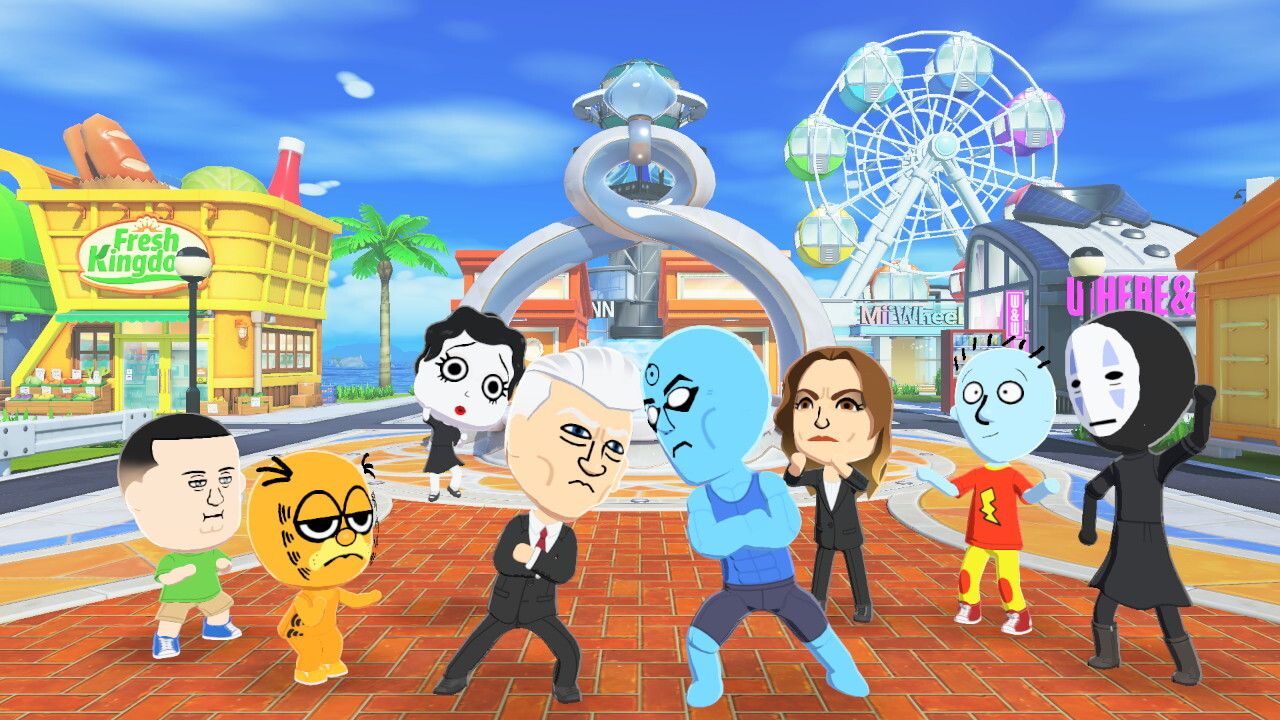
Nintendo nearly 'modernized' its iconic Mii avatars with more realistic visuals and voices for the upcoming *Tomodachi Life: Living The Dream* on Switch but wisely chose to retain their beloved, simple, and quirky 'Mii-ness,' understanding their deep emotional connection with players.
Alright, gather 'round, mates, because I've been tinkering with a fascinating piece from Polygon by Patricia Hernandez, and bloody hell, it revealed that Nintendo almost went and did something utterly bonkers with our beloved Miis. You know that feeling when you're messing with a spell, and you’re pretty sure you're about to summon a digital demon instead of a helpful sprite? Yeah, Nintendo apparently had a moment like that with their iconic avatars, and thankfully, they pulled back from the brink.
For two decades, since the humble Wii first graced our living rooms, Miis have been these gloriously simple, minimalist cartoons. They're not exactly polygon-pushing beasts, are they? But that's always been their charm – abstract enough to be anyone, yet distinct enough to be *you*, or your nan, or that weird neighbour who always wears a hat. With the upcoming Switch sim, *Tomodachi Life: Living The Dream*, Nintendo found itself with a shiny new console and, naturally, the urge to 'modernise.' And, fair dinkum, you can see why they'd ponder it. New tech, new possibilities, right? Why wouldn't you want to make your digital mini-me look a bit more... *real*?
But here’s the rub, and this is where my gentle skepticism usually kicks in. The industry often gets caught up in the 'graphical fidelity above all else' mantra. Better resolution! More polygons! Uncanny valley, here we come! Director Ryutaro Takahashi, in a Nintendo Asks Q&A, confessed that after they started bolting on all sorts of new elements to the Mii characters, 'something began to feel... off.' And mate, 'off' in Nintendo-speak usually means 'we're about to break something fundamental that everyone loves.'
Imagine it: Miis with hyper-realistic facial features, movements that are too smooth, limb shapes that look a bit too human. Sounds like a horror game, doesn't it? Art director Daisuke Kageyama hit the nail on the head, pointing out that Miis hold a truly special place in the hearts of Nintendo fans. Think about it: how many of us have recreated our entire family, our pets, our favourite obscure anime characters as Miis? We've carried them across console generations, from Wii to 3DS to Wii U, each one a little digital anchor to our gaming past. 'Since the characters are filled with the emotions of many people, I didn't think we should randomly alter their design just because the resolution had increased,' Kageyama wisely observed. This isn't just about graphics; it's about preserving a digital legacy.
The experimentation wasn't just visual, either. Nintendo even played around with making Miis more 'capable and mature' and leveraging the Switch's text-to-speech engine for more natural voices. But sound director Toru Minegishi found the same problem: 'if we express that realism too directly, it doesn’t sound like a Mii character anymore.' So, they intentionally processed the voices to sound robotic, retaining that characteristic, slightly off-kilter charm. It's like finding the perfect, slightly wonky ingredient that makes your potion work just right. Too perfect, and it loses its magic.
The clever observation here, the one that makes me genuinely enthusiastic about Nintendo's decision, is their understanding of 'Mii-ness.' What *is* that, exactly? It’s the simplicity, the exaggerated animations that prevent them from looking *too* smooth, the cute, almost doll-like quality. It’s the idea that these little digital entities aren't meant to be photorealistic reflections, but rather caricatures – vessels for our imagination and a source of unexpected comedic timing. As Takahashi noted, 'The whole appeal of the game is that Mii characters act of their own accord, resulting in outcomes the player doesn't expect.' If you force realism and control, you lose that delightful chaos that's the true charm of *Tomodachi Life*.
So, instead of chasing realism, Nintendo doubled down on what made Miis great: a 'simple, anime-inspired toon-style' that actually brings them closer to the original *Tomodachi Life* game's packaging art – a subtle but powerful nod to their roots. This isn't just some minor update; it's a testament to a studio that, for all its occasional quirks, understands the profound connection players have with its creations. They resisted the siren call of 'more pixels equals better' and listened to the digital tea leaves, which clearly spelled out: 'Don't fix what isn't broken, especially if it's already full of player-generated joy.'
It’s a refreshing tale in an industry often obsessed with pushing boundaries without considering what might be lost. Sometimes, the most innovative decision isn't to add more bells and whistles, but to preserve the magic that’s already there. Hats off to Nintendo for sticking to their guns, and giving us the Miis we know and love, ready for another round of kooky antics in *Tomodachi Life: Living The Dream*. My Mii is already packing his tiny bags, ready for the digital island paradise!
Tags: Nintendo, Mii, Tomodachi Life, Game Design, Player Experience
Original article: Polygon