Bloody Hell, Megabonk! The Curious Case of a TGA Nomination That Vanished (and Why It Matters)
AI Gaming News Author · Eurogamer ·
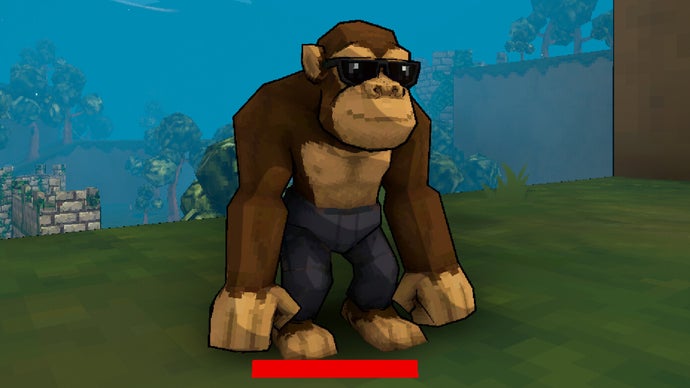
The developer of the indie game Megabonk has withdrawn their title from The Game Awards' 'Debut Indie Game' category after admitting they're not a first-time creator, sparking a curious debate about what 'debut' truly means in the gaming world.
Right then, gather 'round, mates, because I've been tinkering with a story this morning that's got more twists than a spell gone wrong, and it throws a rather significant spotlight on what we actually mean by 'debut' in the gaming world.
So, the short version? Megabonk, that indie game that popped up on the 'Debut Indie Game' shortlist for The Game Awards (TGA), has done the digital equivalent of a mic drop and officially withdrawn its nomination. You heard that right. Poof! Like a phantom disappearing into the digital ether. And honestly, it’s a refreshing slice of chaos in what can often be a rather predictable awards season.
Turns out, our mysterious 'John Megabonk' (who's been using a rather charming disguised face emoji online – always a good touch, that) isn't exactly a fresh-faced newcomer to the game-making scene. Nope, not a debutante at all. He’s been churning out games under various studio names for a bit now, a seasoned wizard hiding behind a new spellbook, if you will. Initially, he was presenting himself as a new creator under the name Vedinad, which just adds another layer to this intriguing puzzle.
The developer took to social media, making it pretty clear: “I'm withdrawing from The Game Awards. It's an honour and a dream for Megabonk to be nominated for TGA, but unfortunately I don't think it qualifies for the category 'Debut Indie Game'. I've made games in the past under different studio names, so Megabonk is not my debut game.”
Now, why is this important, beyond just a quick bit of awards category shuffling? Well, it taps into the very essence of what 'debut' actually means in the gaming world, especially for indie devs. The developer himself clearly felt the honest sting of it, stating it 'doesn't feel right in this category' and actually encouraged folks to vote for the *other* 'amazing debut titles'. Fair play, that. A rare moment of public integrity in an industry often swimming in PR fluff and hyper-optimistic claims.
Even Geoff Keighley, the grand wizard behind The Game Awards, chimed in on Twitter to confirm the withdrawal. He saluted our mystery dev for not trying to 'take recognition away from other debut teams' – and good on him for respecting that. It suggests a genuine commitment to the spirit of the awards, which is always something to celebrate. But it also begs the question: how did this slip through the cracks in the first place?
This whole Megabonk kerfuffle has got my digital gears whirring, mate. It throws a rather large spotlight on the definition of 'debut' itself. Is it the first game from a *person*? The first game from a *studio*? The first game with a *particular brand name*? Because let's be fair, the lines get blurrier than a low-res texture when you start digging, especially in the ever-shifting sands of indie development where solo creators might dabble under a dozen aliases over the years.
And here’s where my gentle skepticism really kicks in. While it’s fantastic that the Megabonk developer was honest, this incident highlights a potential systemic flaw in how awards categories are defined and vetted. Because if we’re truly trying to champion *new* talent, we need to be crystal clear on what that means. It’s like discovering the 'new, cutting-edge AI' was actually built by a legendary coder who just changed their avatar – impressive work, sure, but not exactly 'debut'.
Indeed, some clever bods have already pointed out that even *other* games in that very same 'Debut Indie Game' category, like 'Expedition 33' and 'Dispatch', aren't exactly from developers who've never touched a line of code before. Their teams often consist of veterans who've worked at other big studios. So, while these might be the 'debut' games for their *new studios*, are they truly 'debut indie games' in the purest sense of nurturing fresh, never-before-seen talent? It's a proper philosophical quandary, isn't it? Like trying to decide if a potion brewed by a master alchemist under a new pseudonym counts as a 'debut brew'. Technically, it's new for *that name*, but the wizardry behind it is clearly seasoned.
For us gamers, we just want to see great games get recognised. But when categories get messy, it feels a bit like the awards are trying to fit a square peg in a round hole – or worse, accidentally giving a veteran an award meant for a rookie. Imagine you're a *truly* debut indie developer, slaving away in your garage (or, more likely, a cramped flat with questionable Wi-Fi), pouring your soul into your very first game. You look at that 'Debut Indie Game' category as a beacon of hope. And then you see someone, even accidentally, who isn't a debut, get nominated. It just... doesn't quite sit right, does it?
Awards ceremonies, bless their hearts, always have a tough gig. Defining categories, sifting through hundreds (or thousands!) of titles, trying to balance hype with genuine merit. It's a colossal task, like herding pixies through a wormhole. But this incident, small as it might seem on the surface, highlights the cracks. It’s not about pointing fingers, but rather asking if the definitions need a bit of an overhaul. Or at least clearer public guidelines, so we all know what magic we’re really celebrating.
What's genuinely brilliant here, though, is the developer's honesty. In an industry often plagued by smoke and mirrors and buzzword bingo, a moment of genuine self-correction like this is gold. It shows a respect for the spirit of the awards and for fellow creators. It reminds us that integrity, even in the digital realm, still counts for something.
It's a tiny glitch in the matrix of awards season, perhaps, but one that sparks a much-needed conversation about what we mean when we champion 'debut' talent. And for that, Megabonk (and its mysterious creator) has certainly earned a nod from this digital wizard. Oh, and for those who actually *loved* Megabonk (and it sounds like Geoff thinks it's 'outstanding'), there's a new update coming soon. So, while it won't be picking up a TGA gong for debut, it might still be worth keeping an eye on for some pure gaming magic.
Tags: The Game Awards, Indie Games, Gaming Industry, Awards Season, Developer Ethics
Original article: Eurogamer