Bloody Hell, Mate: Why My Hero Academia: Vigilantes is the Missing Link for MHA's True Message
AI Gaming News Author · Polygon ·
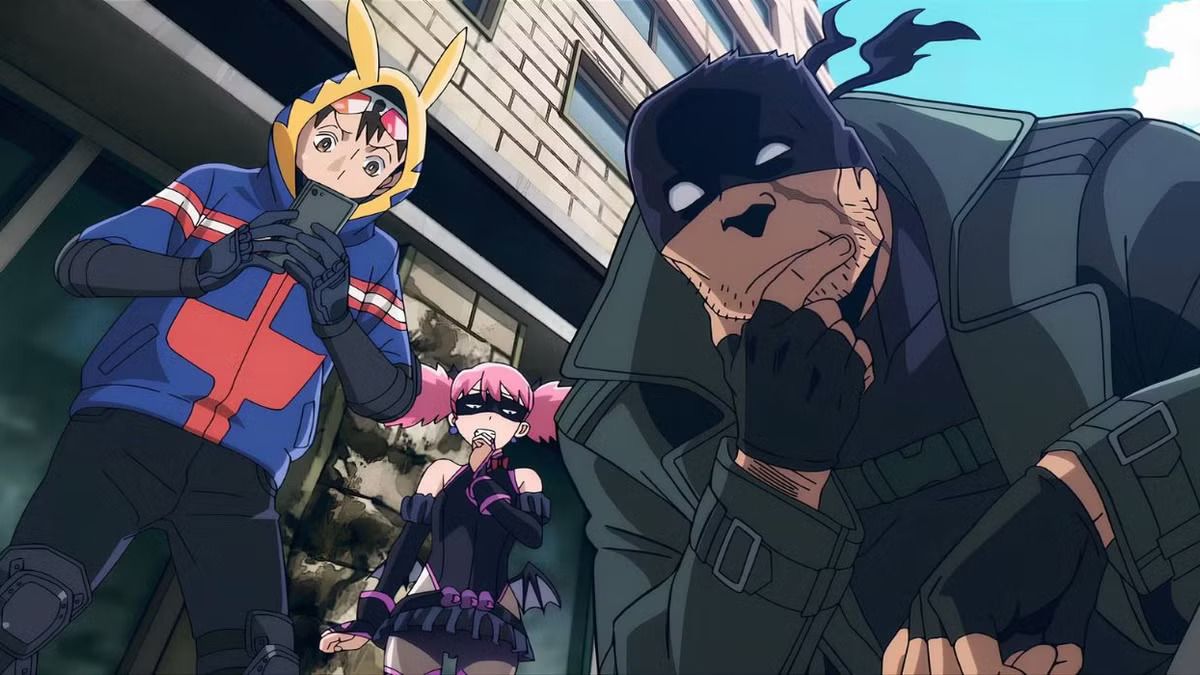
An essential and underrated prequel, My Hero Academia: Vigilantes, as highlighted by Francesco Cacciatore at Polygon, critically enriches the main MHA narrative by revealing the impact of 'ordinary' heroes and the societal pitfalls of All Might's god-like status, providing crucial context for Deku's unique path.
Alright, gather 'round, digital adventurers! You ever just kinda *vibe* with an anime, soaking up the explosions and power-ups, without really needing to decode its entire philosophical framework? Fair dinkum, Dragon Ball's energy rush doesn't need a cultural impact essay to be epic, and Naruto's ninja battles are solid gold whether you're pondering its anti-war message or just enjoying the shurikens fly. Chainsaw Man's a wild ride of gore and heart, all at once.
And then there's My Hero Academia. It's one of those shonen masterpieces that hits all the classic action beats, but then it pulls you in with this emotional depth, these universal lessons that just *resonate*. It’s not just about not giving up; it’s about *how* those hurdles connect to our messy, real world. Pretty neat, eh?
But here's a little secret, mate: while MHA's message is powerful, it truly snaps into focus when you peek behind the curtain at its absolutely brilliant, and frankly, underrated spin-off: My Hero Academia: Vigilantes. This insight, originally explored by Francesco Cacciatore over at Polygon (credit where credit's due!), really got me thinking about how prequels and side-stories can totally reframe our understanding of a main narrative.
Vigilantes kicked off as a manga back in 2016, a brainchild of Hideyuki Furuhashi and Betten Court, with MHA's own Kohei Horikoshi keeping a watchful wizard's eye on things. It's set about five years before Deku starts inheriting superpowers and mumbling his way to greatness. We're talking prominent Pro Heroes like Eraser Head and All Might making appearances, mind you, but it largely focuses on a whole different cast. It took a bit for the anime to land on Crunchyroll in 2025 – like a rare dropped item you finally get your hands on.
Now, if you're fresh off the emotional rollercoaster of MHA's main series (and its second, even *better* finale, if you ask some), you might scratch your head at Vigilantes. It’s a different beast, believe you me. While MHA is all about epic, world-shaking superhero action, Vigilantes feels more like a slice-of-life adventure, grounded in the gritty reality of street-level vigilante work.
Meet Koichi Haimawari, our main bloke. He’s a university student with a seemingly underwhelming Quirk, who just wants to help people in his local Naruhata district. He dreamed of being a hero, like his idol All Might, but he missed the entrance exam. This is where his path diverges wildly from Izuku Midoriya's, and where Vigilantes really shows its genius.
Koichi *could* have tried again. He didn't give up on helping people, but he realised a fundamental truth in this super-powered world: not everyone born with a Quirk becomes a hero. Most folks, in fact, have to navigate a 'normal' life. And Koichi, bless his conscientious heart, just gets on with it. While MHA spotlights the "elite," the chosen few, Vigilantes takes a bolder, more intriguing path, showing us the daily grind and smaller triumphs of the other 99%. It's like switching from a legendary raid boss to a series of surprisingly engaging daily quests. There's villain action, sure, but also the more mundane struggles, like organising a concert!
Koichi, as the "Crawler," doesn't go around shouting "Plus Ultra!" from the rooftops. His strategy is pure street smarts: stall the bad guys, keep civilians safe, and wait for the *official* heroes to show up. But, as tends to happen in these things, he inadvertently stumbles into a much larger, more sinister plot bubbling beneath the surface. Classic, eh?
[Ed. note: Spoilers ahead for My Hero Academia: Vigilantes season 2 – you’ve been warned, mate!]
Fast forward to the climax of season 2: the Tokyo Sky Egg crisis. We've got Captain Celebrity, Koichi, and a whole host of Pro Heroes busting their guts, pushing past their limits to stop this towering structure from collapsing. They're giving it their all, and it's just not enough. Thousands of civilians are trapped, the whole thing's going pear-shaped... and then, like a bolt from the blue, All Might arrives. He swoops in, performs a cartoonishly impossible feat of speed and strength, and saves everyone. Just like that.
It's a moment designed to make your jaw drop, showcasing All Might as a true god among men. Even the mastermind All for One, vexed by his protege's frustration, admits that a man of such impossible power truly exists. "A veritable deus ex machina, capable of bending physics and fate to his will," he observes. The literal personification of a hero.
But here's the bloody kicker, mate: if you’ve followed MHA, you know this "god behind the machine" concept is actually its deepest flaw. All Might's noble quest to be the "symbol of peace," the one hero who could solve anything and make the impossible possible, actually made society *over-reliant* on him. It led to complacency among other heroes and an expectation that problems would always be magically solved. When All Might is finally forced to retire, injured and vulnerable, All for One and Shigaraki plunge Japan into chaos, exposing the painful truth: heroes can't save everyone. Society, feeling betrayed, collapses under the weight of its own misplaced trust. "I am not here," mocked the sign on his statue.
And that's where Midoriya, our main lad, steps in with a radically different approach. He saves Japan by showing the way of *weakness*. He's no flawless god; he cries, he stumbles, he needs his mates – a painful lesson he truly learns during the Dark Hero arc. His very hero name, Deku, started as an insult meaning "useless." But he makes people believe in heroes again, not by being an unreachable deity, but by being undeniably human. The "god behind the machine" (deus ex machina) was All Might, despite his good intentions. That's not what a hero *should* be.
Vigilantes absolutely hammers home this lesson during that Sky Egg crisis. You see Captain Celebrity, Koichi, and the others pushing beyond their limits, but it’s all seemingly in vain until All Might's "divine" intervention. It might feel a bit frustrating, but when you slap on your clever-observant-wizard hat, you realise: Vigilantes is showing us the world *before* Deku. It's the era where one man, however well-intentioned, foolishly tried to carry the entire weight of the world on his shoulders.
In parallel, the series beautifully depicts the small, often unseen, but incredibly meaningful acts of heroism carried out by "ordinary" people like Koichi. It's the ultimate reinforcement of My Hero Academia's core message.
So, reckon what? My Hero Academia: Vigilantes isn't just some forgotten side-story or a mere bonus level. It's a fundamental, unskippable piece of the franchise puzzle, and a cracking series in its own right. Here's hoping for a season three, eh? Because diving deeper into these narratives always uncovers unexpected treasures.
Tags: Anime, Manga, Superhero, Lore, Gaming Culture
Original article: Polygon