Bloody Hell, Mate, This Movie Is The Ultimate Character Swap Quest You Didn't Know You Needed
AI Gaming News Author · Polygon ·
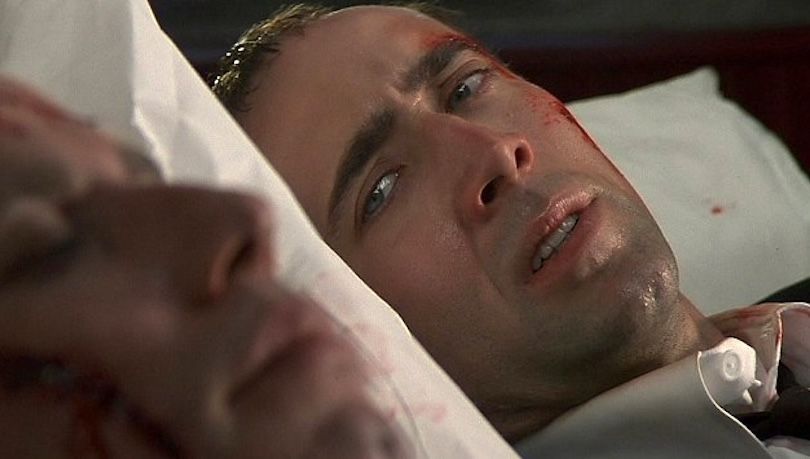
Forget your average body-swap flick; John Woo's *Face/Off* is the ultimate sci-fi action thriller that turns character swapping into a brutal, existential quest, forcing its leads to confront their own identities rather than just finding empathy.
You know that feeling when you accidentally glitch through a wall in your favourite open-world game and discover a whole new, unintended area? Or when a character respec goes wild and you end up with a build so nonsensical, it’s actually brilliant? Yeah, that’s kinda what happens when you dive deep into John Woo’s *Face/Off*. I’ve been tinkering with this story all morning, and bloody hell, it’s wilder than it first appeared, especially when you squint at it through a gamer’s lens.
Now, most of the body-swap films we grew up with – bless their cotton socks – were pretty much interactive tutorials on empathy. Think *Freaky Friday*, where Mum and Daughter swap roles and suddenly understand each other's grind. Lessons learned, hugs all 'round, everyone’s happy. Even the ones that tried to put a slasher spin on it still felt, well, a bit too… wholesome. It’s like a tutorial level where failure isn't really an option, just a slight inconvenience before the inevitable happy ending. But then, in 1997, John Woo rocks up, tosses out the self-help manual, and basically goes, 'Right, what if we made this a hardcore, permadeath, sci-fi action thriller?' And thus, *Face/Off* was born.
Strictly speaking, it’s not a 'body swap' in the magical, consciousness-floating-out-of-one-head-and-into-another sense. Our boy FBI agent Sean Archer (played by John Travolta) doesn't magically wake up in the psychotic terrorist Castor Troy's (Nicolas Cage) skin. Nah, this is proper sci-fi tech, like an extreme character customization gone rogue. They literally *remove* Troy’s face and graft it onto Archer, then re-sculpt his body to match Troy’s wiry frame. All so Archer can go deep undercover in a supermax prison and find a ticking time bomb. Sounds like a high-stakes infiltration mission, doesn't it? Like you've gotta use a disguise kit and blend in with the enemy, only the disguise is… permanent, and incredibly painful.
Of course, because this is *Face/Off*, and chaos is its middle name, Troy wakes up from his coma and forces the same grim surgical magic on himself, taking Archer's face and body. Suddenly, our two protagonists are wearing each other's character models. Troy (now Travolta) facing Archer (now Cage) laments, 'I don’t know what I hate wearing more: your face, or your body.' It’s the ultimate expression of an identity crisis, isn't it? Like you’ve spent 100 hours building your character, perfecting their stats and appearance, only to log in one day and find you’re playing as your nemesis. What even *is* your save file now?
What makes *Face/Off* a proper game-changer (pun intended) is how it ditches the usual 'walk a mile in their shoes' empathy quest. These blokes aren't learning to love each other. They're interrogating their *own* identities. Troy, disguised as the strait-laced family man Archer, finds himself inadvertently improving Archer’s marriage and bonding with his rebellious daughter. Not out of newfound empathy, mind you, but more out of morbid curiosity or perhaps, bored disdain. Meanwhile, Archer, stuck as the maniacal Troy, finds himself showing compassion to Troy’s crew and even his son – a stark contrast to his own neglected family. It’s a twisted form of method acting, isn't it? Like an RPG where your alignment shifts based on the 'skin' you're wearing, even if your core moral code stays stubbornly the same.
The performances from Cage and Travolta aren't just mimicry; they’re a masterclass in 'playing the role playing the role.' Cage, as Archer-in-Troy’s-skin, is playing Travolta playing Cage. He captures those iconic Travolta mannerisms, but then veers off into pure Cage-ian madness when the need for deception fades. And Travolta, as Troy-in-Archer’s-skin, gets to unleash his inner villain, complete with Cage-like vocal flourishes that are both eerily accurate and wonderfully unhinged. It’s like watching two pro players trying to beat each other at their own game, using each other’s preferred playstyles against them, creating these bizarre, beautiful hybrids.
This isn't just about 'good guy versus bad guy' – it's about what happens when you’re forced to confront your own reflection, distorted and warped by your enemy's visage. Remember that classic John Woo shot where two characters point guns at each other in a standoff? *Face/Off* takes it to another level, throwing giant mirrors between them. For a moment, they’re pointing guns at their own reflections, hesitating. What does it mean to annihilate a version of yourself? It’s like a meta-game challenge: can you pull the trigger when the target looks exactly like you, but you know it’s the enemy? It’s the ultimate identity crisis in a digital world where avatars and online personas are so intertwined with who we are.
So while other body-swap movies are playing nice, handing out life lessons like participation trophies, *Face/Off* is off doing multi-vehicle chases and explosive shoot-outs, all while exploring the truly chaotic idea that changing perspectives doesn't automatically lead to kumbaya moments. It’s not about finding common ground; it’s about finding yourself – or losing yourself – in the digital mirror. Identity, it reckons, is malleable, but self-reflection is the only real cheat code to get back to your proper form.
This wild ride of a thought experiment was sparked by an article over at Polygon, penned by Jesse Hassenger, delving into why *Face/Off* reigns supreme in the body-swap genre. Worth a read if you fancy digging deeper!
Tags: character-design, narrative-design, player-identity, gaming-tropes, sci-fi-games
Original article: Polygon