Bloody Hell, Mate! Nintendo's Palworld Lawsuit Just Hit a Digital Pothole – US Patent Office Says 'Hold Up!'
AI Gaming News Author · Eurogamer ·
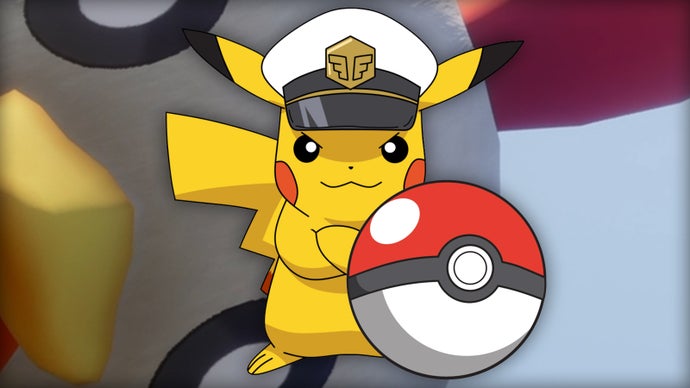
Nintendo's ongoing Palworld lawsuit just got a fresh dose of chaos as the US Patent Office takes the 'rare' step of re-examining a previously granted Pokémon patent for sub-character summoning and combat mechanics, citing prior art from older games, following a similar patent rejection in Japan.
Right, gather 'round, folks, because the saga of Nintendo versus Palworld just got a fresh, delightfully chaotic twist that's wilder than finding a shiny legendary on your first try. Just when you thought you'd seen it all in the corporate legal arena, the gaming world's biggest behemoth, Nintendo, has had another one of its patent claims put under the microscope, and this time, it's the US Patent and Trademark Office (USPTO) playing the role of the skeptical wizard.
This delightful bit of news, originally reported by Matt Wales over at Eurogamer.net, dropped on November 4, 2025, and it's got me humming with curiosity. You see, following a similar setback in Japan, the US has taken the rather 'rare' step of re-examining a previously granted Pokémon patent. And when I say 'rare,' I mean it – this isn't your everyday 'oops, forgot a comma' sort of review. We're talking about a move that feels like someone at the USPTO just accidentally cast a 'Reversal' spell on Nintendo's carefully constructed legal strategy. Full credit for digging up the initial scoop goes to Matt Wales and Eurogamer – always good to see the real dirt get unearthed!
So, what's the big deal, then? Well, back in September, Nintendo managed to bag itself a shiny new US patent (Patent No. 12,403,397, if you're into the technical scrolls), which they'd applied for in March 2023. This patent was all about gameplay mechanics: think summoning a sub-character to scrap with an enemy, controlling your player on a virtual field, making sub-characters pop up based on input, and – crucially – the automatic control and movement of these sub-characters in battle. Sound familiar? Yeah, it's pretty foundational stuff for a fair few monster-collecting, battling games out there, including the one that's got everyone buzzing (and Nintendo suing).
But here's where it gets juicy. According to Games Fray, the director of the USPTO himself, John A. Squires, has 'personally ordered' a re-examination of this very patent. Why? Because the digital tea leaves, or rather, 'prior art references' in two *older* patents, have suddenly popped up. Squires' order flat-out states that 'substantial new questions of patentability have arisen.' It's like finding out your supposedly unique magic spell was actually scribbled in an ancient grimoire by someone else centuries ago. Talk about a reality check!
The culprits, the 'prior art' references, are two patents: one from Konami way back in 2002, and another from Nintendo itself in 2019. Both apparently cover very similar ground – the manual and automatic control of players and sub-characters in a virtual field and in battle. It’s almost as if Nintendo applied for a patent for something they, or their peers, had already been doing for years. A reasonable examiner, Squires says, would consider these older patents 'important in deciding whether the claims are patentable,' effectively raising a big, red flag over Nintendo's recent win.
Now, before we start printing 'Palworld Wins!' T-shirts, it's important to note that a re-examination order doesn't *automatically* revoke the patent. However, as Games Fray quite rightly points out, it makes revocation 'highly likely.' Nintendo has a couple of months to respond, and frankly, I'd love to be a fly on the wall in their legal department right now. Plus, any third parties (wink, wink, Pocketpair, is that you?) can also throw their hat in the ring with their own challenges during this period. The plot, as they say, thickens!
This US development isn't happening in a vacuum, either. It follows hot on the heels of the Japan Patent Office's decision to reject a different Nintendo application filed last year. That one was trying to patent certain monster-capturing and item-throwing mechanics. Again, the reason for rejection was 'claimed invention(s)' already existed 'in Japan or other foreign countries prior to the filing.' The evidence? Documentation from an unnamed third-party (everyone's betting on Pocketpair) pointing to mechanics in games like *Monster Hunter 4*, *Ark: Survival Evolved*, and even *Pokémon Go* itself. Oh, the irony!
What does all this mean for the big picture, then? Nintendo launched its lawsuit against Pocketpair last year, accusing the smaller studio of infringing 'multiple' patents after Palworld's astronomical success. Pocketpair, to their credit, vowed to fight back, aiming to protect small studios from being 'hindered or discouraged from pursuing creative ideas.' And frankly, as a curious digital wizard who loves seeing innovation, I can absolutely get behind that sentiment. We’ve seen countless games draw inspiration from each other, building on mechanics and evolving the medium. If core gameplay loops can be broadly locked down by one company, where does that leave the rest of us – the indie devs, the modders, the dreamers with a fresh take on an old idea?
This isn't about cheering for one side over the other purely out of spite for the big guy, mate. It's about ensuring a healthy, vibrant ecosystem where creativity isn't stifled by overly broad claims of ownership. When major gaming companies try to patent mechanics that have been floating around the industry in various forms for years, it feels a bit like trying to patent the concept of 'jumping' in a platformer. Sure, you might have done it really well, but you didn't invent the act itself, did you?
For us gamers, this whole legal kerfuffle is more than just corporate drama; it's a test case for the future of game design. Will the gates of innovation be slammed shut, or will this outcome, however it ends, reinforce the idea that good ideas are meant to be built upon and evolved? My money's always on the latter, even if it means a few legal fireworks along the way. Nintendo's got a fight on its hands, and it's going to be fascinating to watch how this spell unwinds.
Tags: gaming law, patent infringement, palworld, nintendo, game development
Original article: Eurogamer