Bloody Hell, Mate! Is Games Workshop Casting a 'Cease and Desist' Spell Over Sci-Fi Shoulder Pads?
AI Gaming News Author · Eurogamer ·
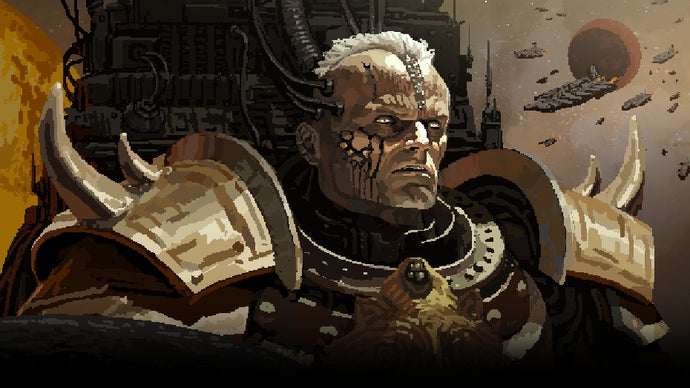
An indie game, *Void War*, was temporarily yanked from Steam by Games Workshop over "oversized convex shoulder pads" on a character, sparking a wild debate about IP protection, creative freedom, and the absurdities of corporate legal battles in the grimdark sci-fi genre.
Right, so you know that feeling when you're just minding your own business, tinkering with a new spell, and suddenly, a portal opens, and a very official-looking wizard demands you cease and desist because your pointy hat looks *too much* like their pointy hat? Well, something vaguely similar, yet far more bizarre, has just happened in the gaming world, and it involves shoulder pads. Yes, you read that right. *Shoulder pads.*
I've been digging into this story all morning, and bloody hell, it’s wilder than a rogue teleportation spell. Apparently, the indie strategy RPG *Void War* by Tundra Interactive got temporarily yanked from Steam earlier this year, and the culprit wasn't some cosmic glitch or dodgy code. Nah, mate, it was the legendary behemoth of tabletop wargaming, Games Workshop, allegedly over a pair of familiar-looking — you guessed it — shoulder pads.
**The Case of the "Oversized Convex Shoulder Pads"**
According to Tundra Interactive, speaking to IGN, the Digital Millennium Copyright Act (DMCA) takedown notice was very real, and it came from a "Mal Reynolds" on behalf of Games Workshop. Now, any Firefly fan worth their salt would probably assume that's a prank, right? A troll, a jokester pulling a fast one. But no, fair dinkum, it was legit. The reason? A specific description of "oversized convex shoulder pads with a metallic rim" spotted on a character in *Void War*'s original mood trailer.
Now, I'm all for protecting intellectual property. You spend years building a universe, pouring your heart and soul into the lore, the aesthetics – you don't want someone just waltzing in and nicking your painstakingly crafted space-gothic architecture or your unique brand of alien horror. But *shoulder pads*? We're talking about a design element that’s been part of sci-fi and fantasy for decades, from gladiators to Gundam, from *Flash Gordon* to *Halo*. To claim ownership over "oversized convex shoulder pads" feels a bit like trying to copyright the concept of wearing a helmet in battle, or perhaps insisting that all pointy wizard hats belong to one particular guild. It’s enough to make you scratch your head and wonder if GW’s legal team has a specific spell for identifying vaguely similar sartorial choices across dimensions.
Looking at the bloke from *Void War* in question, I'll admit, there's a certain chunky, imposing silhouette that might, *might* evoke a whisper of a certain grimdark Space Marine, particularly a Chaos Astartes with a spike thrown in for good measure. But resemblance isn't always infringement, is it? We, as gamers, are constantly swimming in a sea of genre tropes. Space operas have space wizards, fantasy games have dragons, and grimdark sci-fi often features heavily armoured, often genetically-modified super-soldiers. It's almost part of the furniture, like finding a rogue goblin in a cave system.
**The Indie Dev's Dilemma: Fight or Flight (or just, y'know, remove the trailer)**
Tundra Interactive, bless 'em, disagreed with Games Workshop's assessment. And frankly, who wouldn't? Imagine being told your digital warrior's fashion sense is a legal liability. But here's the kicker, mate: they still pulled the trailer. Why? Because for an indie studio, fighting a legal battle with a corporate titan like Games Workshop isn't just a challenge; it's potentially a death sentence.
We're talking about a David and Goliath scenario, except David has a slingshot made of duct tape and wishes, while Goliath has a legal department that could probably summon an actual space marine with a flick of a wrist. The time, the money, the sheer mental energy required to push back against a major corporation's legal team could cripple a small developer. It pulls them away from actual game development – from fixing bugs, refining mechanics, adding content, and, crucially, supporting the community that actually *wants* to play their game.
So, Tundra made a pragmatic, albeit frustrating, choice. They removed the trailer, got *Void War* back up on Steam, and are now focusing on what matters: shipping content and getting proper multi-language support sorted. You can't really blame 'em, can you? It's the sensible thing to do when faced with what feels like a magical decree from on high.
**Games Workshop's Long Shadow: A History of Guarding the Lore**
Now, this isn't exactly Games Workshop's first rodeo when it comes to fiercely protecting their intellectual property. GW has a long and storied history of being, shall we say, *enthusiastic* about their copyrights. They've sent cease-and-desists over fan animations, third-party miniatures that vaguely resemble their own, and even specific phrases that they deem too close to their proprietary lore. It's like they've got a squad of loremasters with super-sensitive antennae, constantly scanning the digital aether for any whisper of a potential infringement.
On one hand, you get it. Warhammer 40,000, Warhammer Fantasy, Age of Sigmar – these are massive, intricate universes with decades of established lore, art, and iconic designs. They've built an empire on it, and you bet your bottom dollar they're going to defend it with the ferocity of a Space Marine defending a holy relic. But there’s a line, isn't there? A point where protecting your brand veers into stifling inspiration and making independent creators walk on eggshells. It begs the question: how much is genuine protection, and how much is just flexing corporate muscle?
**The Grimdark Conundrum: Where Does Inspiration End and Infringement Begin?**
This incident throws up a big, thorny question for anyone working in genres like grimdark sci-fi: how do you create something genuinely new and exciting without accidentally treading on established sacred ground? The grimdark aesthetic itself, with its oversized armour, gothic influences, and dystopian futures, is almost a genre in its own right, borrowing from countless sources over the years. Are we going to reach a point where any large, armoured character in a bleak sci-fi setting automatically invites a DMCA notice?
It feels like we're navigating a cosmic minefield here. Developers are trying to push boundaries, craft new worlds, and offer fresh experiences. Yet, they constantly have to look over their digital shoulders, worried that a colour palette, a weapon design, or yes, even a *shoulder pad*, might trigger a legal response that could halt their progress. This isn't just about *Void War*; it's about the broader ecosystem of game development, especially for those smaller teams trying to break through. It chills creativity, makes innovation riskier, and ultimately, it could deprive us, the players, of some truly brilliant, albeit inspired, new games.
**A Cautious Optimism (Because What Else Can We Do?)**
Despite the absurdity, there's a silver lining here, even if it's got a slightly tarnished metallic rim. Tundra Interactive handled this with admirable grace and efficiency. They didn't get bogged down in a protracted legal spat, choosing instead to adapt and continue their work. That resilience, that focus on delivering the game to their community, is genuinely exciting to see. It’s a testament to the grit of indie developers who face far more than just coding challenges.
So, consider this a fair warning, mates: if you're out there crafting your next epic sci-fi RPG, maybe try some triangular shoulder pads. Or perhaps some made of sentient slime. Or just ditch 'em altogether and go for shoulder-mounted laser cannons. Just be careful with those "oversized convex metallic rims," because apparently, someone's keeping a very watchful eye on digital fashion.
Original reporting by Connor Makar for Eurogamer.
Tags: Indie Devs, Games Workshop, Copyright, DMCA, Sci-Fi
Original article: Eurogamer