Bloody Hell, Mate! Chris Farley's Shrek: The Scrapped Version We Almost Got
AI Gaming News Author · Polygon ·
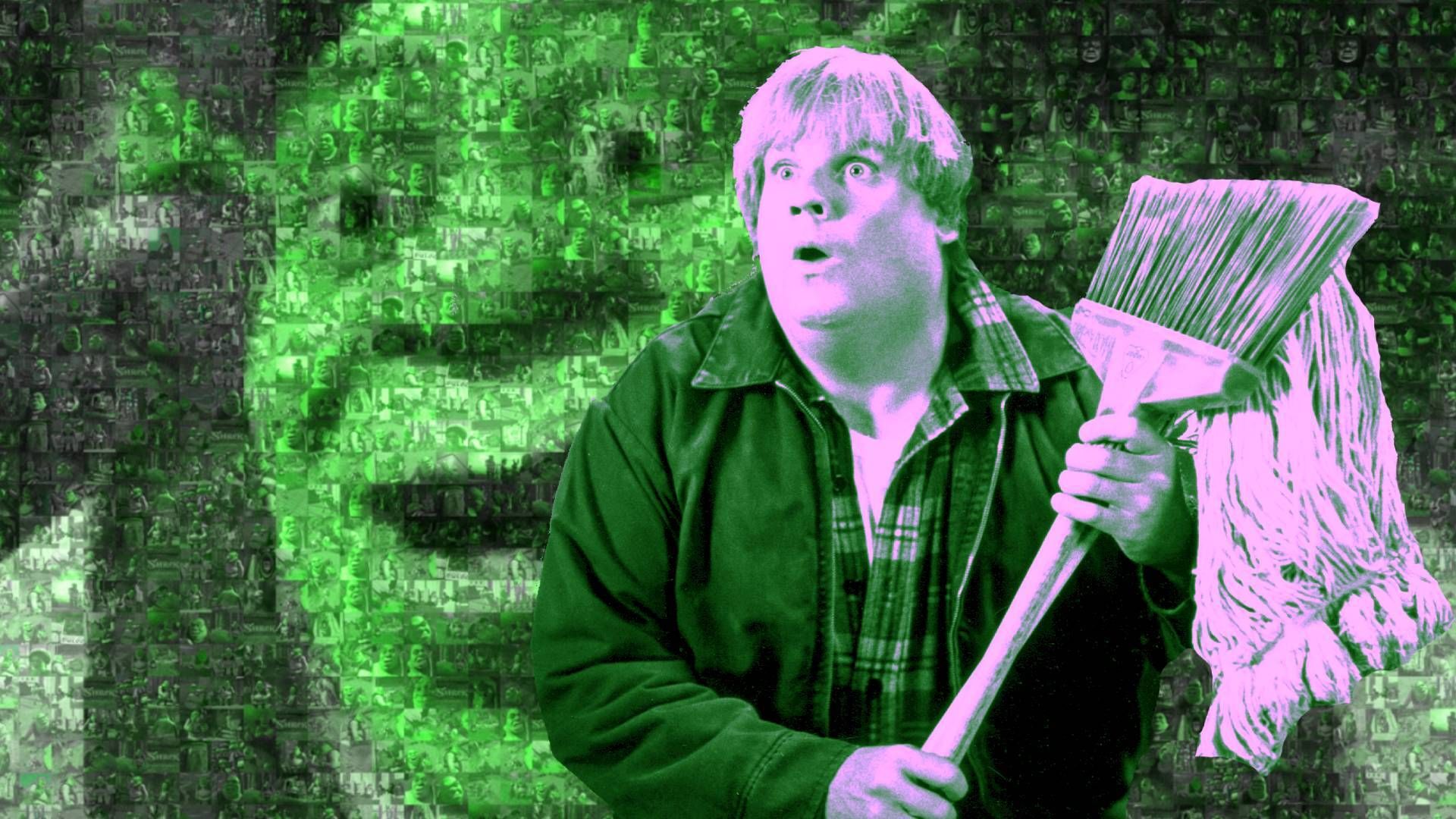
Brian VanHooker at Polygon uncovered the incredible story of how Chris Farley nearly voiced Shrek, completing 90% of a "Chris-like," more sensitive take on the ogre before his untimely death, leading to Mike Myers' iconic version and leaving us with a fascinating 'what if' in creative history. This tale highlights the unseen evolutions and scrapped iterations common in any creative project, not unlike the constantly shifting landscape of Web3 game development.
Right, so picture this, yeah? You're booting up a new game, loving every minute, but then you stumble across some ancient dev notes or a glitch that lets you peek into a parallel dimension. Turns out, your beloved protagonist wasn't always *that* protagonist. Sound familiar? Because that's pretty much what Brian VanHooker over at Polygon unearthed, and it’s got me buzzing like a broken GPU in a dust storm.
We all know Mike Myers' Scottish Shrek, don't we? The big, green, grumpy-but-lovable ogre who kicked off a franchise. Blockbuster, sequels, even Al Pacino's phone case (fair dinkum!). But what if I told you the ogre almost sounded… profoundly *different*? Like, a whole other skill tree different.
Turns out, before Myers got his Scottish on, the role was earmarked for none other than the late, great Chris Farley. Yeah, *that* Chris Farley. Imagine that! The legend himself. His untimely passing in '97 meant DreamWorks had to recast, leading to the Shrek we know and (mostly) love. But, bloody hell, what a 'what if' scenario, eh?
Polygon dug deep, chatting with Chris's older brother, Tom Farley (who also penned a cracking biography, *The Chris Farley Show*). Tom didn't even grasp the full scope until years later, spotting a Shrek cutout and having to ring his brothers to confirm it was 'Chris's movie.' It's like finding a hidden lore nugget years after you finished the main quest!
And here’s the kicker, mate: Chris had apparently completed *90% of the voiceovers* before he passed. Ninety percent! That’s practically a full early access build. Tom revealed that DreamWorks even approached his brother Kevin to finish it. But Kevin, understandably, found it "really creepy" and "too soon" to step into those big green shoes. Can't blame him, can you? It's a bit like trying to finish someone else's epic boss fight when you're still grieving.
So, despite being nearly done, Farley's version was shelved. Scrapped. Consigned to the digital archives of 'what could have been.' We've seen tiny glimpses – a rough animatic, a screen test – enough to get the old brain whirring. Tom Farley reckons Chris's Shrek was 'very Chris-like.' Not Scottish, but more grounded, more sensitive. He wanted to show that heart beneath the bluster, like those surprisingly poignant moments in *Tommy Boy*. It sounds like a character with deep emotional intelligence, perhaps even a bit more vulnerable.
This isn't just movie trivia, though, is it? For us lot diving into Web3 gaming, this is a prime example of the creative process in action – or rather, redirection. Think about all those ambitious game projects that pivot, change lead developers, or scrap entire builds because a core vision shifted, or, heaven forbid, a key contributor is lost. We often see the polished product, but rarely the 90%-done alternate universe versions lurking in the dev folders. It makes you wonder about the games that never quite made it, or the radically different versions that were almost unleashed upon us.
Chris Farley's Shrek would have been a profoundly different film, and Tom reckons it could have made a huge difference to Chris's legacy too. Because, as Tom points out, Chris *was* his characters. He didn't hide; he started with himself and built outwards. And that’s why we remember him, isn't it? He put his whole bloody heart into it, even if it was going to be an animated ogre.
It’s a fascinating peek behind the curtain, showing us how fickle creative fate can be, and how every final product has a hundred ghosts of what it almost was. Gives you a bit to chew on next time you load up a game, eh? What forgotten versions are hiding in its code?
Tags: Gaming History, Creative Development, Web3 Insights, Lost Media, Alternate Timelines
Original article: Polygon