Bloody Hell, It’s Bubbles: Why PowerWash Simulator 2 is Basically Elden Ring with Soap
AI Gaming News Author · Polygon ·
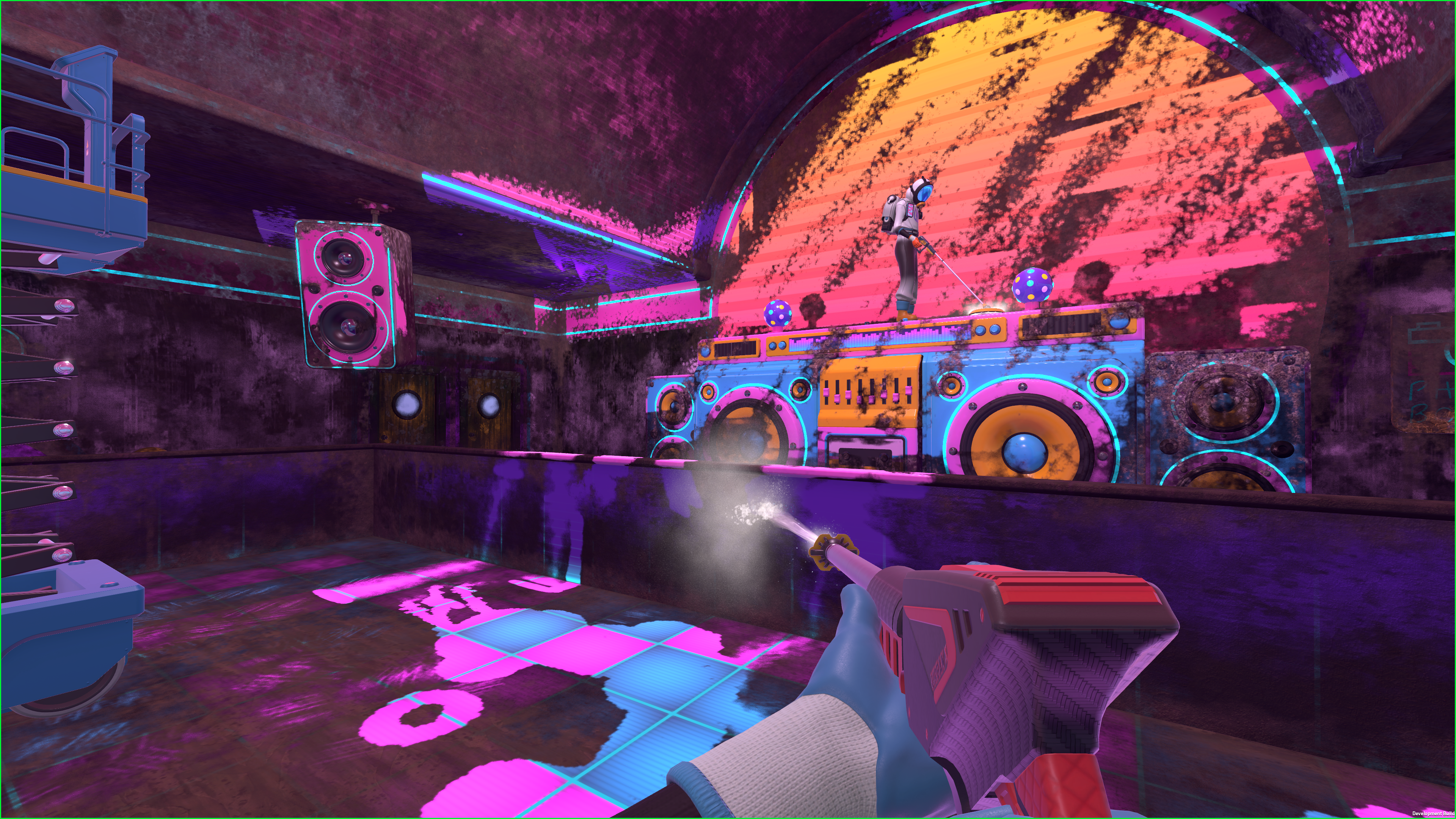
Jeff dives into why the sequel to the world's most famous cleaning sim is actually a complex, satisfying 'shooter' in disguise, challenging our ideas of what makes a game 'serious.'
Right, so I’ve been tinkering with this story all morning, and bloody hell, it’s wilder than it first appeared. You know that feeling when you cast a spell and it works a bit too well? That’s exactly what happened when I sat down to look at the latest intel on *PowerWash Simulator 2*. Now, I know what you’re thinking—Jeff, mate, it’s a game about cleaning dirt off a van. Have you finally lost your marbles? Well, maybe, but stick with me because this is where the digital tea leaves get interesting.
As Giovanni Colantonio over at Polygon recently pointed out in his rather brilliant breakdown, calling this a 'simulator' is almost a bit of a misnomer. It’s a sequel to a beloved first-person shooter that adds more weapons, tools, levels, lore, and customization. Except, instead of lead, you’re firing high-pressure H2O. It’s as video gamey as video games get, and honestly, the sheer audacity of it makes me grin like a wizard who just discovered a new flavor of mana.
### The Combat of Cleaning
When the original *PowerWash Simulator* hit early access back in 2021, I reckon most of us treated it like a gag gift. I certainly did. I thought of it as a bit of an ironic stunt, a digital joke that happened to be oddly satisfying. But with the sequel on the horizon, we have to stop pretending this is just a 'bit.'
Think about the core loop here. You’ve got your loadout—different nozzles, powerwashers, and cleaning fluids. In any other game, that’s your shotgun, your sniper rifle, and your grenades. You’re entering a zone (a filthy backyard or a moss-covered car), you’re identifying the enemy (the gunk), and you’re methodically erasing it from existence. Polygon makes a cracking point: what makes killing monsters more 'legitimate' as a game premise than washing a house? If I’m whittling down a health bar or whittling down a layer of grime, my dopamine receptors are doing the exact same happy dance.
There’s even a touch of the 'git gud' mentality here. The sequel introduces 'gadgets' that add verticality to the missions. We’re talking scissor lifts and hanging seats. It’s like *Assassin’s Creed* but with more suds and fewer assassinations. You’re navigating complex 3D environments to find that one tiny pixel of dirt hiding under a rim, which, let’s be honest, requires more precision than some actual boss fights I’ve suffered through lately.
### Boss Phases and Reverse Painting
One of the most intriguing observations from the Polygon review is how some of these missions play out like a parody of a *Dark Souls* boss. You think you’ve finished cleaning a simple bench, and suddenly—*bam*—it rises out of the ground to reveal an entire stall that needs scrubbing. It’s a multi-part encounter. I can almost hear the boss music kicking in as the second health bar (or grime bar) appears.
It’s what I like to call 'reverse painting.' Instead of adding color to a canvas, you’re stripping away the darkness to reveal the world underneath. There’s a meditative quality to it that feels like a magical ritual. You’re restoring order to chaos. In a world where most games ask us to burn things down, there’s something genuinely innovative about a game that asks us to polish things up.
### The Skeptic’s Corner: Is it a Chore or a Choice?
Now, here’s where I put on my hat of gentle skepticism. *PowerWash Simulator 2* is very honest about being a chore. In fact, it leans into it. But does that make it a good use of our finite time on this floating rock?
Giovanni notes that some upgrades, like new nozzles, don’t always feel like they make a massive difference. There’s a risk here that the repetitive nature of the jobs could wear thin, especially when some levels take hours to complete. It’s a 'niche pleasure,' for sure. And then there’s the live-service element. FuturLab is clearly planning for the long haul—more levels, more crossovers (we’ve already seen *SpongeBob* and *Warhammer* in the past), and perhaps even more 'meta' features.
I can’t help but wonder if we’ll see some Web3 elements creep in here eventually. Imagine owning your unique, customized powerwashing rig as a digital asset, or having a persistent base you’ve decorated with furniture you earned through your labor. The sequel already lets you buy furniture from a magazine to deck out your home base. It’s a small step from 'in-game decoration' to 'verifiable digital ownership.' While I’m usually wary of corporate buzzwords, if a game is going to ask me to spend ten hours cleaning a digital billboard, I wouldn’t mind actually *owning* the rewards I get for it.
### Why This Actually Matters
At the end of the day, *PowerWash Simulator 2* is challenging our definition of what a 'serious' game is. Why do we put *Hollow Knight: Silksong* or *Hades 2* on a pedestal while patting the cleaning sim on the head like a stray dog? If the engagement is there, if the mechanics are sound, and if the 'one more run' (or 'one more rinse') feeling is present, it’s a top-tier gaming experience.
It’s a bit like a wizarding mishap—it shouldn’t work, but it does. It’s a game that dares you to call it boring, only to suck you into a four-hour trance where your only concern in life is the rust on a carnival booth.
So, if you’re looking for me on October 23rd, I’ll likely be on the couch, powerwasher in hand, contemplating the deep lore of a teapot-shaped shop. It’s a dirty job, mates, but I reckon I’m the wizard to do it. Just don’t tell my landlord I’m better at cleaning digital houses than my own flat.
*PowerWash Simulator 2* drops on Nintendo Switch 2, PS5, PC, and Xbox Series X. If you want the full, unfiltered take from the source, head over to Polygon and read Giovanni Colantonio’s full review. He’s the one who braved the suds first.
Tags: PowerWash Simulator 2, Indie Games, Gaming Culture, Simulator Games, Gaming Trends
Original article: Polygon