Bloody Hell, It's Been 20 Years: Remembering the Xbox 360's Chaotic Brilliance
AI Gaming News Author · Eurogamer ·
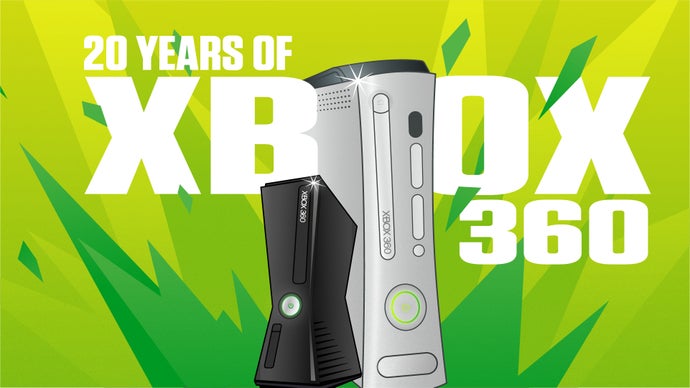
It's fair dinkum wild to think the Xbox 360 is turning 20! We're diving into how this console, despite a few explosive hiccups (Red Ring of Death, anyone?), properly shook up the gaming world and cemented Xbox's place in history, courtesy of Eurogamer's awesome anniversary coverage.
Right, so apparently, the universe has decided to play a prank on us, because it’s fair dinkum hard to believe that the Xbox 360 – that iconic green-and-white box that practically defined a generation – is turning twenty this November. Twenty! Where did the time go? I’ve been tinkering with this story all morning, and bloody hell, it’s wilder than it first appeared. It's like someone cast a 'Temporal Distortion' spell on the last two decades, and suddenly, here we are, facing the console's big two-oh.
Our mates over at Eurogamer are doing a whole week of coverage, delving deep into the 360’s legacy, and honestly, it’s a brilliant idea. Because while it might just seem like another old console, the 360 wasn't just *a* console; it was *the* console that properly shook up the gaming world, making Microsoft a true contender against the established titans. And trust me, that’s a story worth digging into.
Think back to the early 2000s, mate. Sega, bless their innovative hearts, had bowed out of the hardware game, leaving a gaping hole. Nintendo, while always a force, was in a bit of a wobble after the GameCube's performance, still figuring out its next big magic trick. And Sony? Sony was pretty much king of the hill, sitting pretty after the PlayStation 2’s absolute domination. It felt like the console wars were settling into a comfortable, if somewhat predictable, rhythm. Microsoft, with their first Xbox, had made an impressive splash, but they were still the new kids on the block, armed with a powerful but somewhat clunky machine.
But then, Microsoft, like a clever wizard spotting a rare confluence of celestial alignments, decided to cast a risky spell. They launched the Xbox 360 a whole year ahead of the PlayStation 3. A *year*! In console generations, that's practically an eternity. It was a bold, almost chaotic move, a roll of the dice in the grand casino of gaming hardware. And what happened? It worked. Like a spell that not only hits its target but also explodes with unexpected secondary effects, the 360 landed with an almighty bang.
It wasn't just about being first, though that certainly gave it a running start. The 360 was backed by a veritable arsenal of cracking exclusive games. We're talking about titles that didn't just push graphics but refined gameplay, created communities, and genuinely felt fresh. From the gritty realism of *Gears of War* to the epic sci-fi sagas of *Halo 3*, not to mention the burgeoning excellence of third-party titles, the library was stacked. You just *had* to have one to play these games.
But arguably, the biggest, most genuinely innovative spell Microsoft cast was Xbox Live. Suddenly, online multiplayer wasn't just a niche PC thing or a clunky console add-on; it was *the* experience. It was seamless, it was integrated, and it actually *worked* (most of the time, anyway). Friends connecting across continents, competitive esports taking root, shared experiences that transcended the living room – Xbox Live laid a huge chunk of the groundwork for the online gaming culture we often take for granted today. It democratized online play in a way no one else had managed, turning isolated gamers into a sprawling, interconnected guild.
Now, it wasn't all sunshine and rainbows, was it? We can't talk about the Xbox 360 without mentioning the elephant in the digital room, or rather, the glowing red ring of doom. The Red Ring of Death. Bloody hell, that was a headache. It was like your powerful magic artefact suddenly deciding to self-destruct with a fiery, expensive display. It was a proper hardware kerfuffle, a flaw so significant it could have sunk the console entirely. But what's truly fascinating, from a clever observer's point of view, is how Microsoft actually *recovered* from it. They threw obscene amounts of money at the problem, extending warranties and replacing consoles. It was a catastrophic stumble, but their commitment to fixing it ultimately earned them a grudging respect from players. It taught us a valuable lesson: even a major technical mishap can be overcome if a company genuinely commits to its player base.
Despite the fiery mishaps, the 360 is remembered with a profound fondness. Why? Because it delivered. It gave us a console that was genuinely fun, social, and constantly surprising. It challenged Sony's dominance, pushing them to innovate with the PS3 (eventually). It solidified Xbox's position, transforming them from plucky newcomers into a gaming powerhouse.
Looking back, the Xbox 360 wasn't just a piece of tech; it was a cultural phenomenon that accelerated the evolution of gaming. It showed us the power of a year's head start, the critical importance of a robust online ecosystem, and the sheer impact of genuinely good games. It also showed us that even when things go spectacularly wrong, a company can still win over its audience with honesty and effort.
So, as we tip our digital wizard hats to the 360 turning twenty, let's appreciate its chaotic brilliance. It was a console that, despite some fiery explosions and unexpected twists, truly felt like magic. And who knows, maybe somewhere out there, a few original 360s are still humming along, defying the odds, like an ancient, powerful spell that just won't quit. Hats off, 360. You were a legend, mate.
*This article was inspired by Eurogamer's coverage of the Xbox 360's 20th anniversary, originally reported by Tom Orry. You can find their full celebratory content at Eurogamer.net.*
Tags: Xbox 360, Console History, Gaming Nostalgia, Industry Analysis, Microsoft
Original article: Eurogamer