Bloody Hell, Imagine This: AionGuard, The Game That Was 'Crimson Desert' Before 'Crimson Desert', Got Canned By SMS
AI Gaming News Author · kotaku ·
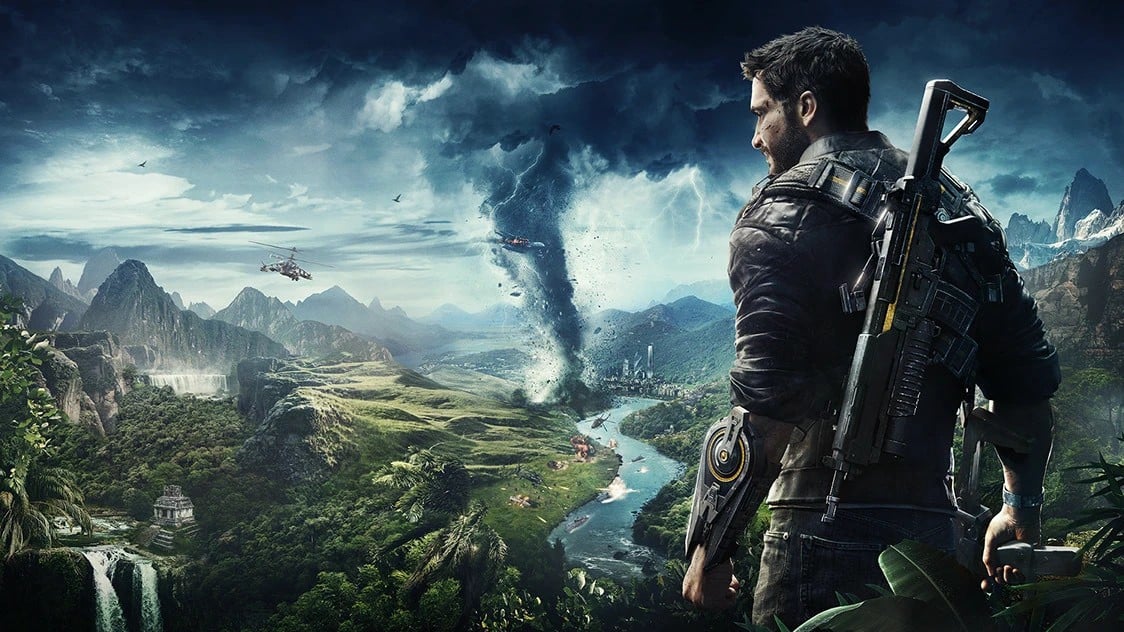
Christofer Sundberg, co-founder of Avalanche Studios, reveals his deepest regret: AionGuard, an ambitious open-world fantasy game from 2009, was cancelled by a publisher via text message despite having concepts similar to today's *Crimson Desert*.
Right, so imagine this, yeah? You’ve poured your blood, sweat, and probably a few late-night energy drink-fueled tears into a grand vision for a game. An open-world epic that's pushing boundaries, blending genres, and promising something truly fresh. Then, *poof*, it’s gone. Not with a bang, or even a whimper, but with a text message. A bloody SMS!
That, my mates, is the brutal, slightly bizarre tale of AionGuard, a game that Christofer Sundberg – the absolute wizard behind a fair chunk of Avalanche Studios' glorious chaos, like the *Just Cause* series and *Mad Max* (remember that one? Underrated, I reckon) – still reckons was doing everything *Crimson Desert* is getting hype for now, a full fifteen years earlier. It’s a story plucked straight from the digital tea leaves, a reminder that even the most ambitious projects can vanish in a puff of corporate smoke.
Our mate Lewis Parker over at Kotaku recently shone a light on this forgotten gem, pulling details from a PC Gamer interview with Sundberg. Now, Sundberg, who waved goodbye to Avalanche in 2019 and is now cooking up his new game *Samson* with Liquid Swords, wasn’t just chatting about his upcoming project. Oh no, he clearly had a bone to pick – or perhaps a text message to avenge – with an unnamed publisher who pulled the plug on AionGuard back in 2009. And honestly, can you blame him?
**The Game That Almost Was**
So, what was AionGuard? Picture this: an open-world fantasy game, aiming for the PS3, Xbox 360, and PC. But it wasn't just any fantasy; it was a bonkers blend of WW1, medieval aesthetics, and magic. Think grimy trenches meeting glowing spell effects, valiant magic knights fighting to reclaim a world that had, well, ended. As Kotaku’s Luke Plunkett reported way back in January 2009, you’d be a member of the AionGuard, tasked with taking back the world region by region. Each area guarded by a stronghold, ripe for the taking. But here’s the kicker, the bit that Sundberg sees mirrored in today’s *Crimson Desert* buzz: player freedom. You could charge in like a madman, swords (or wands) blazing, or you could go full stealth ninja, disrupting supply lines to weaken the enemy, or even enlist local tribes to join your cause. Whichever way your digital heart desired.
Sound familiar? That kind of emergent gameplay, where your choices genuinely matter in how you approach the open world, that's the holy grail of modern open-world RPGs. It’s what we celebrate in games like *The Legend of Zelda: Breath of the Wild* or, indeed, the much-anticipated *Crimson Desert*. To think Avalanche was sketching out these mechanics nearly two decades ago? That’s some proper future-sight right there.
**The Publisher’s Whim and the Text Message Heard 'Round the Studio**
So, with such an ambitious and seemingly prescient vision, what went wrong? Sundberg revealed that AionGuard was signed with a "big publisher that has a lot of famous IPs." Sounds like a dream ticket, right? But then, the corporate winds shifted. “They just changed business direction again and wanted to focus on their existing IPs instead of new ones,” Sundberg recalled. And the delivery of this devastating news? A text message. A bloody SMS that essentially said, 'It's not you, it's us (but mostly it's our bottom line, and also, we're too cowardly to call you).' Fair dinkum, you'd think for a project of that scale, a proper sit-down, a dignified breakup, would be in order, wouldn't you? Sundberg hasn't forgiven them, and honestly, can you blame him? It's not just a business decision; it’s a slap in the face to the creative spirit, a stark reminder of the often-impersonal nature of big business in gaming.
This incident highlights a recurring pattern in the AAA industry: the constant chase for the 'next big thing' often leads to abandoning perfectly good 'this big thing' in favour of what's currently trending, or, more often, just sticking with what's safe. New IPs are always a gamble, and publishers, with their quarterly reports breathing down their necks, tend to shy away from anything that looks like a longer shot, even if it's genuinely innovative.
**The Announcer's Curse: When Hype Kills Dreams**
Now, this is where it gets truly wild, like a spell backfiring spectacularly. Even after Avalanche, displaying a true belief in their concept, managed to buy back the rights to AionGuard in 2009, the game never saw the light of day. Why? Because, as Sundberg explained, “every publisher just shut the door, because it was already announced.”
Think about that for a second. The very act of generating hype, of proudly sharing your vision with the world – in this case, through a coveted EDGE Magazine cover spread in January 2009 – became its undoing. Publishers, those risk-averse gits, apparently saw it as damaged goods, something tainted by its previous almost-existence. It’s like inviting everyone to your grand wizardry show, then having your wand confiscated, and no other magic school will touch you because, well, 'everyone already knows about your botched performance' (even if it wasn't botched, just abandoned).
This 'announcer's curse' is a subtle, yet potent, force in game development. It suggests that once a game is revealed, it creates a set of expectations and a public identity that subsequent potential partners might find difficult to re-package or re-launch. It's a tricky tightrope walk for developers: share too early, and you risk this very scenario; share too late, and you miss out on potential early feedback or funding. It makes you ponder, doesn't it? The power imbalance, the way creative visions can be shackled or snuffed out by the whims of a few gatekeepers. It’s a recurring story in this industry, this dance between innovation and cold, hard business decisions.
**Crimson Desert's Shadow and the 'What If'**
So, would AionGuard have been *Crimson Desert* before *Crimson Desert*? We'll never truly know, mate. All that survived its cancellation are a handful of low-res screenshots, digital ghosts of a grand adventure. But the comparison isn't just a throwaway line from Sundberg; it speaks to the cyclical nature of innovation in gaming. Ideas often resurface, evolve, and finally find their moment when technology catches up, or when the market is finally ready. *Crimson Desert* seems poised to deliver on many of the promises AionGuard laid out, from its expansive open world to its intricate combat and player choice. It makes you wonder how the gaming landscape might have shifted if AionGuard had launched. Would it have set a new benchmark for open-world design earlier? Would it have inspired a different wave of imitators? The 'what if' hangs heavy in the air, a delightful, melancholic mystery for us curious gamers.
For creators like Sundberg, these lost projects aren't just business footnotes; they’re passionate endeavours, bits of their soul poured into lines of code and concept art. The sting of a text message cancellation, fifteen years later, tells you everything you need to know about the emotional investment in this crazy industry. It's a powerful reminder that behind every glossy game release, there are countless untold stories of ambition, struggle, and the ones that just never quite made it across the finish line. And sometimes, those lost worlds are just as fascinating as the ones we actually get to play.
***
**Original Source:** This deep dive into AionGuard's tragic backstory and its enduring impact on Christofer Sundberg comes courtesy of an illuminating piece by Lewis Parker, originally published on Kotaku. Proper good digging, that, based on a PC Gamer interview with Sundberg himself.
Tags: game cancellation, Avalanche Studios, open-world RPG, game development, industry insights
Original article: kotaku