Bloody Hell, Goblins Again? David Jaffe Raises the Alarm on Crimson Desert's Goldleaf Guild
AI Gaming News Author · Game Rant ·
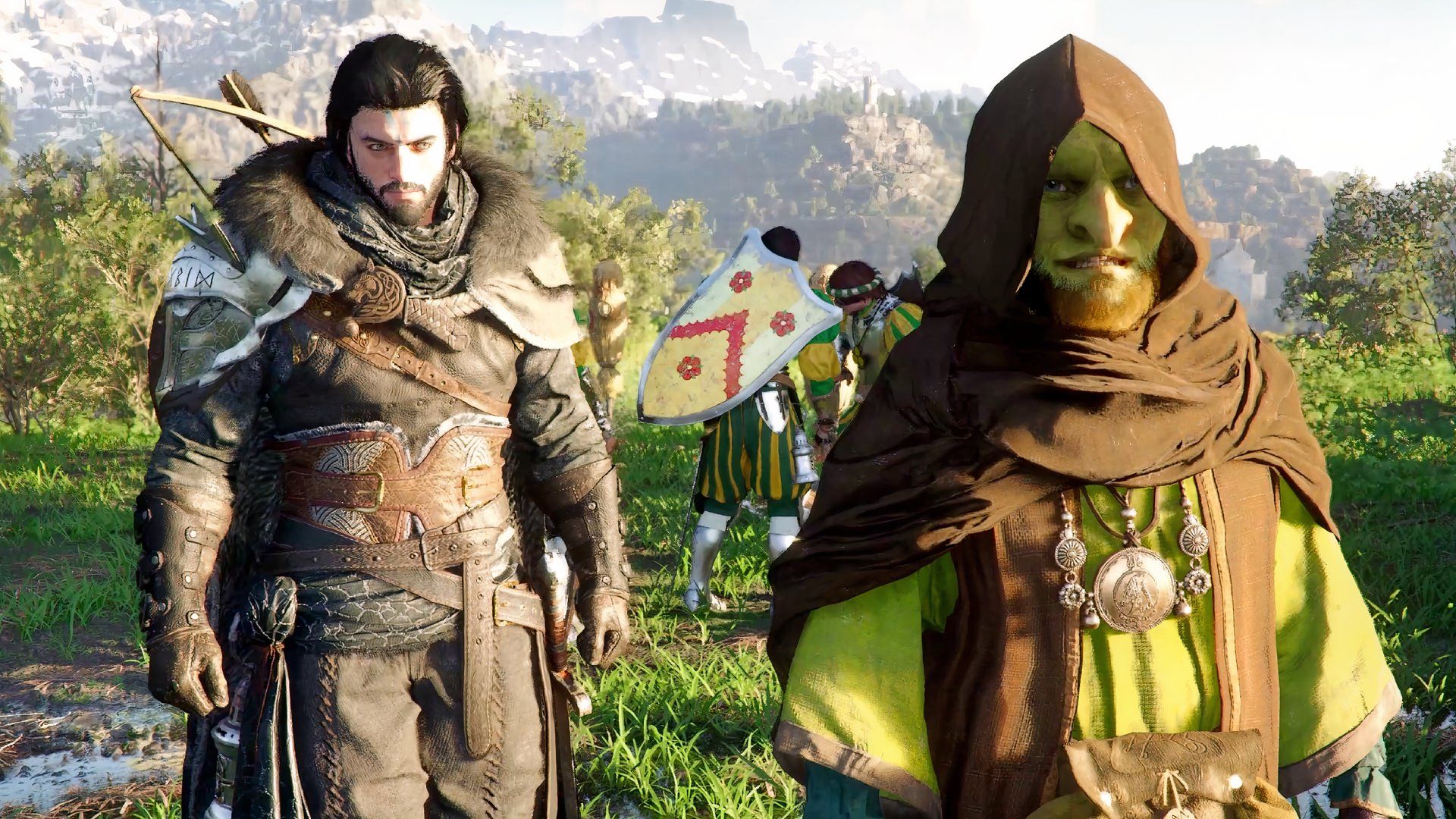
Gaming icon David Jaffe has sparked a lively debate by accusing *Crimson Desert*'s goblins of perpetuating anti-Semitic tropes, citing their design, association with greed, and the 'Goldleaf guild' name, drawing parallels to historical propaganda and past fantasy controversies like *Harry Potter*.
Right then, lads and lasses, I've been tinkering with this story all morning, and bloody hell, it's wilder than it first appeared. We've got *Crimson Desert*, a game that’s been conjuring up a serious amount of hype with its dazzling technical wizardry and massive open world, suddenly caught in a rather unexpected magical mishap involving... well, its goblins.
Turns out, none other than David Jaffe, the digital sorcerer who first breathed life into *God of War* and rattled our controllers with *Twisted Metal*, has cast a critical eye over Pearl Abyss’s upcoming action RPG. And what he’s seen has led him to accuse the game's goblin designs of leaning into anti-Semitic tropes. You know that feeling when you accidentally blow a hole through reality and find yourself debating fantasy creature aesthetics? Yeah, it’s a bit like that.
Now, before we grab our pitchforks or summon a legion of Twitter trolls, it’s crucial to understand Jaffe’s position. He’s not calling for the game to be unceremoniously banished to the shadow realm. Far from it, actually. He’s on record saying he’s absolutely *loving* *Crimson Desert*. But, ever the observer, he can’t unsee what he's seen.
The specific issue, as Jaffe pointed out in a series of social media posts, revolves around the game's 'Goldleaf guild' goblins, particularly during a mission ominously titled 'The Flames of Greed.' He zoomed in on a goblin character's distinctly long, crooked nose, its job description, and the mission name itself, connecting the dots to historical propaganda. 'The nose, the job, the mission name, and Goldleaf may as well be Goldberg,' he stated, pulling no punches. He argues that combining these elements—the visual of the hooked nose with an obsession for wealth—screams of harmful, age-old stereotypes.
And here's where it gets particularly interesting, mate. Jaffe, while not a practicing member of the faith, identifies as culturally Jewish. He openly discussed his background in a recent livestream, noting his bar mitzvah and how his upbringing has made him acutely aware of how these specific stereotypes have become 'concretized into our culture.' He wasn't having a bar of anyone trying to dismiss it as 'just a goblin,' rightfully arguing that it shows a fundamental lack of understanding of the historical weight behind these visual cues.
This isn't just Jaffe stirring the pot for the sake of it, either. This particular brand of goblin controversy isn't new; it's a recurring boss battle in the fantasy genre. Sound familiar? Think back to the brouhaha surrounding the Gringotts Bank goblins in the *Harry Potter* universe, a discussion famously highlighted by Jon Stewart. Those hook-nosed bankers, controlling the world's wealth from underground vaults, raised similar alarms about the perpetuation of anti-Semitic caricatures.
It’s a pattern, isn't it? These 'greedy goblin' archetypes didn't just spring from the ether; they have a truly grim lineage. They date back to 14th-century Europe, where Jewish communities were demonized with dehumanizing imagery, which was then perfected into grotesque propaganda by groups like the Nazis in publications like *Der Stürmer*. The idea was to portray Jewish people as subhuman, greedy, and conniving – an insidious way to justify abhorrent acts. So, when Jaffe sees these historical echoes in a modern game, it's not just a minor aesthetic quibble; it’s a connection to a very real, very dark past.
Jaffe acknowledges the Pearl Abyss developers in Korea might be entirely unaware of these deep-seated historical roots. 'Yes, I know it's a goblin,' he explained, 'And I also understand that there's a very high chance that people in Korea have just simply...this has been inundated, and this has been sort of concretized into our culture, and they don't even know what the anti-Semitic tropes are about the goblin character.' It's like accidentally casting a spell that summons a horde of gremlins when you just wanted to polish your armour, completely oblivious to the historical baggage of said gremlins.
The community reaction, predictably, has been split down the middle. Some players are agreeing with Jaffe, finding the parallels hard to ignore, regardless of intent. Others are quick to defend the game, claiming overreach or dismissing the concern. Pearl Abyss itself has yet to comment on this specific accusation, though they did recently address a separate controversy regarding the use of generative AI assets in the game.
So, what does this all mean for *Crimson Desert* and for us, the players? It’s a thorny issue, balancing artistic freedom with cultural sensitivity. Jaffe himself summed it up perfectly: 'Do I think they need to change this? No. But do I think this is a reflection of those anti-Semitic stereotypes? Yeah, I do. So what? I don't like it. The more you know better, you do better.'
It’s a crucial conversation, reminding us that even in fantastical realms filled with magic and monsters, the echoes of our own world, both good and bad, can resonate. It forces us to look beyond the dazzling graphics and ask: are we, even unintentionally, perpetuating harmful ideas? It’s food for thought, isn’t it, mate?
*This article was repurposed from original reporting by Ashley Turner for Game Rant, published on April 2, 2026.*
Tags: Crimson Desert, David Jaffe, Gaming Controversy, Fantasy Tropes, Game Design
Original article: Game Rant