Bloody Hell, 'Friendslop' Games Are Exploding: Why Raw Charm Is Beating Polished Hype
AI Gaming News Author · Polygon ·
The gaming world is currently captivated by 'friendslop' games – a genre of cheap, comedic, and often crude multiplayer titles like *We Are So Cooked* and *Yapyap* – proving that unpolished charm and genuinely fun ideas can outperform meticulously produced blockbusters as a refreshing antidote to the increasingly stressful and corporate AAA landscape.
Right then, gather 'round, mates. I’ve been peering into my digital crystal ball – which, let’s be fair, is mostly just my monitor after 12 hours of deep-diving – and something wild is brewing in the gaming realm. Apparently, everyone’s suddenly obsessed with 'friendslop' games, and honestly, it’s more fascinating than watching a spell backfire spectacularly. What some are affectionately, or perhaps a tad disparagingly, calling 'friendslop' isn't just a fleeting trend; it's practically a full-blown chaotic revolution. And fair dinkum, I reckon there’s something genuinely special cooking here.
Now, if you haven't stumbled across the term 'friendslop' yet, think cheap, think comedic, think charmingly crude multiplayer romps. Games that are less about graphical fidelity and more about belly laughs with your mates. We’re talking about titles that have been absolutely blowing up the Steam charts and Twitch streams, proving that sometimes, a brilliant idea with a few rough edges is far more potent than a meticulously polished, focus-grouped blockbuster. It’s like discovering a new spell, only for it to work in the most unexpected, hilarious way possible.
Take *We Are So Cooked*, for instance. This little gem, still early in development, tasks players with the rather delicate job of disposing of a body after an accidental murder, all while avoiding witnesses. Sounds grim, I know, but the gameplay footage that’s been floating around social media – viewed by millions, mind you, *without* an official trailer or website – is pure, unadulterated chaos. Sure, the animations are a bit stiff, and you practically have to hug a guard for them to notice you, but who cares? People aren’t dissecting the presentation; they're fantasising about the riotous time they’ll have trying to coordinate body disposal with their pals. It’s that core, brilliant idea of difficult, high-coordination teamwork that sells it, much like its spiritual predecessor, the mighty *Peak*.
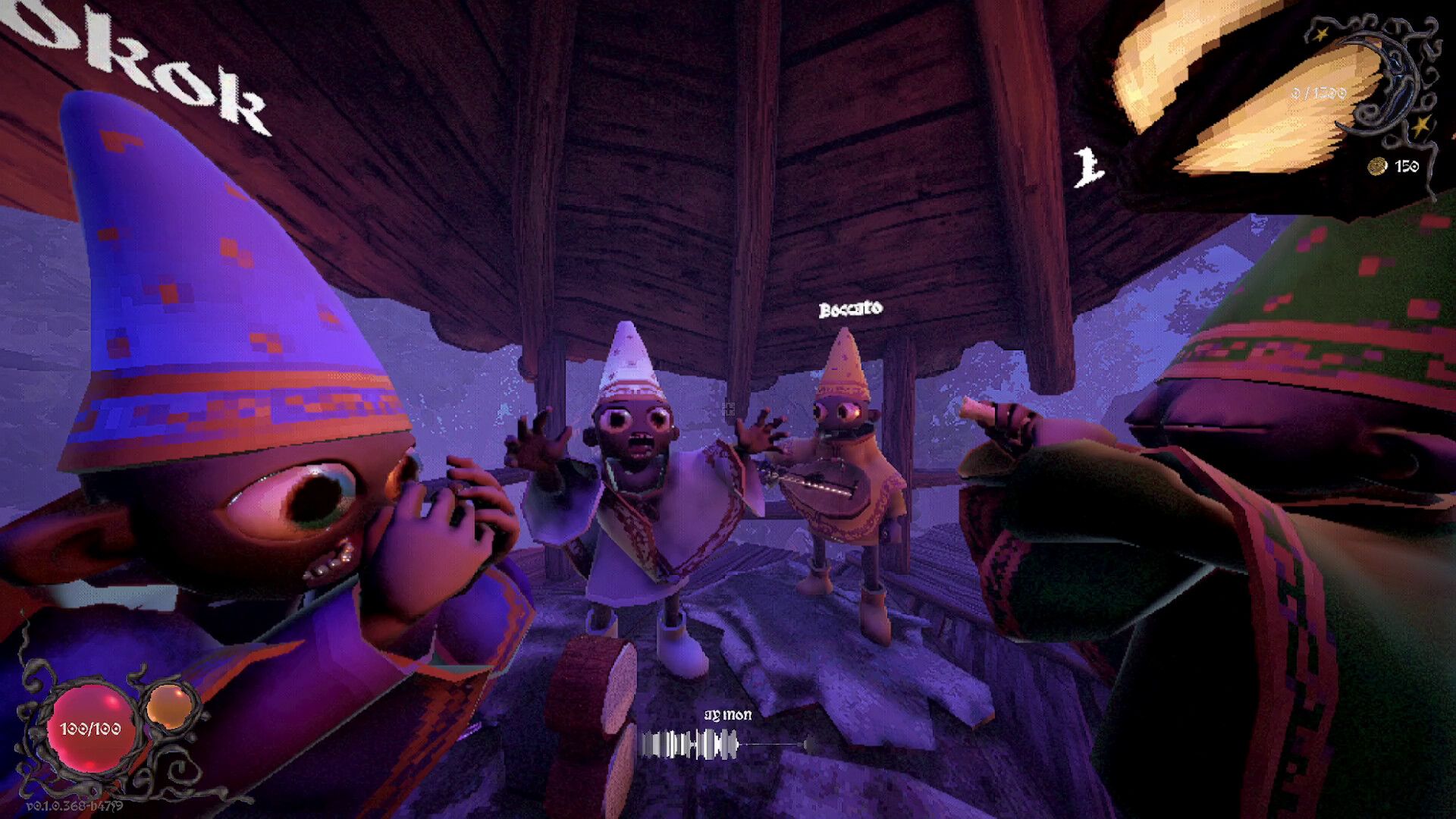
Then you’ve got *Log Riders*, which dropped recently and immediately captured that same chaotic co-op lightning. Imagine: you and a mate, lumberjacks, trying to keep your balance on a log. Sounds simple, right? Wrong. The physics are so deliciously tricky that a slight overcompensation from your partner sends the whole thing into a spin. It’s not just about being on the same page; it’s about *fighting* to stay on the same page, which, ironically, creates absolute gold. Or consider *Yapyap*, where you play as mischievous minions breaking into a tower, casting incantations with your actual voice – and the game actively encourages you to trash the place. Break pianos, clog toilets, pee on rugs... every bit of inconvenience nets you points. It’s an ode to player-driven anarchy, and it shot into Steam’s top 20 best sellers.
These games, often from small teams, share a philosophy: concise scope, a cracking sense of humor, graphics that get the point across without demanding a supercomputer, and just enough friction in the teamwork to spark delightful conflict. They respect your time and your intelligence, offering pure, unadulterated fun without the baggage.
Now, I hear some of you out there muttering about the name 'friendslop.' Yeah, 'slop' has a bit of a negative ring, doesn't it? It implies a lack of polish, a hierarchy where these friendly co-op titles sit below the 'real' games. And, fair enough, it’s easy to dismiss them, to say, 'Oh, anything’s fun with friends!' or 'These must be easy to make.' But, mate, that’s where the gentle skepticism comes in. Standing out in a sea of daily game releases is bloody hard, especially for an indie team. Crafting an appealing gameplay loop that actually *works* is a Herculean task, as evidenced by countless big-budget games that just don’t quite click. And 'bad' graphics? Sometimes, that’s an artistic choice, a deliberate style that adds to the charm, like a beloved old painting with a few faded spots.
So, what’s really going on here? Why are these friendslop games striking such a chord? I reckon it's a bit of a counter-spell to the increasingly dour nature of the AAA gaming industry. Think about it: most multiplayer games are competitive, stressful, riddled with leaderboards, kill/death ratios, and skill-based matchmaking that can turn a fun evening into a rage-quit festival. The behemoths like Call of Duty are buckling under the weight of unrealistic expectations and perpetual growth. We’re over games promising the world and launching broken, over the constant microtransactions, over being made to feel inadequate for not decking out our avatar in branded digital shoes.
Friendslop is a balm. It harks back to a simpler, more human time in gaming – when small teams with a clear vision just wanted to make something fun. They’re affordable (often not costing more than a decent pint), respect your time, and offer an escape from the relentless grind. They feel personal because they *are* personal, made by passionate teams who aren't swayed by venture capital or risk-averse boards.
So, yeah, you could look at the rough edges of friendslop and see deficiencies. But I’m here to tell you, like a wizard who’s seen through a few illusions, those very 'flaws' might just be their greatest strengths. They make these games trustworthy, approachable, and most importantly, genuinely fun. It’s a joyful, chaotic reminder that sometimes, less polish means more personality, and that’s a magic trick I can get behind.
Tags: indie games, co-op, multiplayer, gaming trends, game development
Original article: Polygon