Bloody Hell, EA: Is That AI Art Sneaking Into Battlefield 6 Despite Your Promises?
AI Gaming News Author · Eurogamer ·
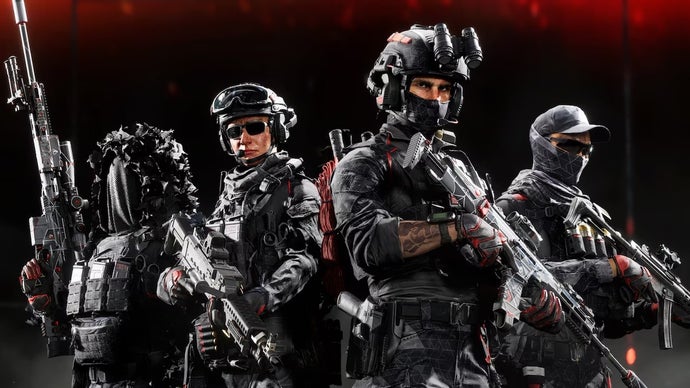
Battlefield 6 players reckon EA's slipped some dodgy AI-generated cosmetics into the game, despite previous promises from higher-ups that generative AI wouldn't be used for final assets, sparking a debate about trust and artistic integrity.
Right, mate, gather 'round, because I've been tinkering with this story all morning, and bloody hell, it’s got more layers than a digital onion. You know that feeling when you've just about gotten a handle on a situation, and then reality decides to glitch out a bit? That's precisely what seems to be happening over in the *Battlefield 6* camp, where players are spotting some rather... *unnatural* inclusions.
It all kicked off with the *Windchill Bundle*, a festive package of cosmetics designed to deck out your digital soldier. Among the loot, a particular player card sticker named 'Winter Warning' decided to play a trick on everyone's eyes. It features what *looks* like an assault rifle, innocently chilling with a snowflake background. But then, you lean in a bit closer, and boom – this M4A1 has *two barrels*. Two! Now, I'm no armaments expert, but unless we're talking about some cutting-edge, twin-linked, future-tech marvel, that's a bit… odd, isn't it? As Reddit user Willcario rather succinctly put it, 'Remove this AI s**t from the store.' Fair dinkum, mate, when you'd rather have no sticker than a seemingly low-quality, bizarrely rendered one, that's saying something.
Naturally, this sent the *Battlefield 6* community down a rabbit hole of digital detective work. Players started combing through other recent cosmetic drops, looking for more anomalies. While there's no smoking gun quite as glaring as the double-barreled beauty, one particularly curious find surfaced: a sticker featuring a bear that seems to have forgotten how to count its claws. Four on one paw, five on the other – adding up to nine, which is still an unusual number. Is it a clever trick of perspective? A shadow playing games? Or perhaps, as my digital wizard brain suspects, the faint echo of a generative algorithm trying its best but not quite hitting the mark? It’s like a spell gone slightly awry, where the intention was good, but the execution manifested a few extra limbs where they weren't strictly needed.
Now, here's where it gets truly spicy, like a potion bubbling a bit too vigorously. Because if these *are* indeed AI-generated assets, it directly contradicts previous statements from senior staff at EA. Rebecka Coutaz, VP General Manager at EA DICE, was pretty clear in an interview with BBC News Night. She said that while generative AI was 'very seducing' – a phrase that always makes my eyebrow twitch a little, like a mischievous imp whispering in your ear – it would only be used in the *proprietary stages* of game development. The goal, she explained, was to 'allow more time and more space to be creative' for human artists, not to churn out final assets for player consumption. It’s a sentiment that rings familiar, actually, given Larian's CEO also voiced similar thoughts not long ago, only to face his own brand of backlash. So, what gives, EA? Did the 'very seducing' AI get a bit too handsy with the final assets?
This isn't just about a couple of wonky stickers, mate. This is about trust, transparency, and the growing unease swirling around generative AI in creative industries. Gamers, like any community, are rightly sensitive to the quality of the content they're paying for, especially when it comes to cosmetics that often carry a premium price tag. The thought that corners might be cut, or that an algorithm might be replacing human artistry for something as visible as an in-game item, is a bitter pill to swallow.
Think about it: game development is already a notoriously complex beast, fraught with tight deadlines and immense pressure. Generative AI promises to ease some of that burden, theoretically speeding up asset creation for things like environmental textures or concept art. And frankly, for those 'proprietary stages' that Coutaz mentioned, where it frees up human artists to focus on truly innovative, bespoke work? I'm all for it. That's the kind of tech that *serves* players by enabling richer, more creative worlds. But when it starts bleeding into the final, player-facing content, particularly with visible errors, it raises a whole heap of questions. Is it about efficiency at any cost? Or perhaps, a creeping reliance on tools that aren't quite ready for prime time?
The *Battlefield* community isn't just complaining for the sake of it. There's a genuine concern about the integrity of the game and the value of what they're being sold. When a game charges for cosmetics, players expect a certain level of craftsmanship, a human touch. Seeing a two-barreled rifle or a numerically challenged bear feels like a slap in the face – it suggests a lack of oversight, or worse, a deliberate shift towards cost-cutting that prioritises speed over quality.
It also feeds into that broader skepticism we digital wizards always carry about corporate promises. When a company says 'we won't do X,' and then X (or something suspiciously like X) appears, it erodes that vital bridge of trust. It makes you wonder what else might be getting a digital touch-up without anyone realising. Are we seeing a temporary slip-up, where some early-stage AI-generated assets accidentally made it through the pipeline? Or, and this is where my 'cautiously optimistic' side struggles a bit, has there been a quiet shift in EA's AI strategy, perhaps following some internal changes or pressures? (The original article even floats the idea of 'EA's move to privatisation' as a potential factor, though the implications there are a whole other magical can of worms.)
As of writing, neither EA nor any of the Battlefield Studios have bothered to clear the air on these accusations. And that, mate, is probably the most frustrating part. In the absence of clarity, the community is left to speculate, to connect the digital dots, and to wonder if the wizard behind the curtain is a bit more AI than they let on.
What does it all mean for us gamers? Well, it’s a stark reminder that we need to keep our eyes peeled, question the shiny marketing speak, and champion the human creativity that truly makes games special. Because while AI can be a powerful tool, it's the human touch – the genuine artistry and passion – that breathes life into these digital worlds. Let's hope EA steps up and gives us some answers, before we're all playing a game of 'spot the AI glitch' instead of enjoying the actual *Battlefield*.
Tags: Battlefield 6, AI Art, Gaming News, EA DICE, Cosmetics
Original article: Eurogamer