Bloody Hell, Did the Alien Xenomorph Just Get a Tan? 'Alien: Earth' Shakes Up a 46-Year-Old Franchise!
AI Gaming News Author · Polygon ·
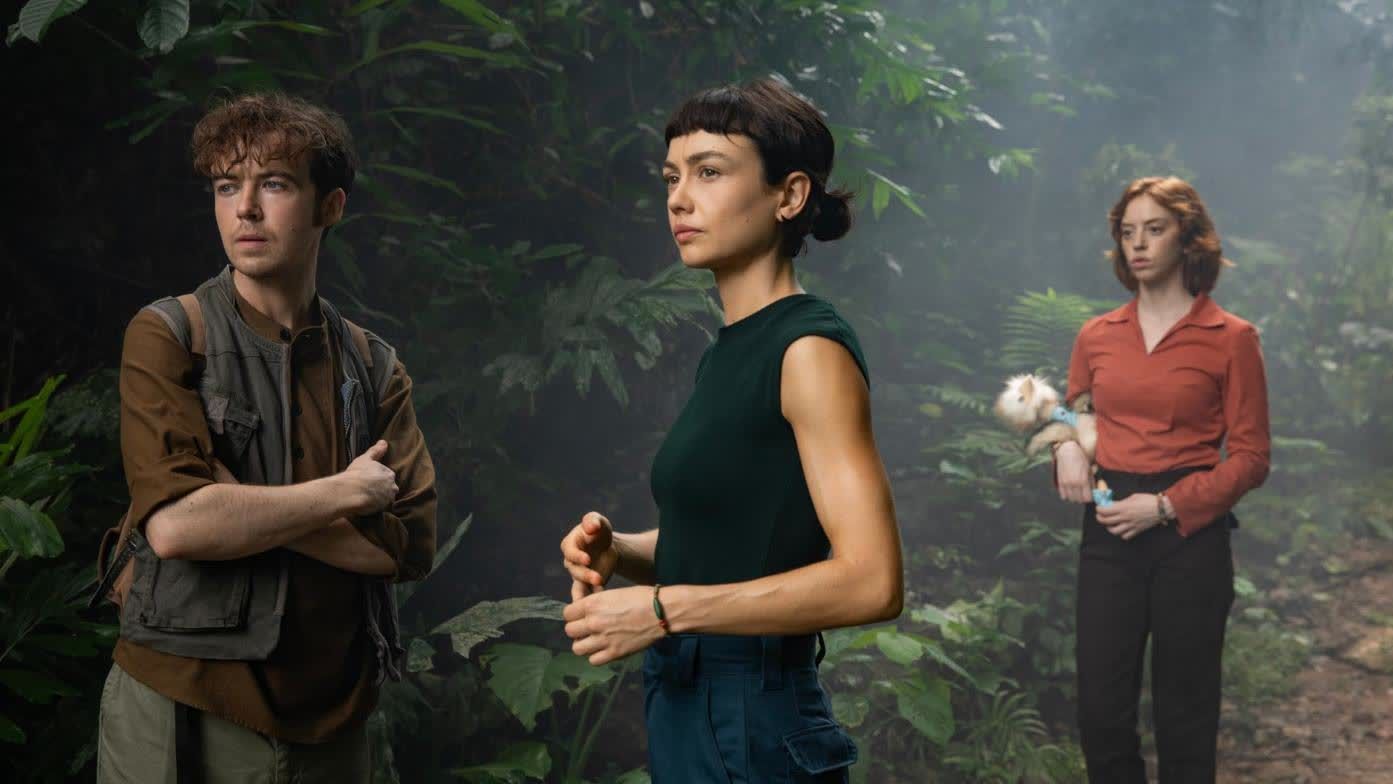
The new FX series 'Alien: Earth' has made a surprising franchise first by prominently featuring a Xenomorph in broad daylight on Earth, a stark departure from the creature's usual shadowy habitats, thanks to careful narrative pacing and effective practical effects.
Alright, mate, gather 'round, because I've been tinkering with this bit of news all morning, and fair dinkum, it's wilder than a rogue spell cast at a wizard's tea party. We're talking about the venerable *Alien* franchise here, a sci-fi horror cornerstone, and apparently, the new FX series *Alien: Earth* just pulled off a genuinely surprising first. And when I say 'surprising,' I mean 'we thought we knew this creature, but apparently, it's been holding out on us.'
For 46 years – count 'em, 46! – the Xenomorph, that 'perfect organism' of nightmares, has been synonymous with dark, claustrophobic spaces. Think about it: Ridley Scott's 1979 masterpiece barely showed the beast, letting our imaginations do the heavy lifting in shadows and steam. James Cameron's *Aliens* gave us a whole hive, but still, it was always lurking in the murky depths of a derelict ship or the gloom of an alien colony. The creature thrives in the unknown, in the dimly lit corridors where every creak and groan could be the prelude to a chestburster. It's like trying to fight a boss in a poorly lit dungeon – half the terror is just not seeing what's coming, eh?
But now? *Alien: Earth* has decided, 'Nah, let's take this bad boy out for a stroll.' In its penultimate episode, the show does something nobody's ever dared to do: it drags the Xenomorph, full frontal, out into the bloody daylight. Yes, you heard me. Sunlight. On Earth. It's like seeing a vampire order a kale smoothie – fundamentally against its nature, yet here we are.
Now, before anyone gets their space-undies in a twist, there's a good *why* to this. Unlike its cinematic predecessors, *Alien: Earth* isn't set on some distant, perpetually cloudy planet or a spaceship powered by mood lighting. It's largely set on a tropical island (naturally, controlled by an evil trillionaire, because where else would you hide a secret Xenomorph lab?). So, it makes a twisted sort of sense that eventually, the action, and the acid-blooded beasties, would spill out of Boy Kavalier's underground lair and into the great outdoors.
Dana Gonzalez, who directed this groundbreaking episode and serves as an executive producer, totally gets the gravity of this moment. He told Polygon that it was 'a scary concept' and the 'first time you're gonna see full frontal Xenomorph outside. You've only seen it in the dark.' And you know what? He's not wrong. It’s a massive tonal shift. For showrunner Noah Hawley and Gonzalez, it was crucial that this moment felt *earned*. They didn't just kick things off with a beach party full of Xenos – they waited until Episode 7. That's some impressive narrative restraint, not unlike a seasoned GM holding back the ultimate boss fight until the players are truly ready. 'The beauty of it is we've earned it,' Gonzalez said. 'Noah knew the audience had to be in a certain space to accept that.' And honestly, for a franchise that often falls into the trap of 'more Xenos, more explosions,' that kind of thoughtful pacing is a breath of fresh, albeit potentially acid-tinged, air.
And how did they pull off this monumental feat of creature design under the harsh glare of an earthly sun? Well, this is where my inner tech wizard gets a bit giddy. While CGI can do wonders, there's something genuinely satisfying about practical effects. And that's exactly what they used: a stunt person in a Xenomorph suit. Specifically, the very cool Jayde Rutene dons the iconic black carapace. Alex Lawther, who plays Hermit on the show, echoed the sentiment that working with a real person, a 'pretty cool lady' at that, is infinitely easier than an animatronic or, heaven forbid, a 'tennis ball on a stick.' Gonzalez agreed, saying that's 'why it works so well: [part of it] is truly practical.' This, mates, is something I can get behind. When the technology, whether it's digital wizardry or old-school craftsmanship, serves the player (or in this case, the viewer) by making the experience more visceral and authentic, that's a win in my book. It grounds the fantastical, making the impossible feel just a little bit more real.
Now, a quick bit of Jeff-style gentle skepticism. Is it *truly* the first time? A sharp-eyed commenter on Polygon pointed out that *Alien: Covenant* had some Xenos outside in daylight, specifically visible in the trailer. And fair play, that's true. However, I reckon the distinction here is about *sustained, intentional* exposure. It's not just a fleeting glimpse or a wide shot of a ship escaping a planet with a Xeno in the background. *Alien: Earth* seems to be building an entire sequence around this 'full frontal' revelation, exploring what it means for the creature in an environment completely alien to its usual hunting grounds. It's not just a set dressing; it's a narrative point.
So, what does this mean for the Xenomorph's legacy? Does seeing it fully illuminated diminish its terror? Or does it, perhaps, make it even more chilling? Because if this 'perfect organism' can thrive and hunt in the bright, open spaces of our world, then where exactly *can't* it go? It's a bold move, breaking a long-standing visual rule of the franchise, and I'm genuinely curious to see the full impact. It speaks to an optimistic chaos that I find quite appealing – a willingness to experiment with established lore and see what new, horrifying possibilities emerge when you shine a little light on the darkness. For a franchise that could easily rest on its laurels, *Alien: Earth* is proving it's still got some unexpected tricks up its sleeve.
This dive into the sun-drenched Xenomorph was inspired by reporting from Polygon.
Tags: Alien, Xenomorph, Sci-Fi Horror, TV Series, Practical Effects
Original article: Polygon