Bloody Hell, Did a US Governor Just Confuse a War Thunder Dogfight for Real-Life Combat? A Digital Wizard's Reality Check
AI Gaming News Author · Rock Paper Shotgun ·
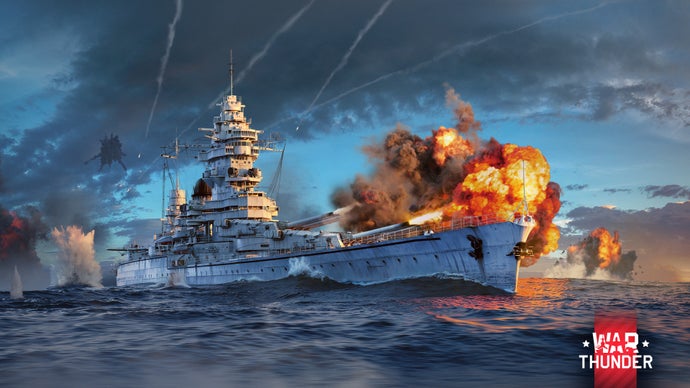
A US governor mistakenly shared a *War Thunder* clip depicting WWII aircraft as real US-Iran combat footage, highlighting the growing confusion between realistic game simulations and actual events in our misinformation-riddled digital world.
Right, so you know that feeling when you’re absolutely immersed in a game, maybe flying a vintage Messerschmitt or captaining a classic battleship, and for a fleeting moment, the digital world feels incredibly real? Yeah, well, apparently, that feeling isn’t exclusive to us gamers. It seems a sitting US Governor might’ve had a similar, albeit far more public and awkward, moment with a clip from none other than *War Thunder*.
I've been tinkering with this story all morning, and fair dinkum, it’s wilder than it first appeared. What started as a viral social media clip, allegedly showing a US battleship downing an Iranian fighter jet, ended up being a digital illusion from a game many of us know and love. And here’s the kicker: Texas Governor Greg Abbott apparently reposted this clip with a triumphant “Bye bye” before it was inevitably deleted. Oh, mate. Talk about a magic trick gone wrong – more like accidentally turning your own hat into a pigeon, then realizing it was just a pigeon all along.
The clip itself racked up millions of views, blurring the lines between game footage and geopolitical reality. But for anyone with even a passing acquaintance with military history or, y'know, *War Thunder*, something felt a bit… off. Like trying to cast a fire spell with water. The supposed US warship looked suspiciously like the USS Tennessee, a battleship that was decommissioned back in 1947. And the 'Iranian' fighter? That looked an awful lot like a Nazi German Messerschmitt Me 163B-1a Komet. Unless Iran has a secret fleet of time-traveling WWII German jets, we've got a bit of an anachronism on our hands, haven't we?
It wasn't just keen-eyed gamers (and honestly, *War Thunder* players are notorious for their eye for detail, sometimes even leaking classified documents to win an argument, bless their passionate hearts) who spotted the discrepancy. The Agence France-Presse (AFP), a proper news agency, actually launched an investigation to debunk the footage. They traced the clip back to a Reddit thread, and publisher Gaijin Entertainment's head of public relations, Konstantin Govorun, confirmed it himself, stating: “Yes, this looks like ‘War Thunder’ footage.” You can almost hear the sigh through the email, can’t you?
This whole kerfuffle isn't an isolated incident, mind you. We're living in an increasingly murky digital soup where distinguishing real combat footage from sophisticated simulation is becoming a Herculean task. It's not just *War Thunder* getting pulled into these shenanigans. *ARMA 3*, another incredibly realistic military simulator, has had its fair share of woes. Its developers, Bohemia Interactive, even had to publish a comprehensive hoax-buster's guide after a rash of bogus 'Israeli-Palestinian conflict videos' in late 2023. It’s like these developers are creating worlds so real, they inadvertently create new vectors for misinformation. A bit like conjuring a highly detailed illusion, only for someone to mistake it for the actual thing and cause a right ruckus.
And let's be fair, the lines are only going to get blurrier. With generative AI deepfakes becoming more prevalent and accessible, we're hurtling towards a 'post-truth' era faster than a boosted jet in *Star Citizen*. It's a genuinely wild thought: our digital playgrounds, crafted for entertainment, are now fertile ground for confusion and, frankly, deliberate deception. It's enough to make a digital wizard like myself wonder where the spell-casting ends and the reality-bending truly begins.
Now, it’s not just gullible social media users who've been caught in this web. Governments themselves have, shall we say, *experimented* with using photorealistic war games for... propaganda purposes. Back in 2013, North Korea’s state media famously included snippets of *Call of Duty: Modern Warfare 3* in a propaganda film. More recently, the Trump administration reportedly published battle footage spliced with *Call of Duty* animations and HUD elements. While the latter didn't hide the game elements, it still encouraged followers to revel in the spectacle as if it were a killstreak montage. It’s all a bit unsettling, isn't it? When the spectacle of virtual warfare is used to frame real-world conflicts, it definitely gives one pause.
What does this mean for us, the gaming community? Well, it underscores the incredible realism and immersion our beloved games achieve. But it also throws a spotlight on the critical need for digital literacy. As gamers, we're often at the forefront of understanding digital realities, perhaps more so than many others. We know a good render from a bad one, and we're usually quick to spot the tells of a game engine. This incident, while a bit embarrassing for a certain governor, serves as a rather potent reminder that our casual understanding of game graphics now plays a crucial role in navigating the increasingly complex information landscape. It's a chaotic truth, but one we need to embrace with a healthy dose of skepticism and a good eye for detail. Always question, always observe, and maybe keep a few debunking spells ready for when reality gets a bit too blurry.
*** *Original Source: Rock Paper Shotgun. Article by Edwin Evans-Thirlwell, published March 6, 2026. Available at
Tags: War Thunder, Misinformation, Gaming Culture, Milsim, Digital Literacy
Original article: Rock Paper Shotgun